
By: Angela Fulo

Our writer’s team sets out to find the best travel information that benefit our readers.
If you’ve been dreaming about traveling the world, visiting some of the most beautiful places in the world would be the goal. Given that there are thousands of landmarks across the globe, it feels quite impossible to see all of them in one lifetime.
To help you decide which ones to visit first, we’ve narrowed down the most beautiful places worldwide. These places include famous human-made and natural landmarks, and less-known ones worth visiting for their significant contributions to civilization or spectacular beauty.
We also included information about the 7 wonders of the world, the 7 natural wonders of the world, and the 7 wonders of the ancient world. Make sure to add some of those to your bucket list.
Let’s dive in!
Jump to what you wish to explore:
- Famous Man-Made Landmarks
- Beautiful Natural Landmarks
- Less Known Man-Made Landmarks
- Less Known Natural Landmarks
- Beautiful Places to visit before they Disappear
- Historical Landmarks
100 Most Beautiful Places in the World
Famous Man-Made Landmarks
Eiffel Tower
Location: Champ de Mars, 5 Av. Anatole France, 75007 Paris, France
Age: Opened 1889
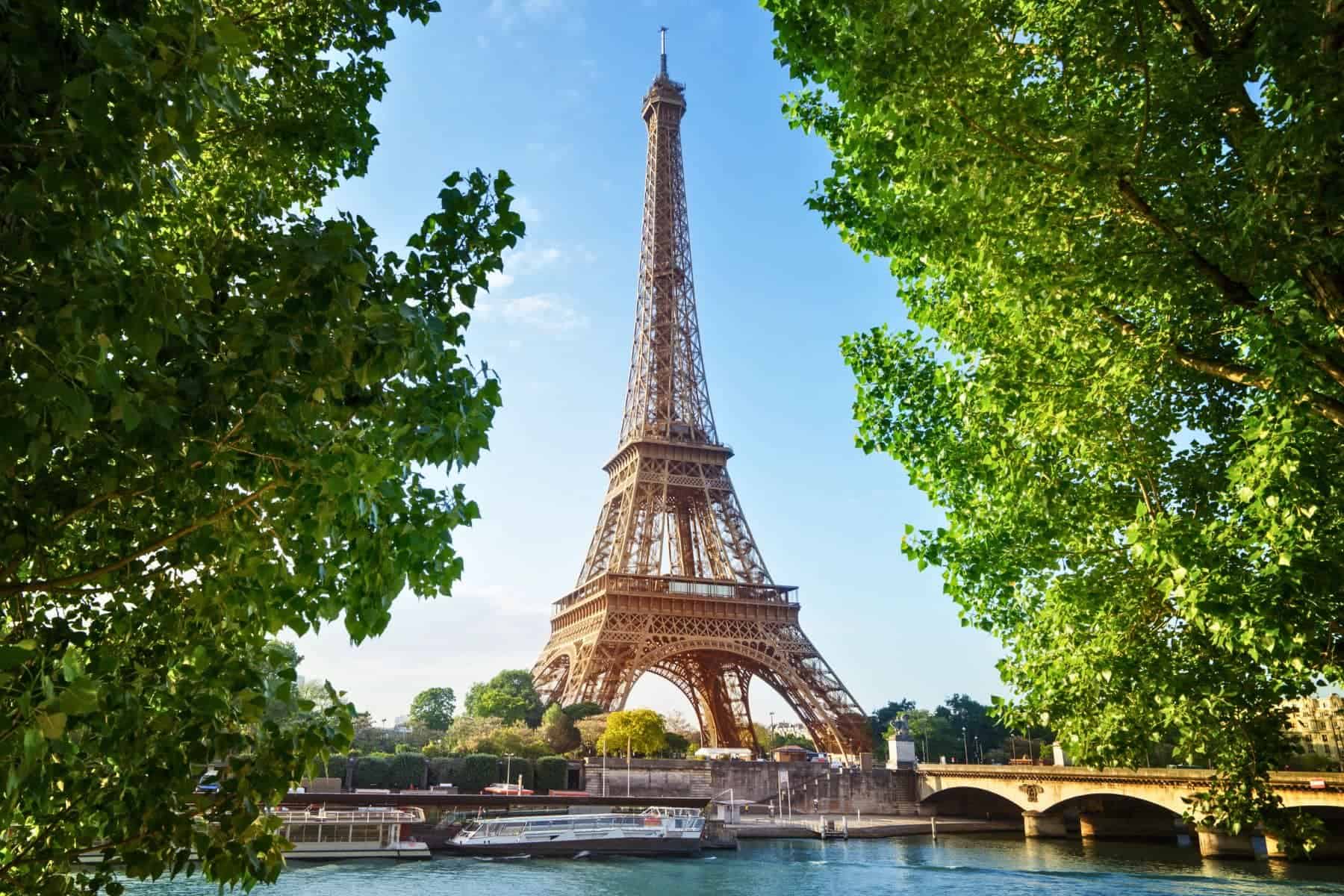
Eiffel Tower was completed in 1889, marking the centennial anniversary of the French Revolution. The idea was to build a 300-m high tower for the highly anticipated World’s Fair of 1889. Originally, it was supposed to be destroyed after two decades. Gustave Eiffel prevented the destruction, arguing that the tower had a vital role to play in science. Accordingly, it should serve as a laboratory and observatory for everyone.
Today, Eiffel Tower is the quintessential symbol of Paris. A general admission ticket for adults aged 25 and above starts at 11.3 EUR. For a hassle-free experience, it’s best to buy your tickets online. You can also check out the visitor’s guide online before your tour.
The tower houses many dining outlets, so you can quickly grab a bite before and after your tour. Esplanade, located on the first and second floors, offers numerous options with its buffets. If you want to experience eating at a Michelin-starred restaurant, you can head to Jules Verne on the second level.
Great Wall of China
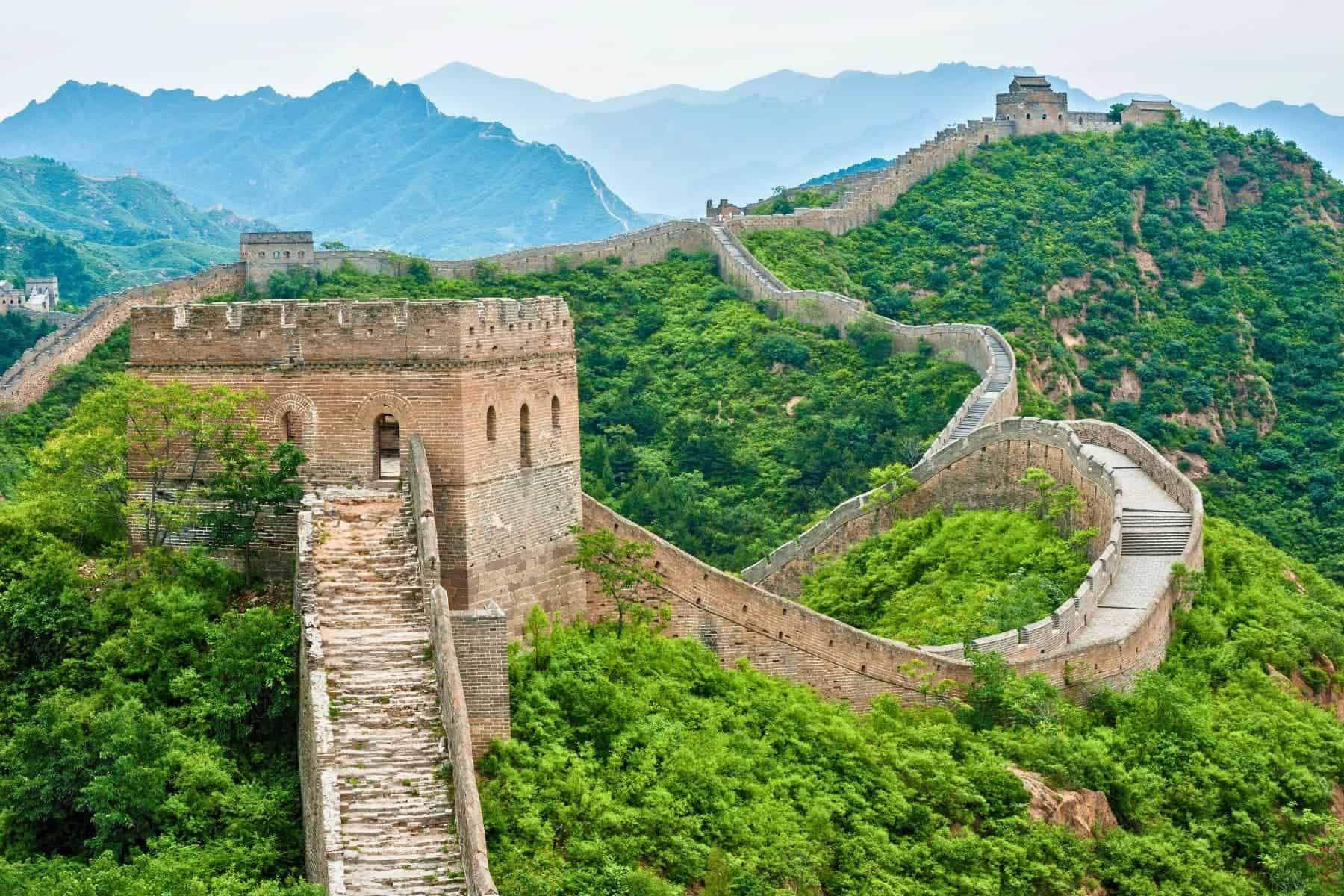
Location: Huairou District, China, 101406
Age: estimated 3,000 years old
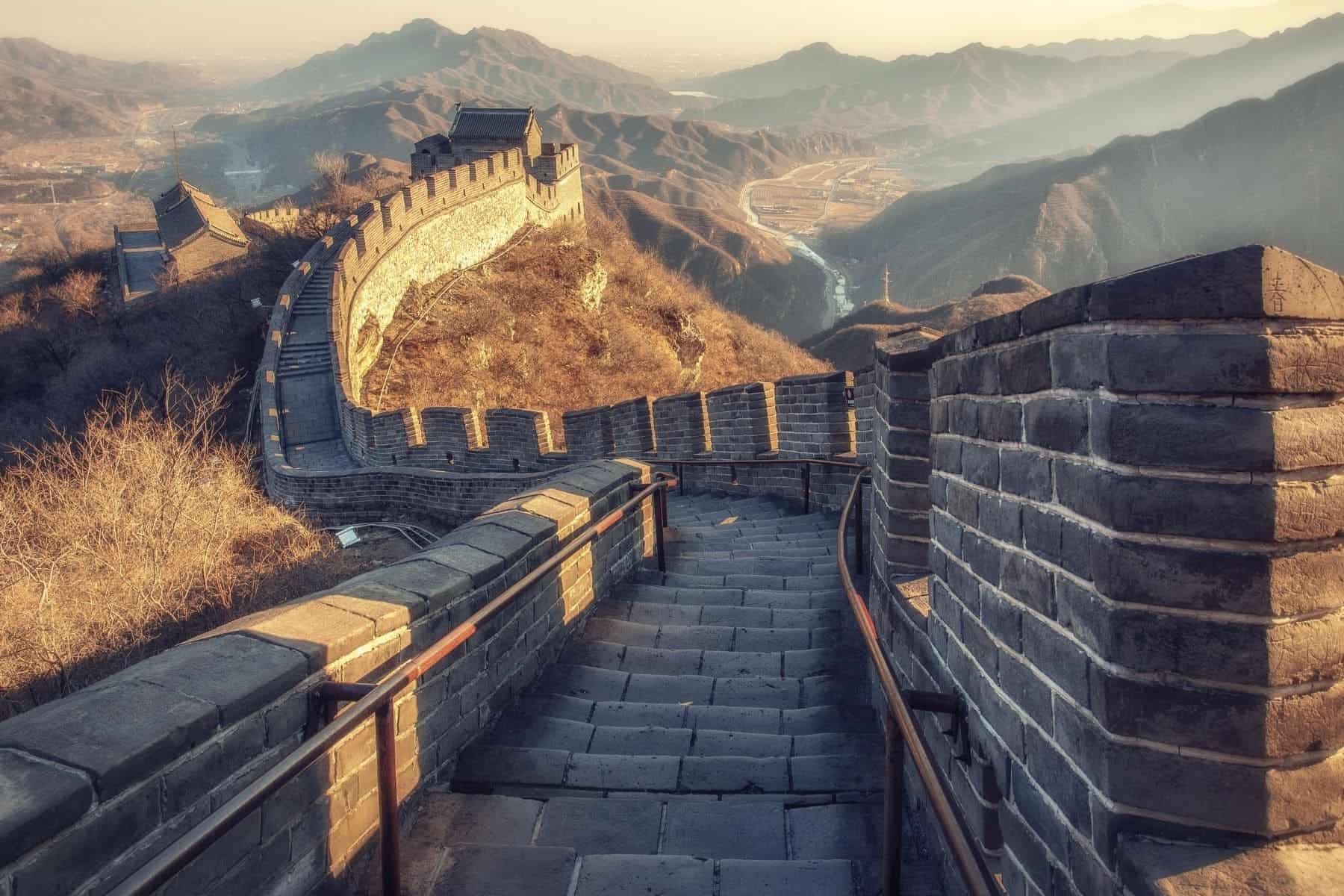
Built over several dynasties, the Great Wall of China is one of Asia’s most fascinating attractions. Whatever materials the ancient Chinese found were used in the construction— from rocks to clay tiles.
Primarily, the wall was constructed to protect China from foreign invaders. It saw many battles over the decades. The last one was fought in 1938.
When planning your visit to the Great Wall of China, you first need to pick a section. The closest one to Beijing is Badaling, so naturally, it draws heavy crowds. You can explore this section on a cable car if you do not feel like hiking.
If you prefer to go at night, Simatai is the section for you. If you prefer to avoid large crowds, head to Jinshanling. It is a remote area with 5 mountain passes along Jinshanling Mountains.
There are many steep stairs along the wall. The most dangerous ones, featuring an angle of ascent of about 80 degrees, are in Jiankou and Simatai.
Leaning Tower of Pisa
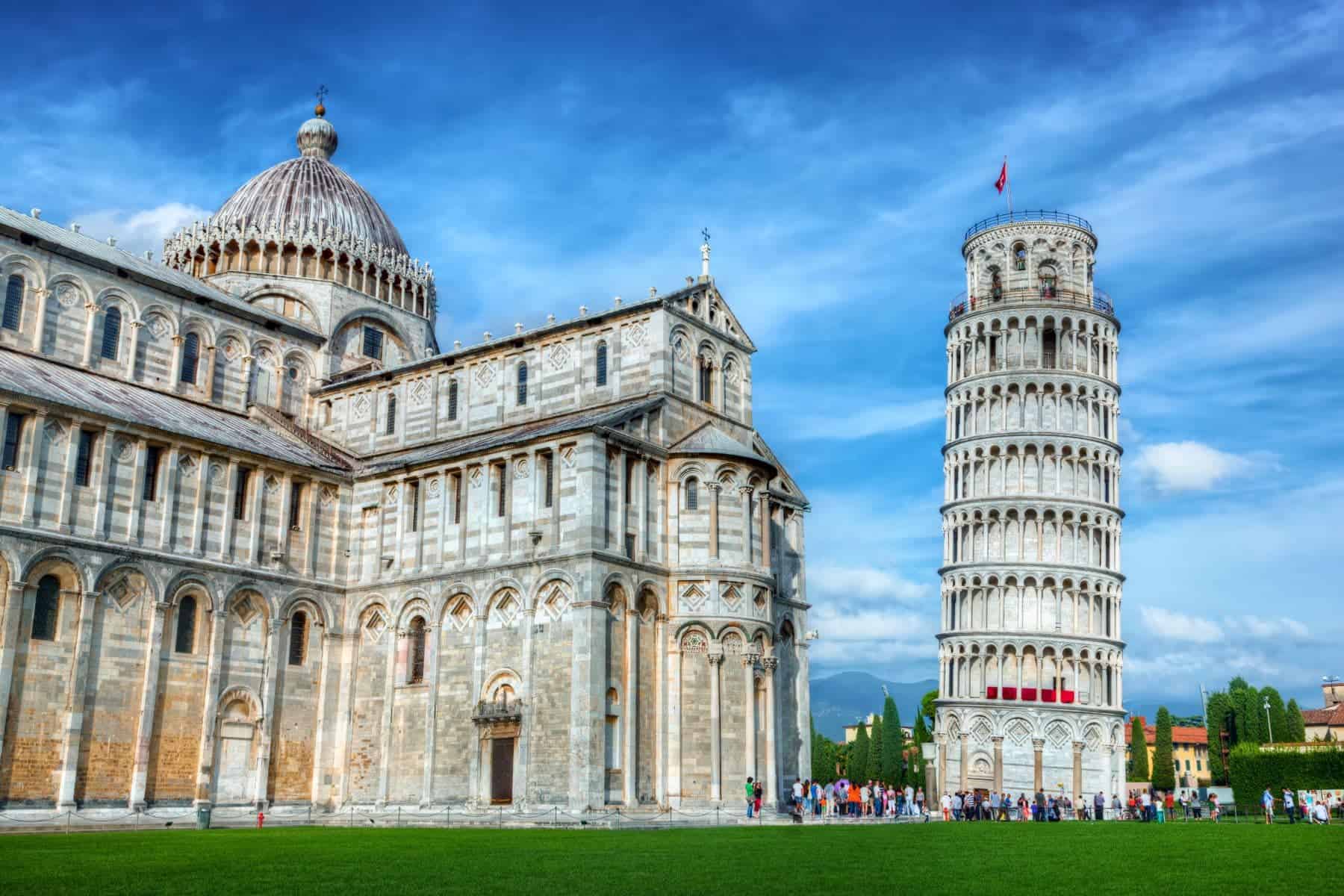
Location: Piazza del Duomo, 56126 Pisa PI, Italy
Age: Completed 1372
The Leaning Tower of Pisa was intended to stand completely vertically. During construction, the soft ground caused it to lean. It’s not only leaning but falling at a rate of about 2 mm annually.
Construction started in 1173, but the work was only completed in the mid-14th century due to the interruptions caused by wars. These interruptions were blessings in disguise because they allowed the soil under the tower to compress, preventing it from falling apart.
The Leaning Tower of Pisa was built to serve as a bell tower. Religion was becoming an integral part of Pisa’s culture, so establishing religious buildings was crucial at the time. Specifically, the tower formed part of the cathedral complex planned during that time.
Climbing up this tower is a worthwhile endeavor. Once you get to the top, you’ll see the incredible views of Pisa. Since it’s a popular attraction, making a ticket reservation is highly recommended. Ticket prices start at 18 EUR.
Great Pyramids of Giza and Great Sphinx of Giza
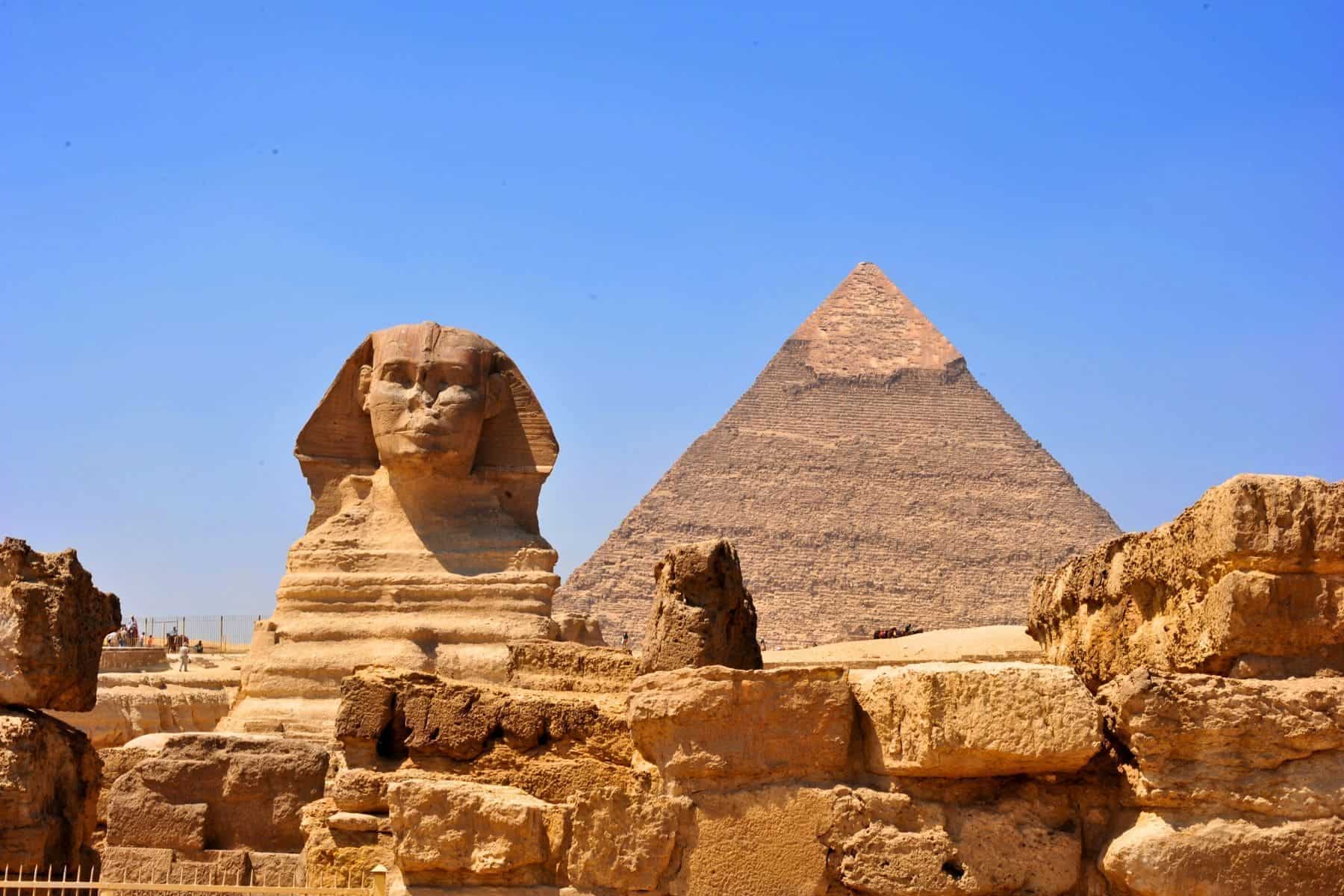
Location: Al Haram, Nazlet El-Semman, Al Giza Desert, Giza Governorate 3512201, Egypt / Al Giza Desert, Giza Governorate 3512201, Egypt
Age: Constructed around 2570 BC, estimated 4,500 year old
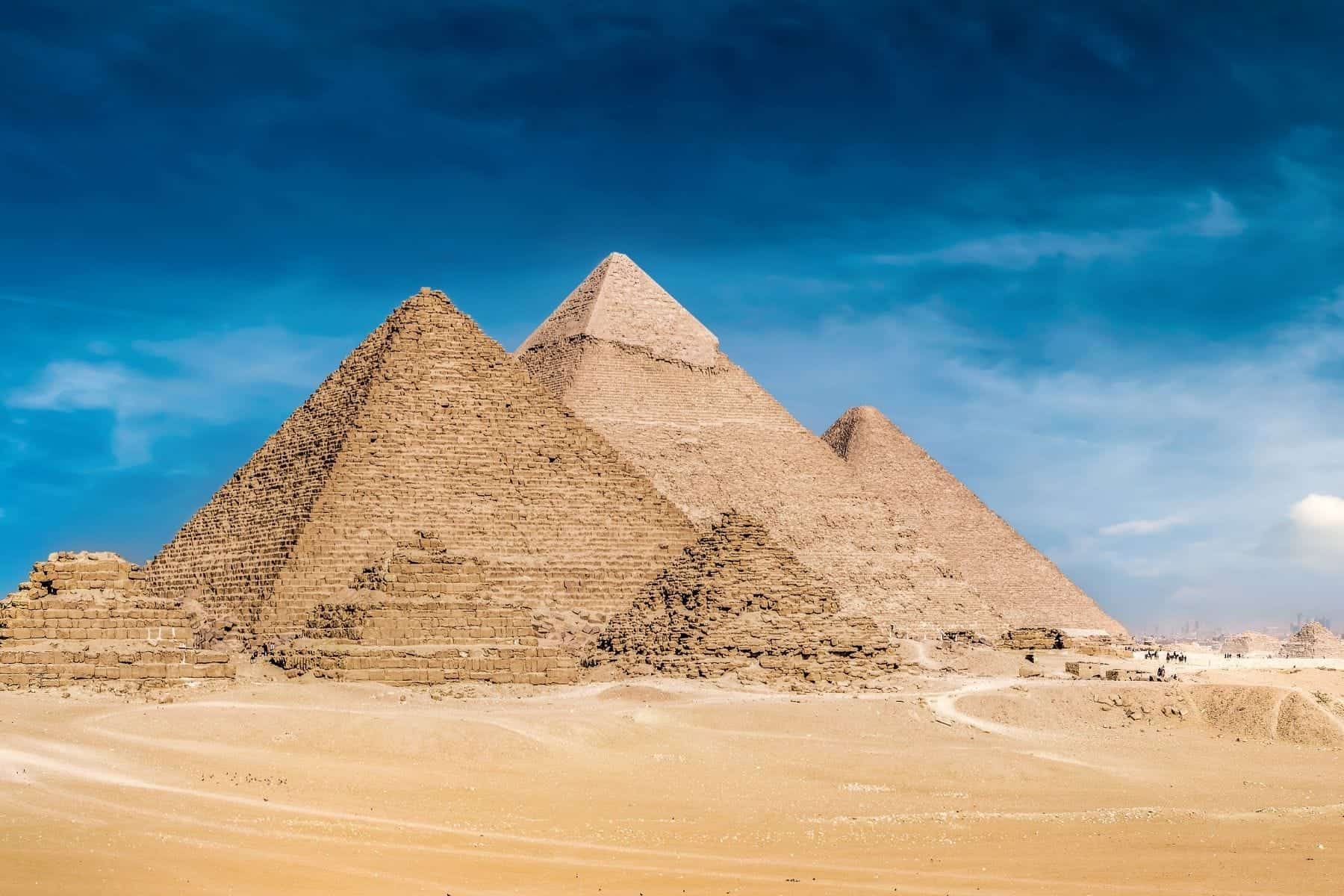
Commissioned by three ancient Egypt pharaohs thousands of years ago, the Great Pyramids of Giza marked an important milestone in human history. The construction required the work of more than 20,000 people. In 1979, the site was recognized as a UNESCO World Heritage Site.
The site isn’t all about the pyramids. It’s a massive complex featuring burial tombs and temples.
Meanwhile, the Great Sphinx of Giza is a limestone sculpture on the Giza Plateau. It resembles a mythical Greek creature with a human face and a lion’s body. It was built during the time of Pharaoh Khafre.
Millions of people flock to Giza annually to see these attractions, so carefully planning your visit is vital. A half-day tour of both sites costs 37.8 USD. If you have an entire day to spare around the complex and want to make the most of your trip, you can avail of the full-day guided tour that costs 70 USD.
Statue of Liberty
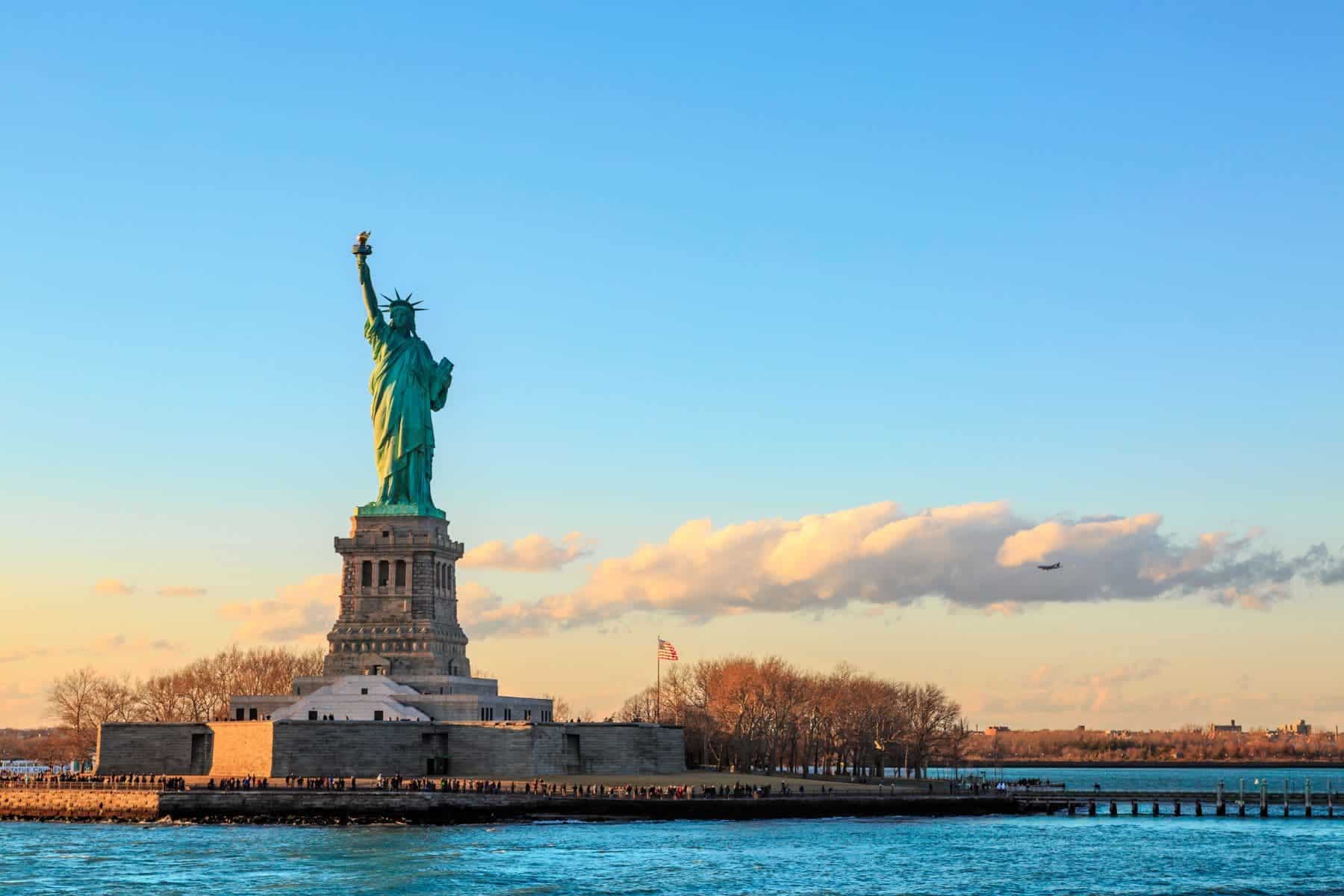
Location: New York, NY 10004, United States
Age: Dedication ceremony in New York, 1886
The Statue of Liberty is undoubtedly a national treasure of the US. A monumental gift from the people of France, it symbolizes freedom and hope.
The crown with spikes represents light extending out into the world. Meanwhile, the tablet has an inscription of July 4, 1776 to symbolize American independence. Yet, perhaps the most important symbol is the broken shackle and chains on the foot, denoting the abolition of slavery in the US.
Even though the idea was born in 1865, the construction of the Statue of Liberty began around 1875 and took roughly 10 years, fully making its way to New York in 1886. It began to arrive by water at the New York Harbor a year prior in 350 pieces.
To visit the famous Statue of Liberty, you need to board the ferry to Liberty and Ellis Islands. A Grounds Ticket includes roundtrip ferry transfers, audio tours, and access to the Ellis Island National Museum of Immigration and Statue of Liberty Museum. Tickets may be purchased up to six months in advance.
At the Statue of Liberty Museum, you’ll learn more about the monument’s history through interactive exhibits. Inaugurated in 2019, it’s an extension of the whole Statue of Liberty experience.
Taj Mahal
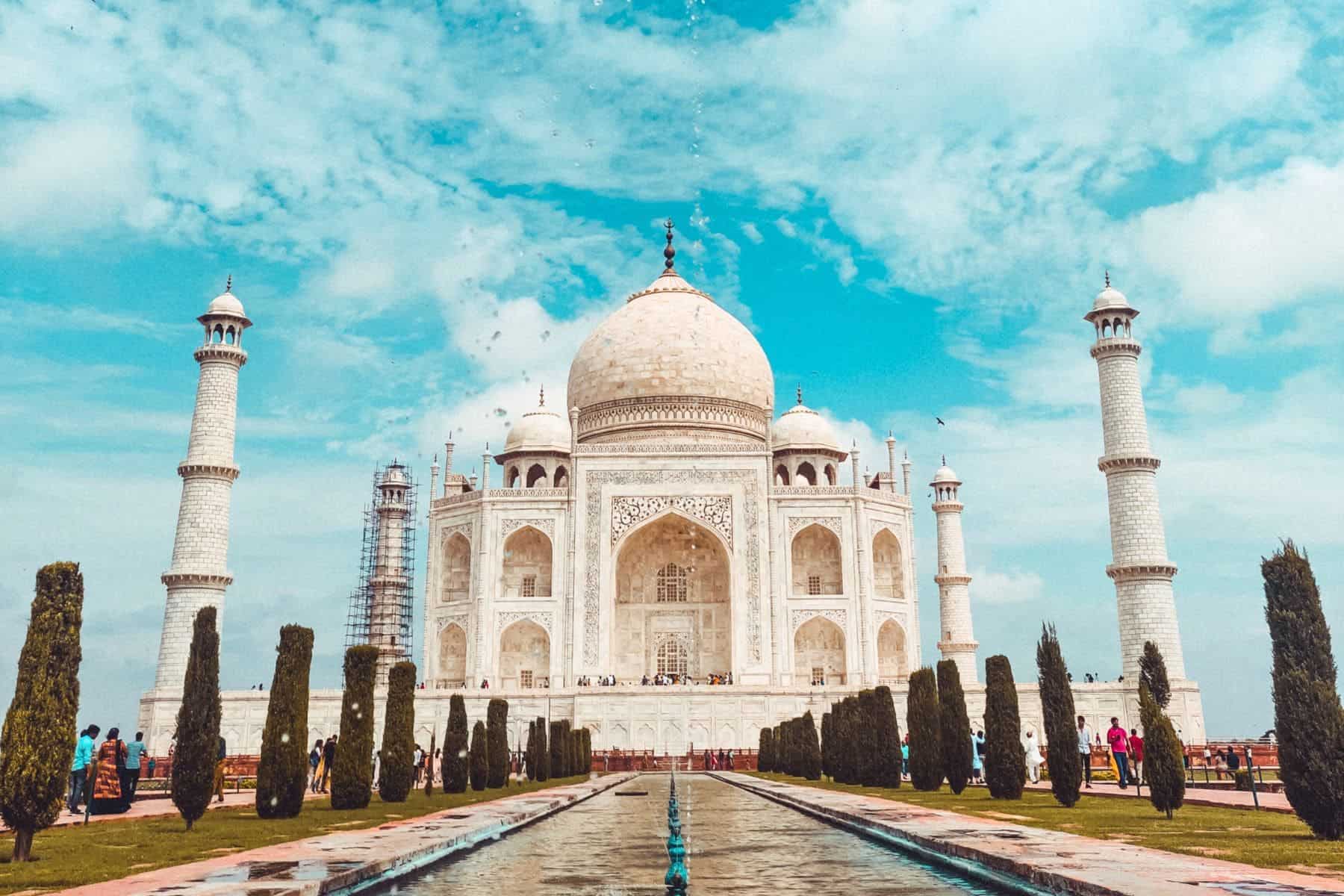
Location: Dharmapuri, Forest Colony, Tajganj, Agra, Uttar Pradesh 282001, India
Age: Constructed ca. 1632-1648
Constructed at the height of the Mughal Empire in the mid-17th century, Taj Mahal is considered the most sophisticated example of Mughal architecture. It combines the influences of Indian, Islamic, and Persian styles.
Shah Jehan commissioned this tomb for his wife, Arjuman Banu Begum. Due to its elegance, it is often called “the jewel of Muslim art”. Indeed, it’s such a romantic place you’d want to see with your partner.
The Taj Mahal draws millions of tourists each year. Ensure you purchase your ticket online. For guests aged 14 and below, admission is free.
Night viewing is possible during full moon nights. It starts at 8:30pm and ends at 12:30am. This tour is provided in 8 batches of up to 50 people. Each batch has 30 minutes to enjoy the viewing.
Visiting hours are from 30 minutes before sunrise and 30 minutes before sunset. Taj Mahal is open daily except on Fridays.
Machu Picchu
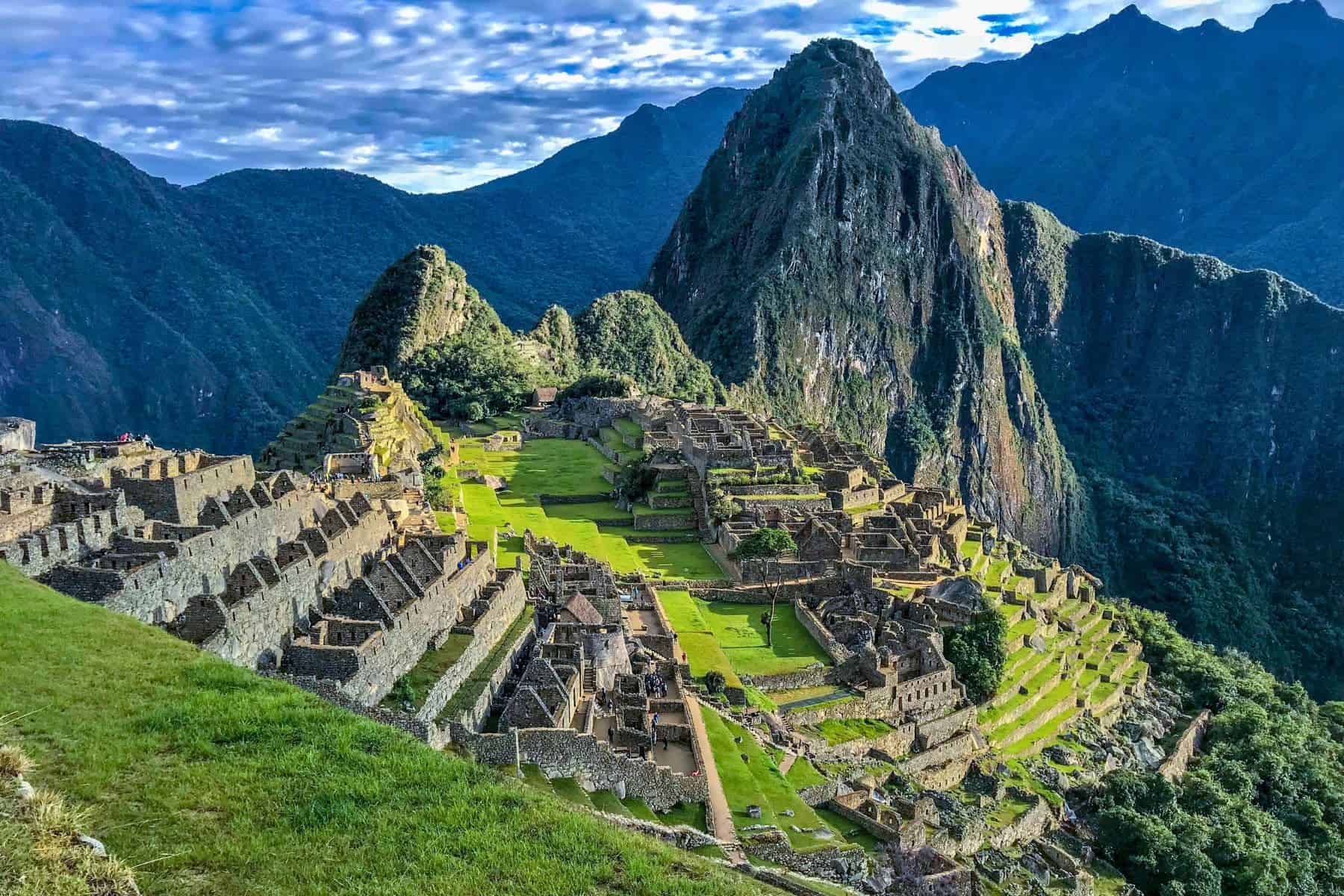
Location: Peru
Age: Construction estimated mid 15th and 16th century (1450-1550)
Machu Picchu is one of Peru’s most biodiverse areas, featuring over 60 archaeological sites over 37,302 ha of land. Arguably, its most important archaeological site is Llaqta, a legacy of the Incan civilization. Although abandoned during the late 16th century, this site remains well-preserved today.
There are two main sectors here: agricultural and urban. Agrarian terraces are found in the former, while the latter features many legendary structures.
You can explore the ruins and learn more about the Incan civilization by going on a guided tour. If you’re into outdoor adventure, you can hike in the Andes Mountains and camp by nightfall. Just make sure to book well in advance.
To see Machu Picchu in all its glory, you can climb to the top of Huayna Picchu. You can also see a couple of places of worship, such as the Temple of the Sun and the Temple of Condor. Another iconic point of interest is Intihuatana, a massive solar clock.
Pompeii
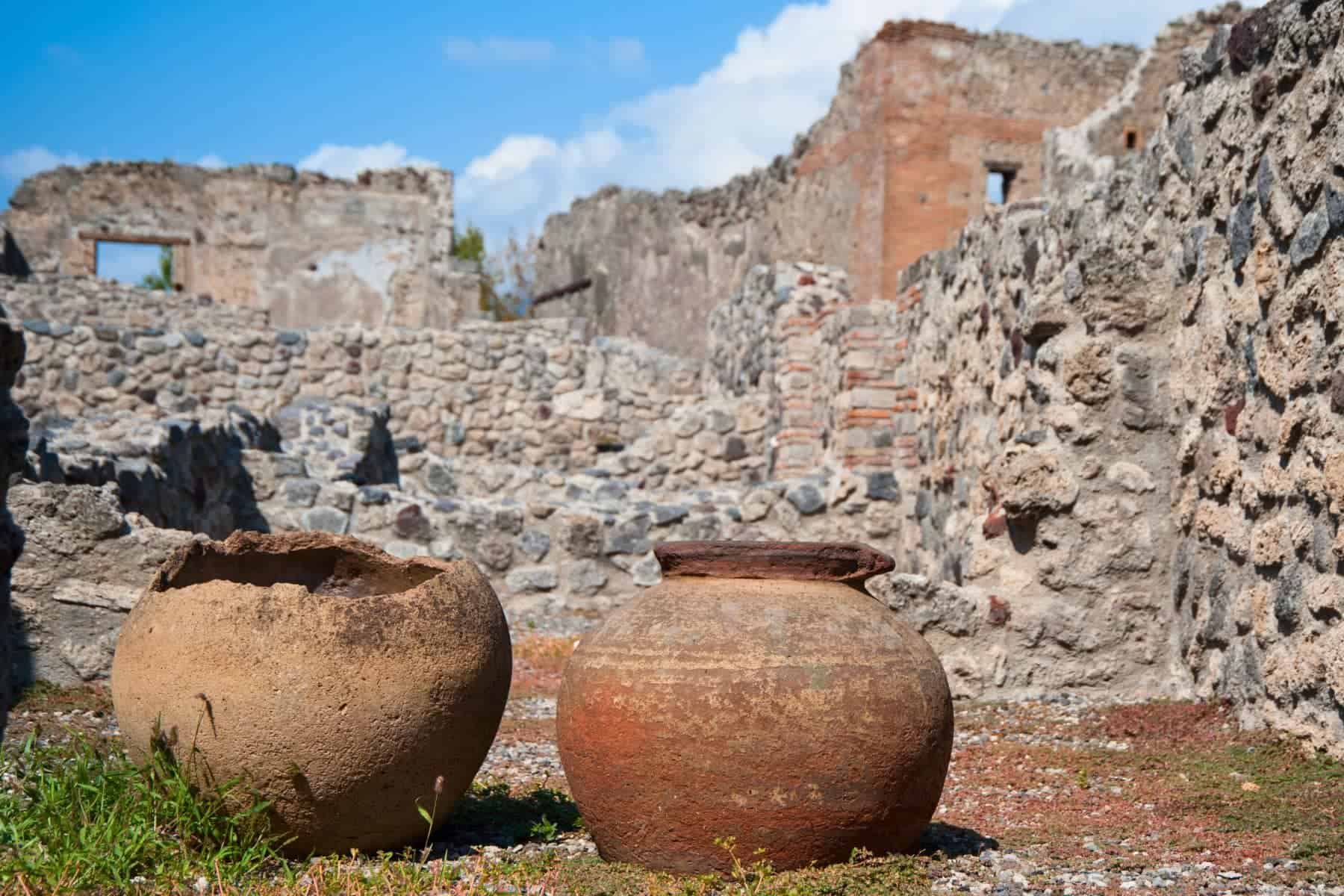
Location: 80045 Metropolitan City of Naples Italy
Age: Evidence dating back to 6th century BC. Estimated age 2500 years.
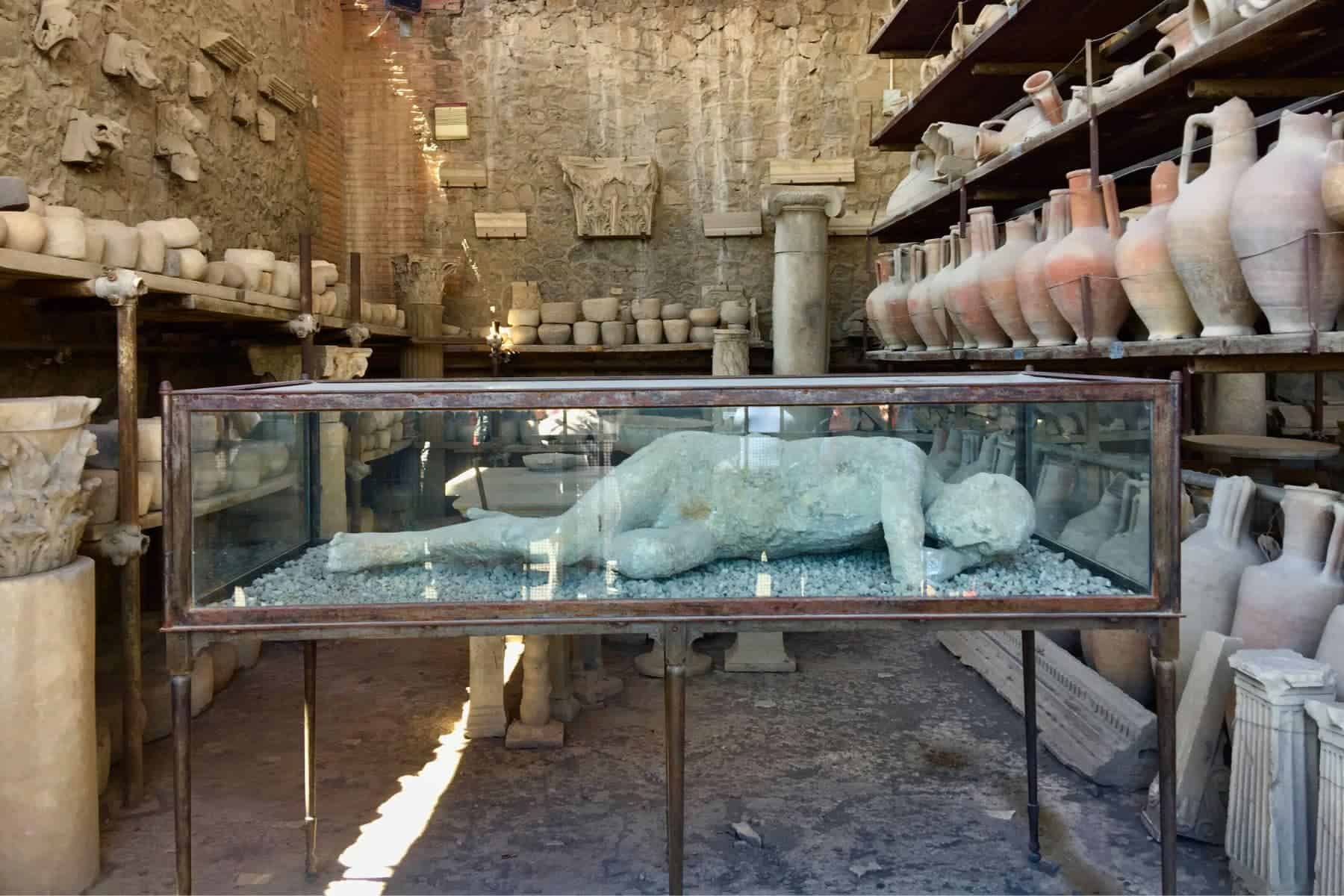
One of Naples’ most important archeological sites, Pompeii, sits at the foot of the famous Mount Vesuvius. When the volcano erupted in 79 AD, it was completely covered in ash. It was only unearthed in 1599.
The entire complex has numerous regions, so a day won’t probably be enough to explore everything to see here. Region VII has many points of interest, including Forum, Granai del Foro, and Terme del Foro.
Forum was the main square featuring several textile and produce shops. Next to it, you’ll find Granai del Foro, which showcases plenty of plaster statues. Terme del Foro features Roman baths.
In Region II, you’ll find Anfiteatro, where gladiator games were held. Next to it is Palestra Grande, a gymnasium where people used to play sports.
Region VI houses Casa del Fauno, Pompeii’s most elegant palace. This region also features Villa dei Misteri, a luxury villa with well-preserved wall paintings.
Opening hours vary depending on the season, so ensure you check out the website before visiting. Every first Sunday of the month, single-access tickets are free.
Basílica i Temple Expiatori de la Sagrada Família
Location: C/ de Mallorca, 401, 08013 Barcelona, Spain
Age: Groundbreaking 1882
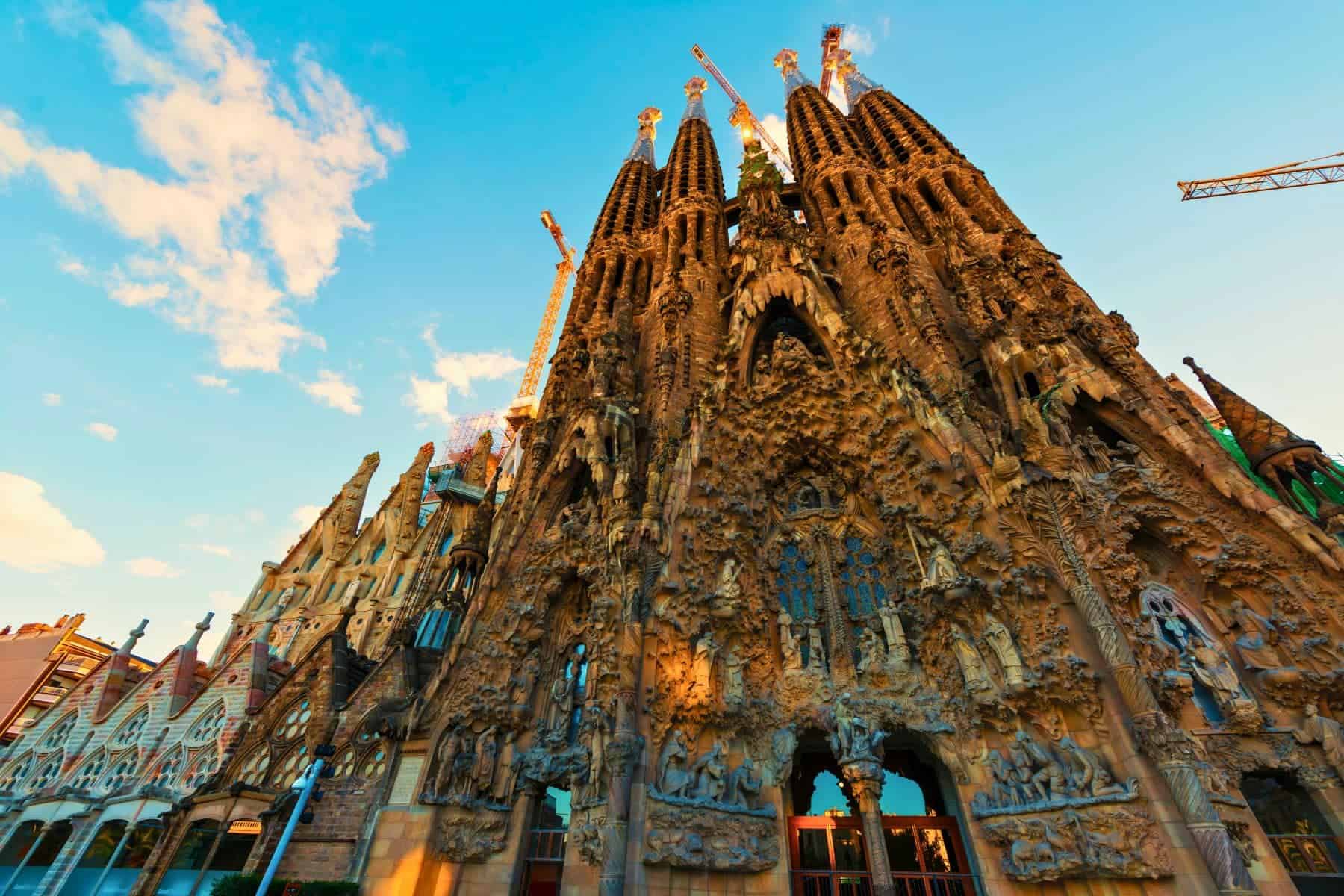
Basílica i Temple Expiatori de la Sagrada Família is the famous work of renowned architect Antoni Gaudi. Over a century since the foundations were laid, construction continues today.
Two of the four Evangelists’ towers were only completed in 2022. The other two are expected to be completed in 2023.
When you walk into the building the experience can only be described as walking into a fairytale, or a scene from Lord of the Rings. Tall stained-glass windows cast colored light across the halls, white pillars reach from the ground splitting as if growing into the ceiling, and everywhere you look there are new details with inspiration from nature.
You may get an individual ticket for as low as 26 EUR. This base price covers a self-guided tour that you can take with the help of the audioguide on the official Basílica i Temple Expiatori de la Sagrada Família app. This tour lasts for about 45 minutes. It is suitable for people aged 16 and above. An adult should accompany guests under 16 years old.
If you want to maximize your visit, you can get the Sagrada Familia With Guided Tour and Towers for 40 EUR. It includes a guided tour of roughly one hour. Nevertheless, you can continue exploring after the guided session. Aside from hearing fun facts about the basilica, you’ll get to see the breathtaking city views from one of the towers.
Catacombs of Paris
Location: 1 Av. du Colonel Henri Rol-Tanguy, 75014 Paris, France
Age: Established 1810
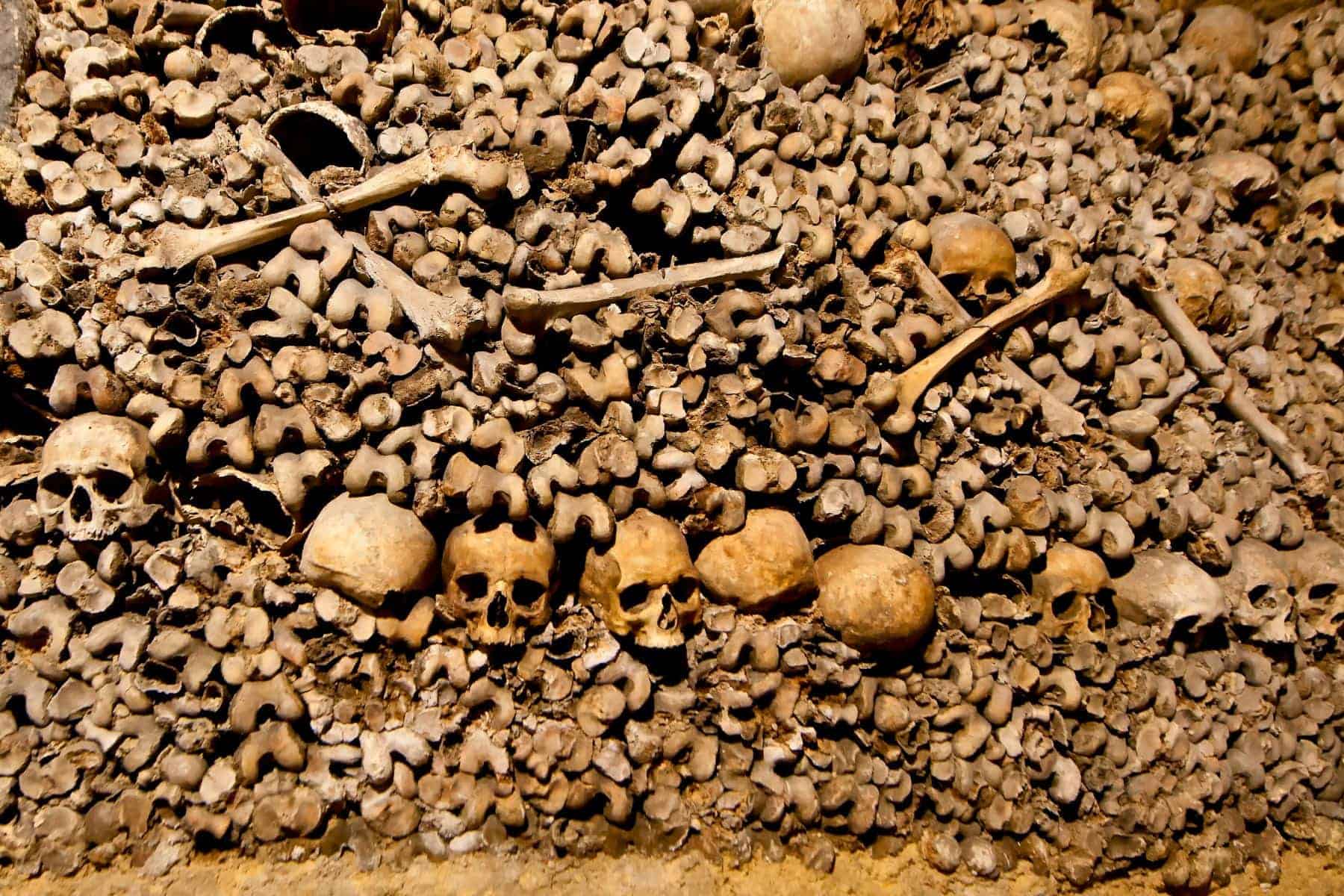
20m under the ground, you will enjoy uncovering an ossuary of millions of remains. The story of the Catacombs of Paris began in the late 18th century. At the time, the contents of Paris’ cemeteries were causing a public health crisis, so the authorities moved them to an underground location.
Before the municipal ossuary opened to the public in the early 1800s, Inspector Hericart de Thury transformed and made it an appealing tourist destination using a museographical approach. One of the goals is to encourage visitors to reflect on death.
Back in the 19th century, visiting schedules varied. Today, the site is a popular attraction open to the public. Regular admission for adults costs 29 EUR, including an audio guide. Tickets are available online, so ensure you buy one before visiting. On average, you’d be spending one hour touring around.
Guided tours are available in French at 6pm on Tuesdays and 1pm on Thursdays. Each tour lasts for two hours.
Mount Rushmore National Memorial
Location: 13000 SD-244, Keystone, SD 57751, United States
Age: Built 1941
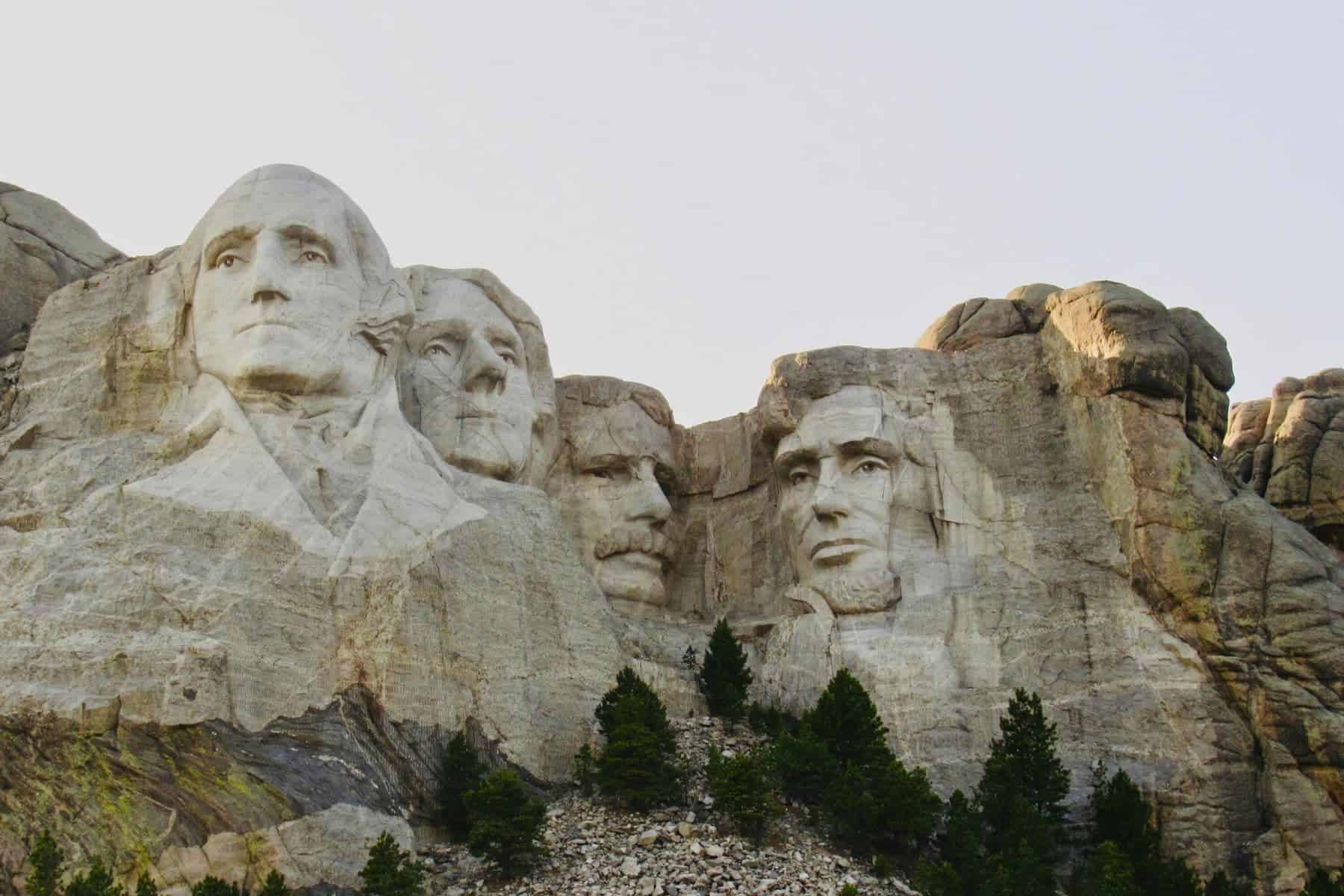
Mount Rushmore National Memorial is a tribute to four former US Presidents: Thomas Jefferson, Abraham Lincoln, Theodore Roosevelt, and George Washington. It recognizes their significant contributions to the fight for freedom and democracy.
The breathtaking Black Hills National Forest surrounds the memorial, so you can do plenty of outdoor activities here no matter what time of the year you visit. If you prefer to explore indoors, you can tour the Lincoln Borglum Museum and Sculptor’s Studio. You can go on your own or join a ranger-guided tour.
If you’re visiting between May and September, you can enjoy night viewing in the amphitheater. The Evening Sculpture Lighting Ceremony isn’t one to miss during these months.
After exploring, you can get commemorative items, many of which are sustainably and locally made, at the gift shop.
The good thing about Mount Rushmore National Memorial is that admission is free. You only need to pay for parking if you are bringing and parking a car in the vicinity.
Sistine Chapel
Location: 00120 Vatican City
Age: Completed 1512
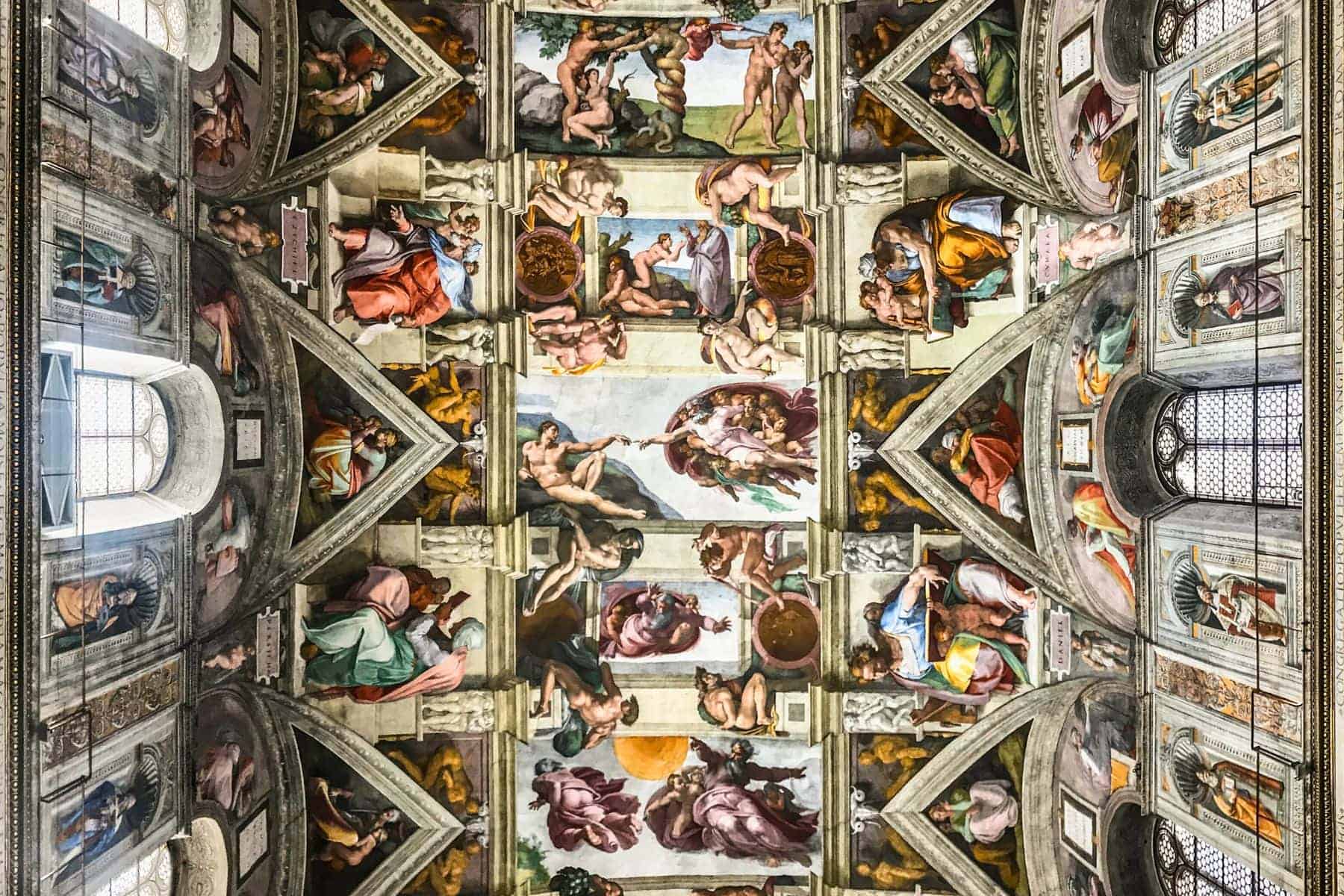
Named after Pope Sixtus IV della Rovere, who commissioned the restoration of the old Cappella Magna in the 15th century, the Sistine Chapel is known for its decorative walls and ceiling. The central panels display the Stories of Genesis, from the creation story to Noah’s story.
Visiting days vary per year. For 2023, visitors can enjoy free admission from 9am to 2pm every last Sunday of the month, as long as this day doesn’t coincide with certain holidays. Regular hours are from 9am to 6pm daily, except on Sundays.
A full entry ticket with online booking costs 22 EUR. Meanwhile, one purchased onsite costs 17 EUR. Buying tickets online is highly recommended so that you can skip the possibly long queue onsite on the day of your visit. This ticket already includes access to Sistine Chapel and all Vatican Museums.
Absolute silence must be observed in the chapel. You can view informative panels along the exhibit itinerary in the Courtyard of Pinecone and Square Garden.
Neuschwanstein Castle
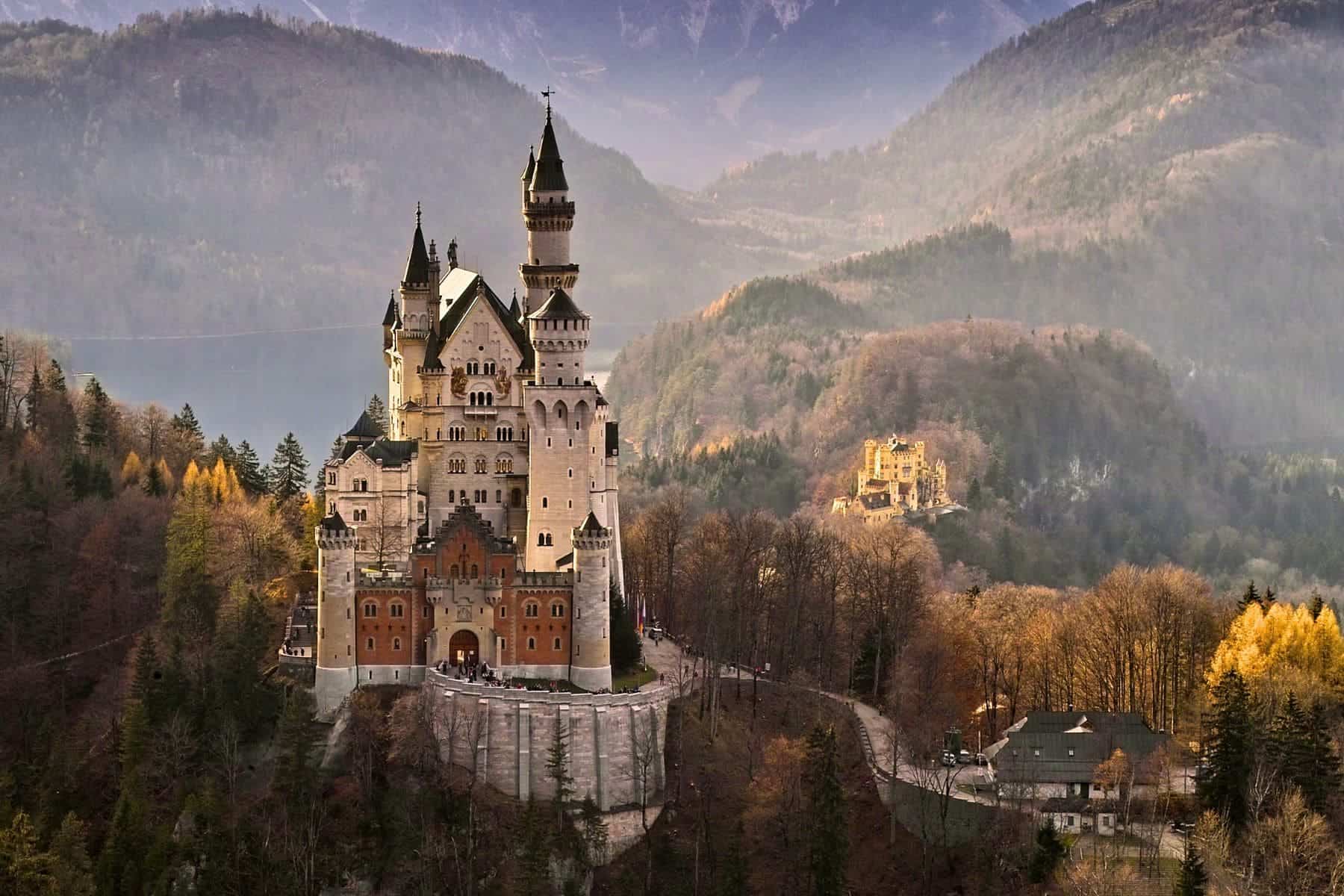
Location: Neuschwansteinstraße 20, 87645 Schwangau, Germany
Age: Opened ca. 1886
Neuschwanstein Castle was constructed in the late 19th century after King Ludwig II of Bavaria declared to rebuild the old castle ruin near Pollat Gorge. As he became increasingly obsessed with protecting his royal dignity, he changed the original plans over the years. The supposed Audience Room became a Throne Room.
On the second level, you will find Cafe & Bistro, where you can enjoy refreshing drinks after your tour. Also, a free multi-vision show about the king and his renowned castles is available on this floor.
Self-guided tours of the castle aren’t allowed. An admission ticket entitles you to join a guided tour at a specified time. You may purchase your tickets online. Buying one onsite isn’t recommended, as tickets are subject to availability and may only be used on the same day they’re purchased.
A single admission ticket for adults costs 15 EUR. Guests aged under 18 are entitled to free admission.
Neuschwanstein Castle is open daily to visitors, except on December 24, 25, and 31, and January 1. Operating hours are from 9am to 6pm between April and mid-October, and from 10am to 4pm between mid-October and March.
Uluru
Location: Petermann NT 0872, Australia
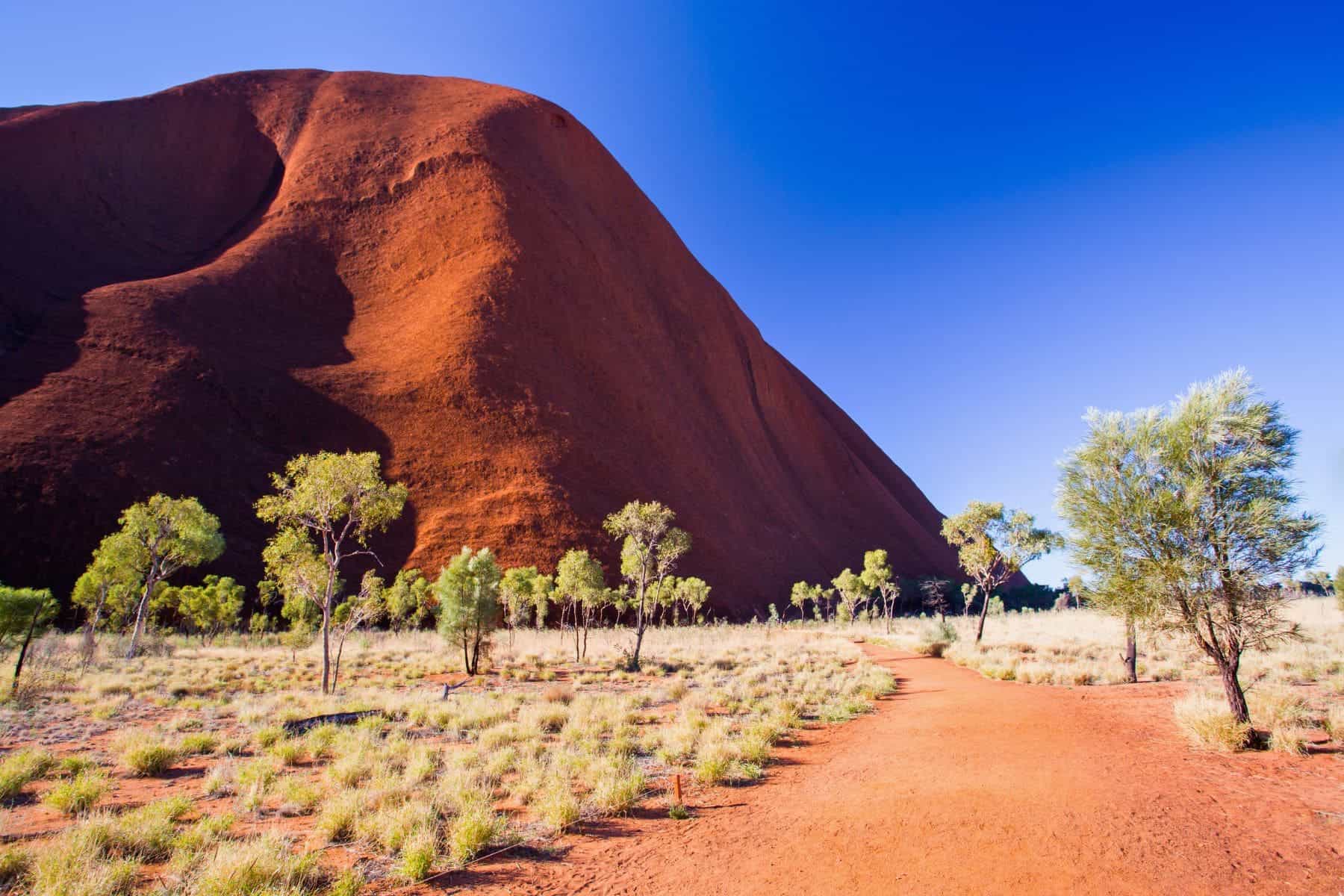
Despite Uluru’s remote location, it has always been one of Australia’s most sought-after destinations. One of the most fascinating things about it is the changing hues of crimson and terracotta as the sun sets each day. To see it change colors, ensure you visit around sunrise or sunset.
This ancient monolith is even more impressive up close. Feel free to touch it during your visit.
To the Anangu people, this monolith is sacred and special. It is believed to have been formed in the earliest period, Dreamtime.
Although Uluru is 863 m above sea level, it isn’t the world’s tallest monolith. Mount Augustus is.
Back then, climbing to the top of the rock was possible. A climb chain was installed in 1964. However, the climb was permanently closed in 2019.
Uluru is so massive that the base walk is about 10 km. You can complete it in roughly 3.5 hours.
Mount Fuji
Location: Kitayama, Fujinomiya, Shizuoka 418-0112, Japan
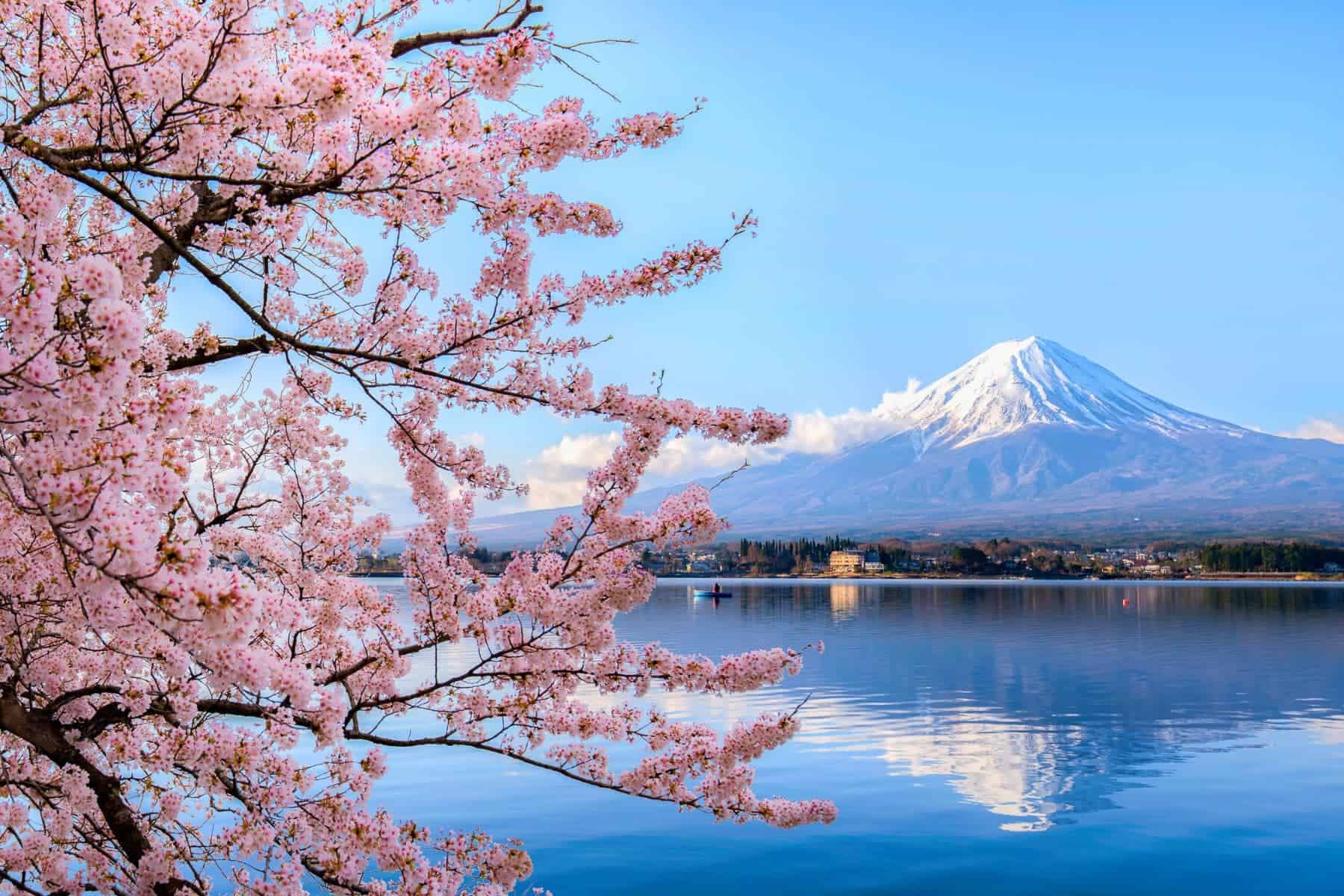
Mount Fuji is Japan’s tallest mountain, standing at 3,776 m above sea level. Aside from its height, it is famous for its stunning conical form. At the summit is the crater with a diameter of about 500 m.
Tourism around the mountain is highly developed and plays a significant role in the local economy. You will find many ski resorts and amusement parks in the area. The Fuji Five Lakes surround the volcano: Lake Kawaguchi, Lake Motosu, Lake Sai, Lake Shoji, and Lake Yamanaka.
Since the volcano is considered sacred in Japanese culture, it’s no surprise that plenty of shrines and temples also surround it.
Numerous information centers surround Mount Fuji to help visitors and climbers with their trips. You don’t have to climb to the peak to enjoy it. With the 100 Scenes With Mount Fuji project, you can see spectacular mountain views from Fuji-Hakone-Izu National Park and the surrounding area.
There is also an observation deck at Yoshida Trail’s fifth station. The sunrise is best seen here, if not at the mountaintop.
Hạ Long Bay
Location: Thành phố Hạ Long, Quảng Ninh, Vietnam
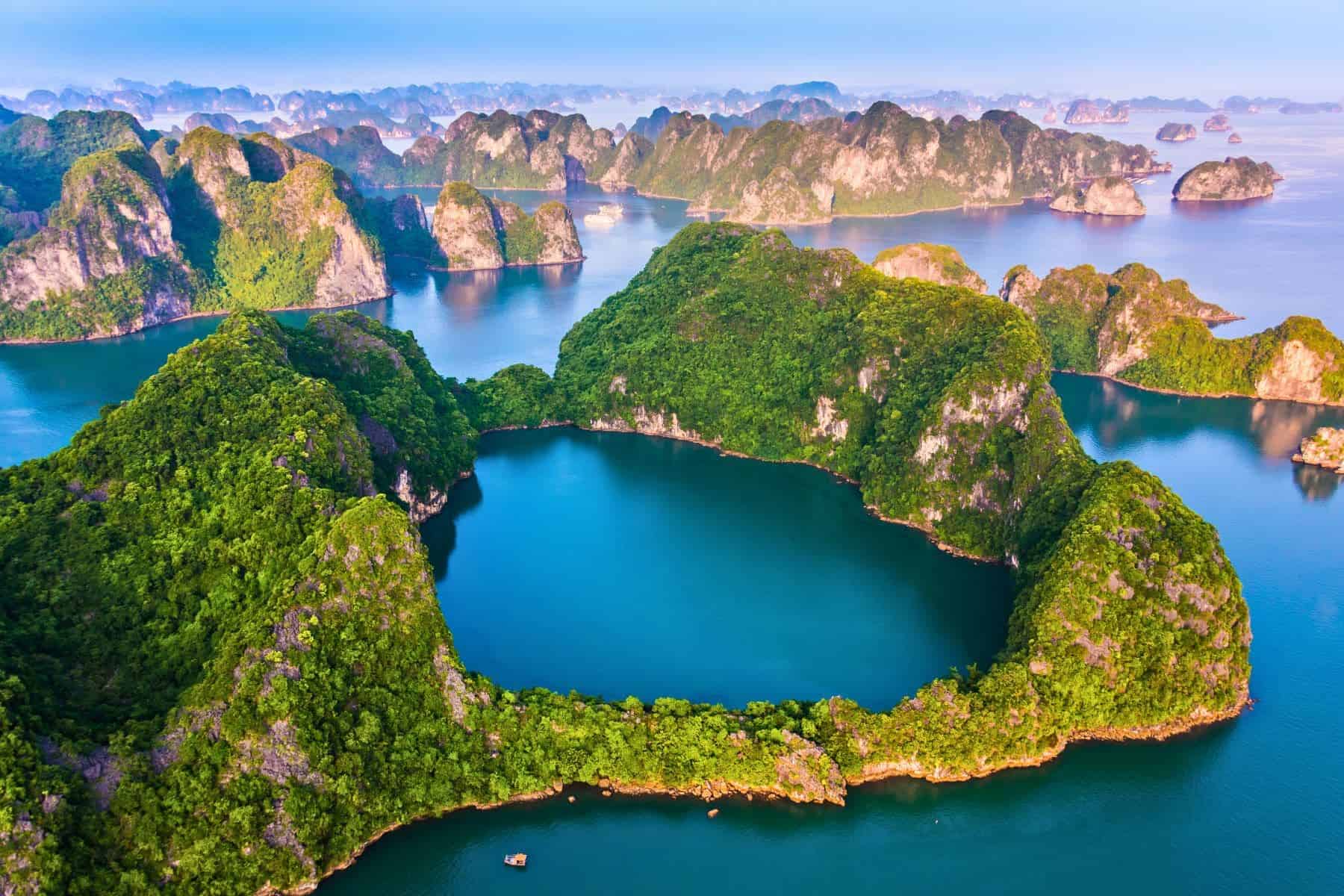
Featuring more than 1,600 islands and islets, most of which are uninhabited, Hạ Long Bay boasts unrivaled scenic beauty. It is a paradise of limestone pillars and sparkling blue waters. Considered an excellent example of a mature Karst landscape, it is unsurprisingly a well-protected UNESCO World Heritage Site since 2000.
The area’s biodiversity is also pretty spectacular. It is home to over 450 Mollusc species and 200 types of fish.
On average, nearly 3 million people go here annually. You can enjoy plenty of activities on the water other than going on a cruise, such as kayaking, scuba diving, and squid fishing.
You can also explore on land by trekking around Cat Ba National Park. You’ll have fun navigating through forests and streams.
If you’re visiting sometime in April or May, don’t miss Halong Tourism Week, the biggest and most anticipated event in the area each year. The event is essentially a celebration of Vietnam’s colorful culture.
Considering weather conditions, the best time to visit Ha Long Bay is between October and April.
Salar de Uyuni
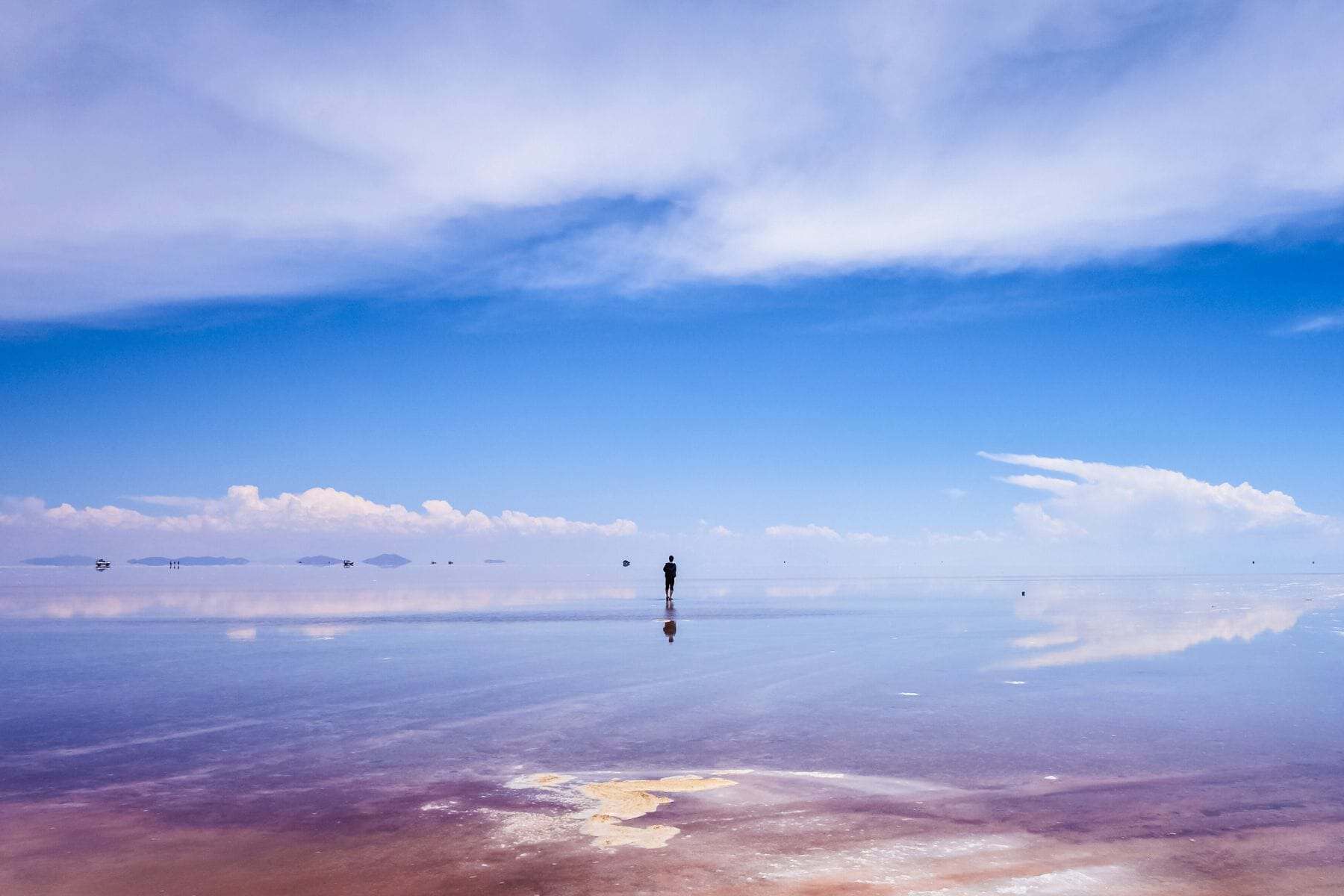
Location: Bolivia
Salar de Uyuni is the most enormous salt flat worldwide. With layers and layers of white salt sandwiched between sedimentary deposits, an estimated 10 billion tonnes of salt is present. Beneath it is about 70% of the planet’s lithium reserves.
You can explore the vista on a three- or four-day tour on a 4×4 vehicle. You can visit anytime of the year, but if you want to see the famous mirror effect, come between March and April. For the best weather conditions, schedule your visit around July and October.
Note that the salt flat isn’t the friendliest to vehicles. Don’t be surprised if your car suddenly breaks down in the middle of the road. Nevertheless, the tour drivers are experienced and used to these situations. They’re equipped to resolve these issues on the road.
During a tour, you’ll stop at Train Graveyard. The tour guide will give you an overview of the site’s history and how the salty winds caused old carriages to rust.
Alps
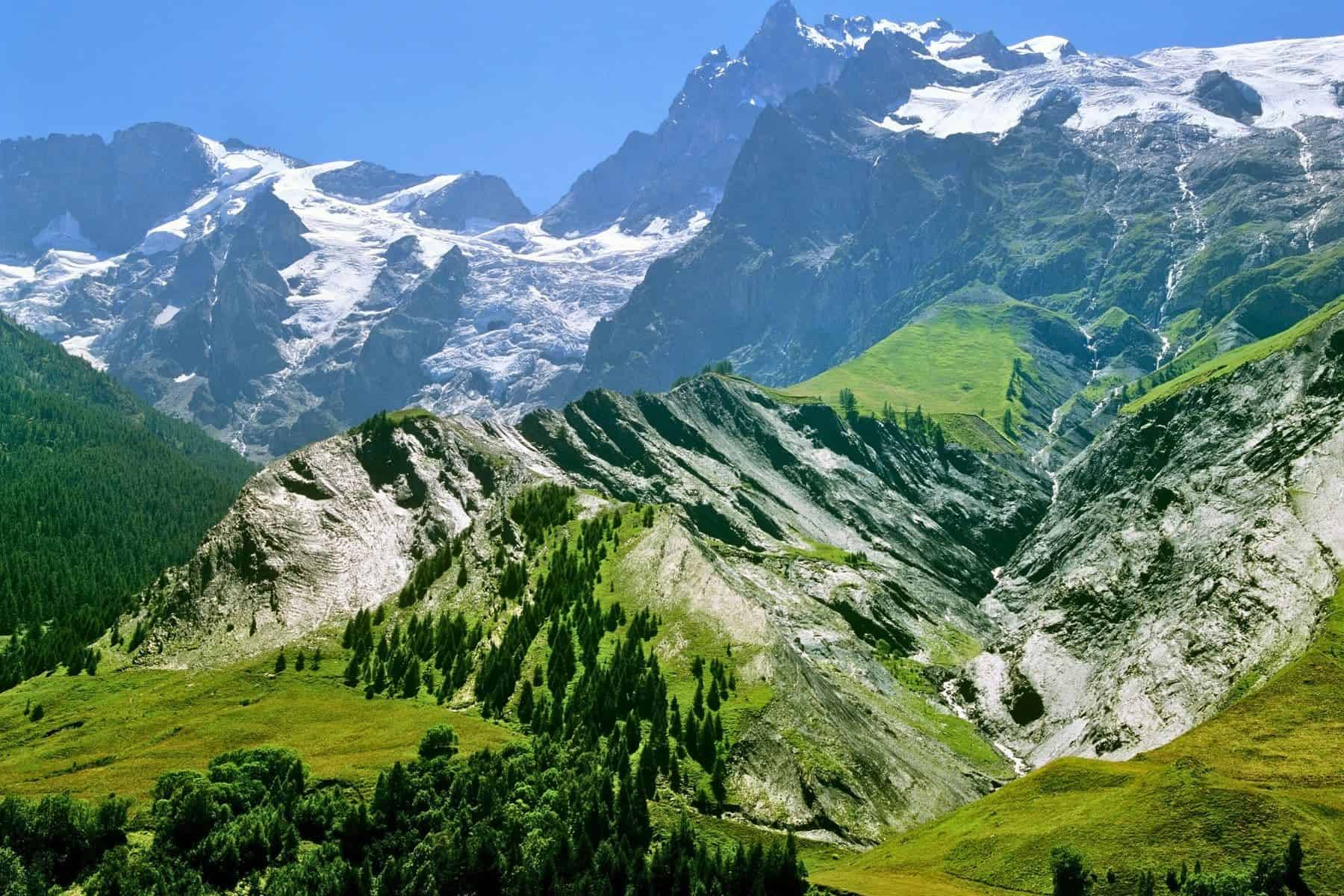
Location: Parts of France, Italy, Switzerland, Germany, Austria, Croatia, and more
The Alps are so massive that it covers multiple countries, stretching from Lake Geneva in Switzerland to the Swiss-Austrian border. It has 48 mountain peaks surrounded by numerous lakes, and an abundance of flora and fauna.
This mountain range has always been a symbol of Switzerland. Covering 60% of the nation’s surface area, it holds great geopolitical and historical significance.
Of course, one of the best things to do here is skiing. Ski season is usually between November and March. If you prefer fewer crowds and more affordable rates, consider skiing during January and March. The most famous ski resorts in the area include St. Moritz and Zermatt.
Hiking is also a popular activity in the area. Some of the best hiking destinations are Lauterbrunnental Glacial Valley, Mount Rigi Panorama Trail, and Val Trupchun Hiking Trail.
Food in the Alps is also pretty incredible. Most restaurants use fresh milk and high-quality meat from locally grown cows. After eating, you can indulge yourself in fine Swiss wine.
Mount Vesuvius
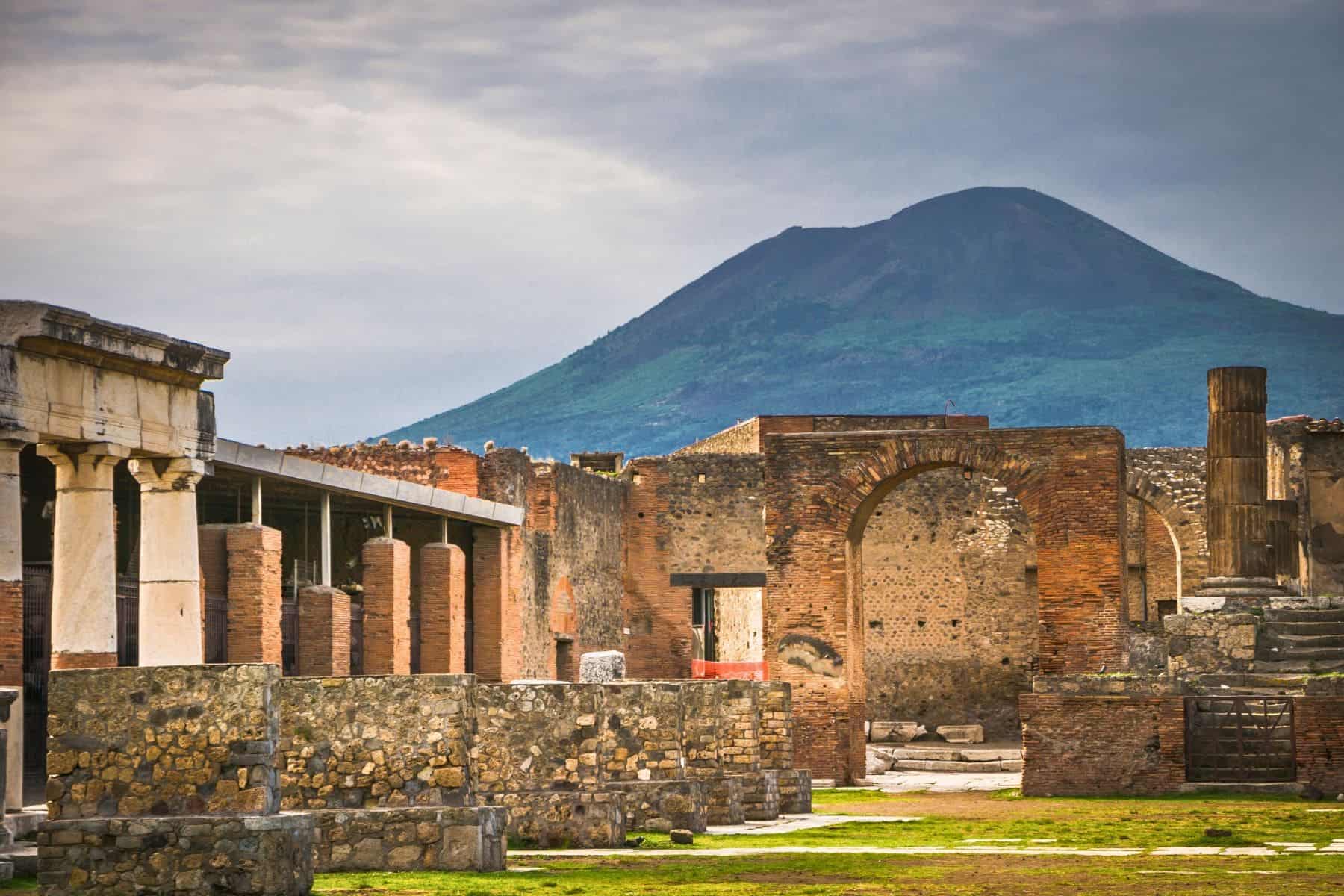
Location: 80044 Ottaviano, Metropolitan City of Naples, Italy
Mount Vesuvius is the most famous modern day volcano in the world. It famous erupted in 79 AD and buried the entire city of Pompeii
With its rich history and fascinating structure, Mount Vesuvius is one of the world’s most famous volcanoes. Its current structure resulted from the merging of Mount Somma, an external cone, and Vesuvius, an internal cone, due to eruptions. Today, it is constantly monitored to control its activity.
The volcano sits within Vesuvius National Park. This park has 54 km of walking paths that you can explore to appreciate the area’s rich biodiversity. Perhaps the most exciting experience here is going to the crater.
During your trip, ensure you stop by the Museum of the Vesuvius National Park at the heart of Villa Regina. Dedicated to preserving and telling the story of the volcano and the surrounding area, it features informative panels and installations. The exhibit displays the geological evolution of the volcano and the development of life around it.
The surrounding vineyards are also worth adding to your itinerary. The area is known for cultivating Piedirosso and Coda di Volpe grapes.
Niagara Falls
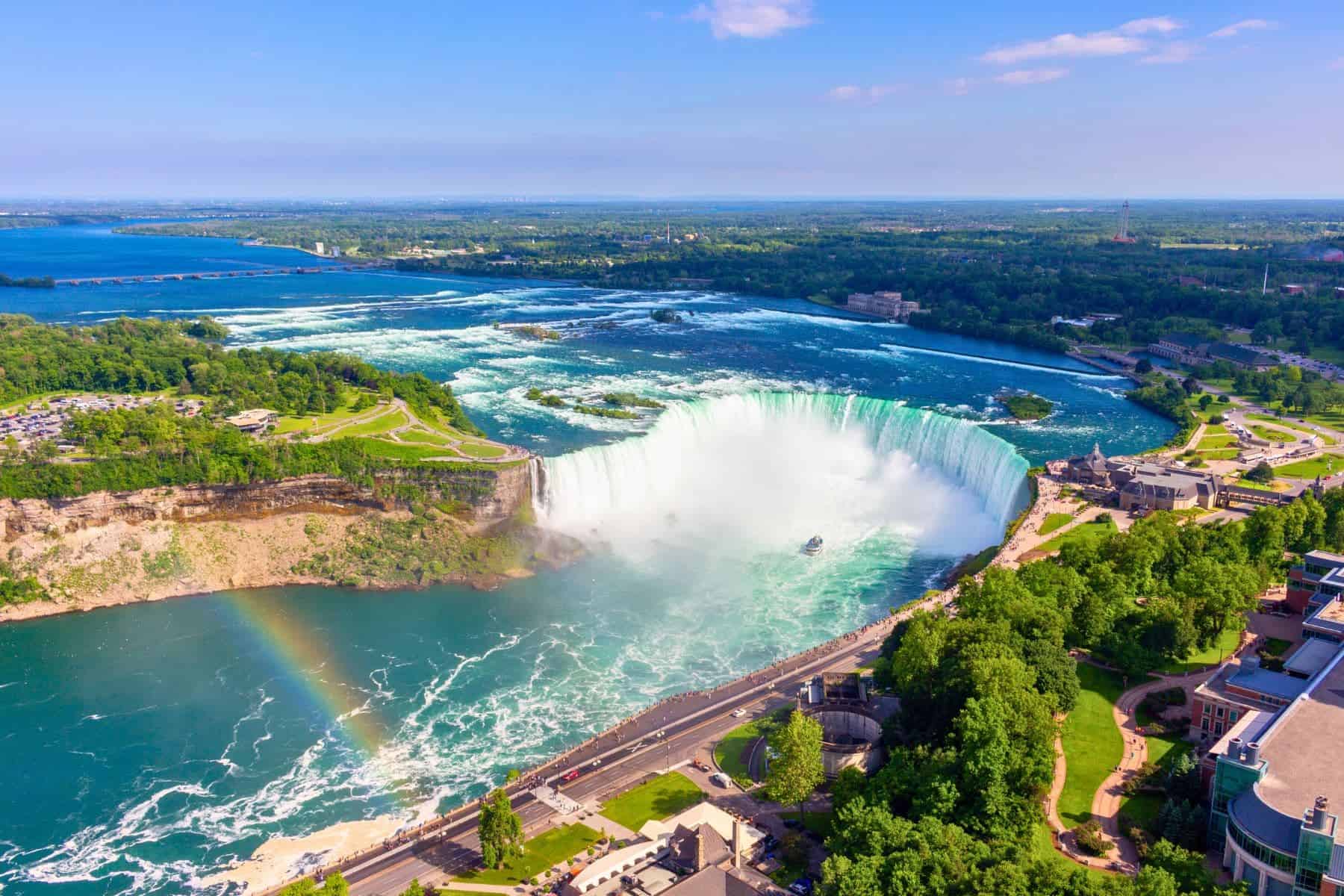
Location: Niagara Falls, NY 14303, United States
Niagara Falls is believed to have been formed over 10,000 years ago. It’s the apex of the free-flowing waters of the four Great Lakes: Lake Erie, Lake Huron, Lake Michigan, and Lake Superior. The water falls at a speed of 32 ft per second.
The falls are protected within Niagara Falls State Park, which is open 24/7 year-round. Founded in 1885, it is the oldest state park in the US. It was designed by the famous Frederick Law Olmsted.
Every night, the state park illuminates the falls for an unforgettable view for visitors. Fireworks displays are also available seasonally.
Aside from being a popular attraction, Niagara Falls is a significant energy source. It can produce more than 4 million kW of electricity.
The area is also recognized for its biodiversity. In 1996, Niagara River Corridor was designated an Important Bird Area (IBA). Moreover, it provides a home to many of New York’s protected animal species, such as the American Bald Eagle and Peregrine Falcon.
Lake Garda
Location: Italy
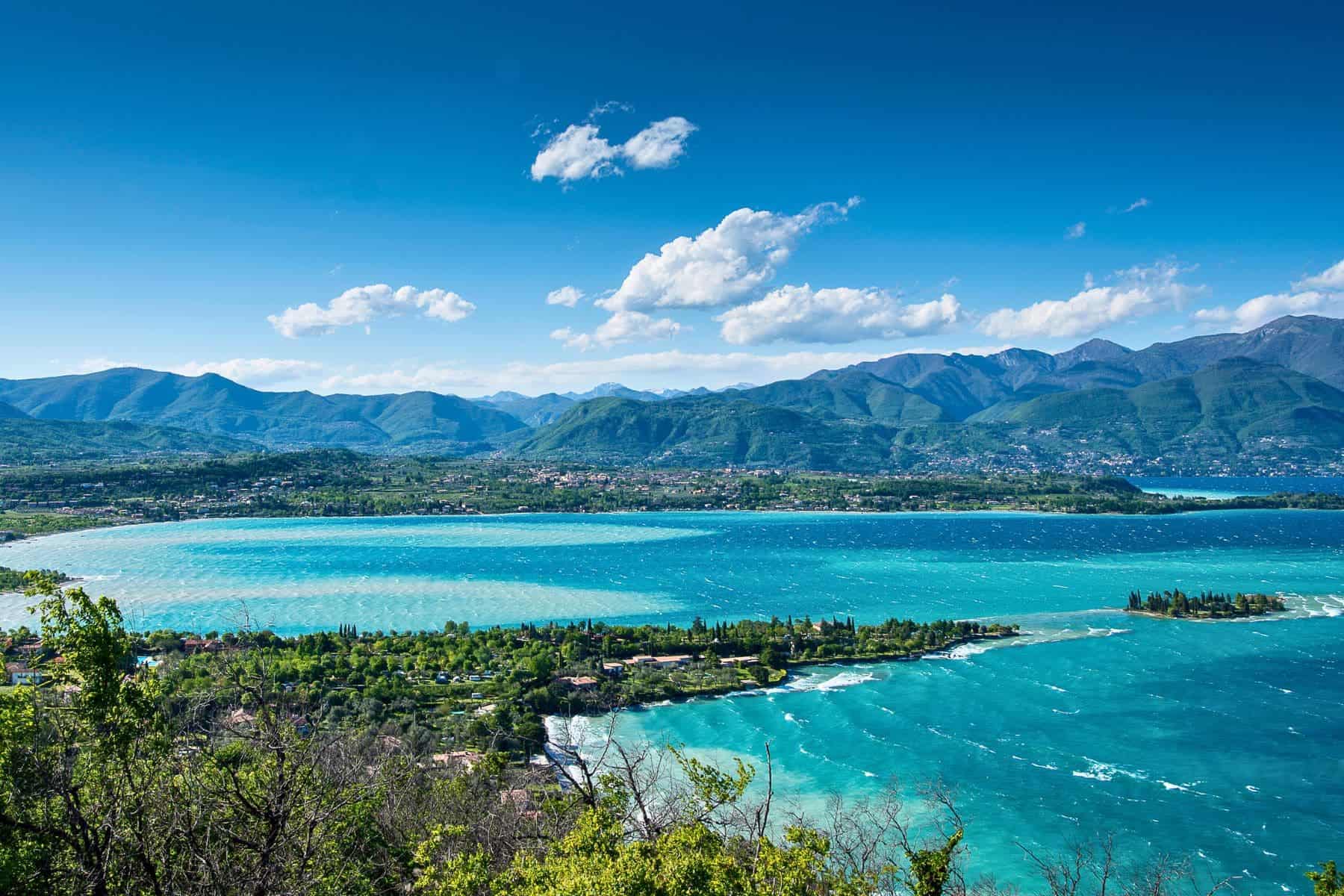
Italy’s biggest lake, Lake Garda, is surrounded by incredible scenery and biodiversity. It offers many exciting recreational opportunities, especially for outdoor enthusiasts. Specifically, it is most famous for sailing and windsurfing. Other water-based activities include canyoning and kite surfing. Of course, you can also explore underwater by diving.
The surrounding area allows for horseback riding. Free climbing and mountain biking are also possible.
The area features unique lemon houses that produce the lemons widely used in many local recipes, including beverages and sweets.
The medieval villages and sophisticated villas surrounding Lake Garda offer a trip to the past. During your trip, ensure you include Palazzo Bettoni in your itinerary.
The lake and its surroundings are popular among millions of tourists not only because of the scenery but also because of the mild Mediterranean climate most days of the year. Exploring outdoors is much easier when it’s not extremely hot, cold, or raining heavily.
Yellowstone National Park
Location: Wyoming 82190 USA
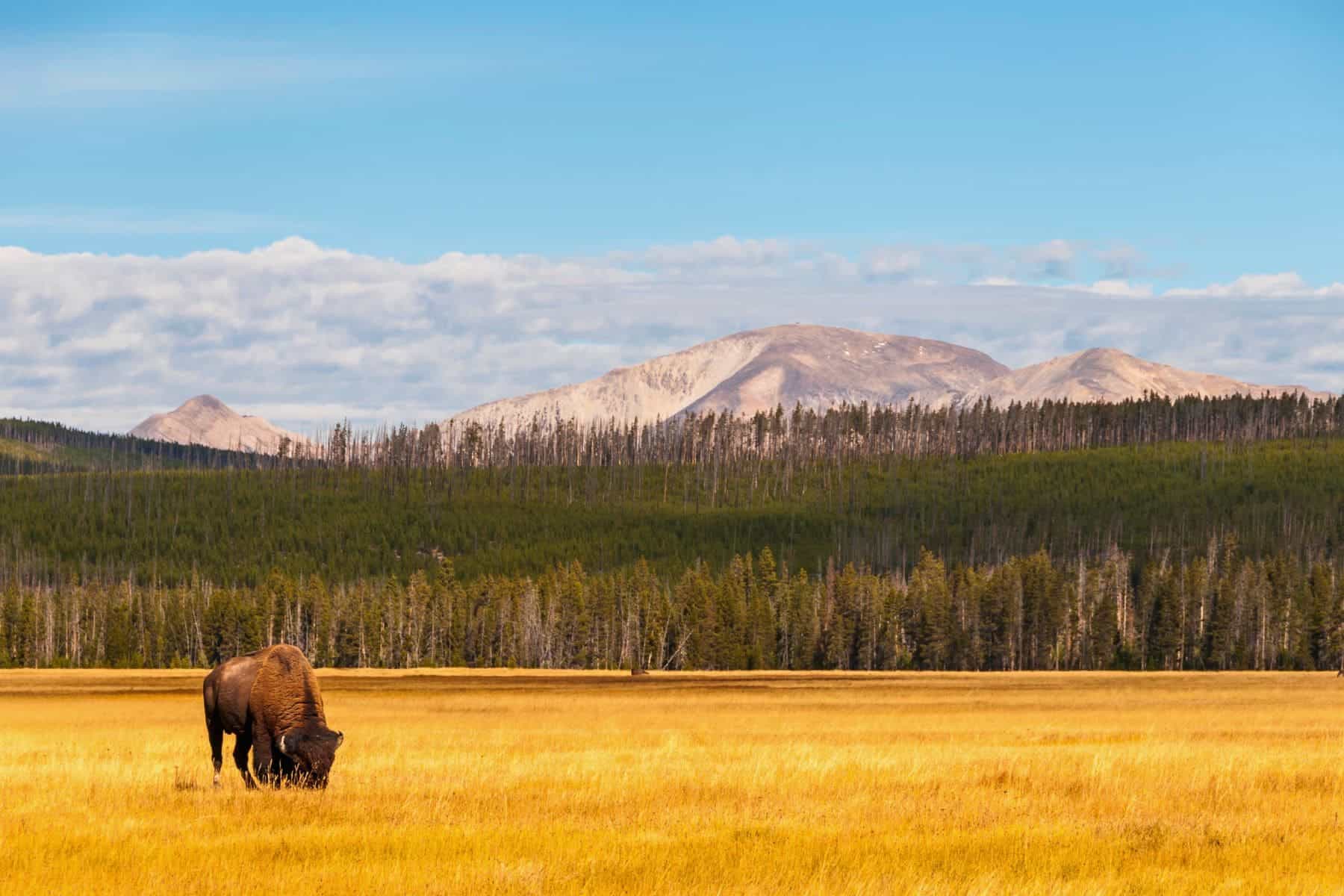
Yellowstone National Park is the first national park worldwide, having opened in 1872. It covers over 2.2 million acres, providing a home to abundant wildlife, incredible landscapes, and geothermal areas.
The park has numerous visitor centers. At Albright Visitor Center, you can get all the information you need before exploring the park. It features exhibits to help you learn more about the park’s history and the wildlife in the area. If you want to join a ranger program or obtain a fishing permit, it’s the place to go. It’s open daily between 9am and 5pm, except on certain holidays.
At Canyon Visitor Education Center, the focus is on the park’s geological history. It operates daily from 8am to 6pm daily, except on some holidays. It has restrooms open 24 hours a day.
Fishing Bridge Visitor Center and Trailside Museum occupies one of the prototypes of park buildings. It showcases the ecology of Yellowstone Lake, with a particular focus on birds. You can also get a fishing permit here. It is open daily between 8am and 6pm, except on certain holidays.
Cave of the Crystals
Location: Terreros 7, 33640 Naica, Chih., Mexico
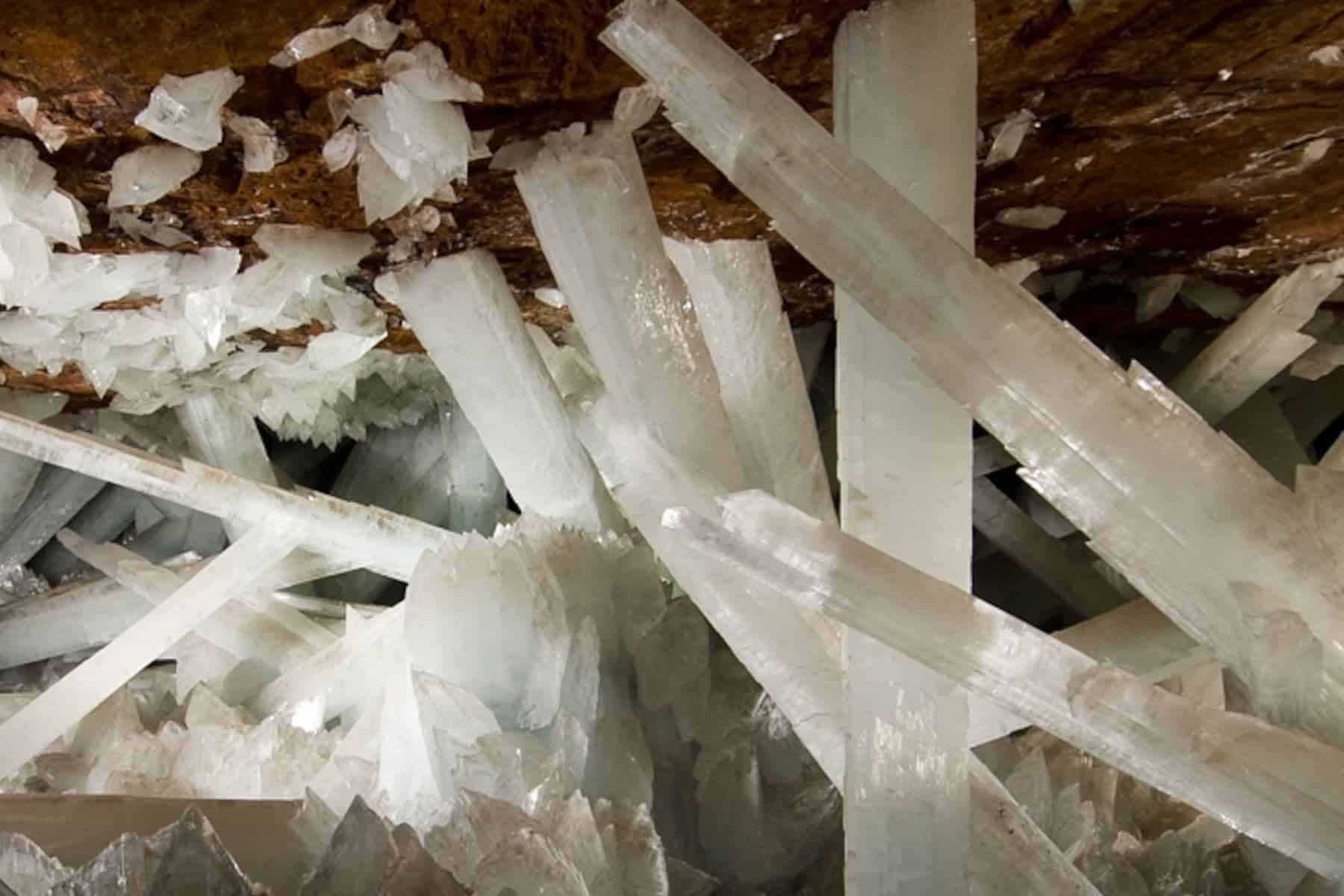
Featuring crystals measuring up to 12 m long and weighing over 55 tons each, Cave of the Crystals is known for having some of the largest crystals in a cave. They are so massive that some can be easily walked on. What’s more fascinating is that these crystals can even grow further.
The crystals were only discovered in 2000 when two miners uncovered the cave while pursuing silver. Under the cave is a pool of magma, the heat of which makes the entire cave extremely hot and humid. It’s so hot that you can’t spend more than a few minutes inside without cooling suites. Even with a cooling suit on, the most you can spend inside is about 45 minutes.
Scientists consider the crystals significant in studying the planet’s geological history. To protect and preserve these natural wonders, the cave isn’t open to visitors. On top of that, the cave isn’t really conducive for tours because of the unbearable heat.
Preikestolen
Location: 4129 Songesand, Norway
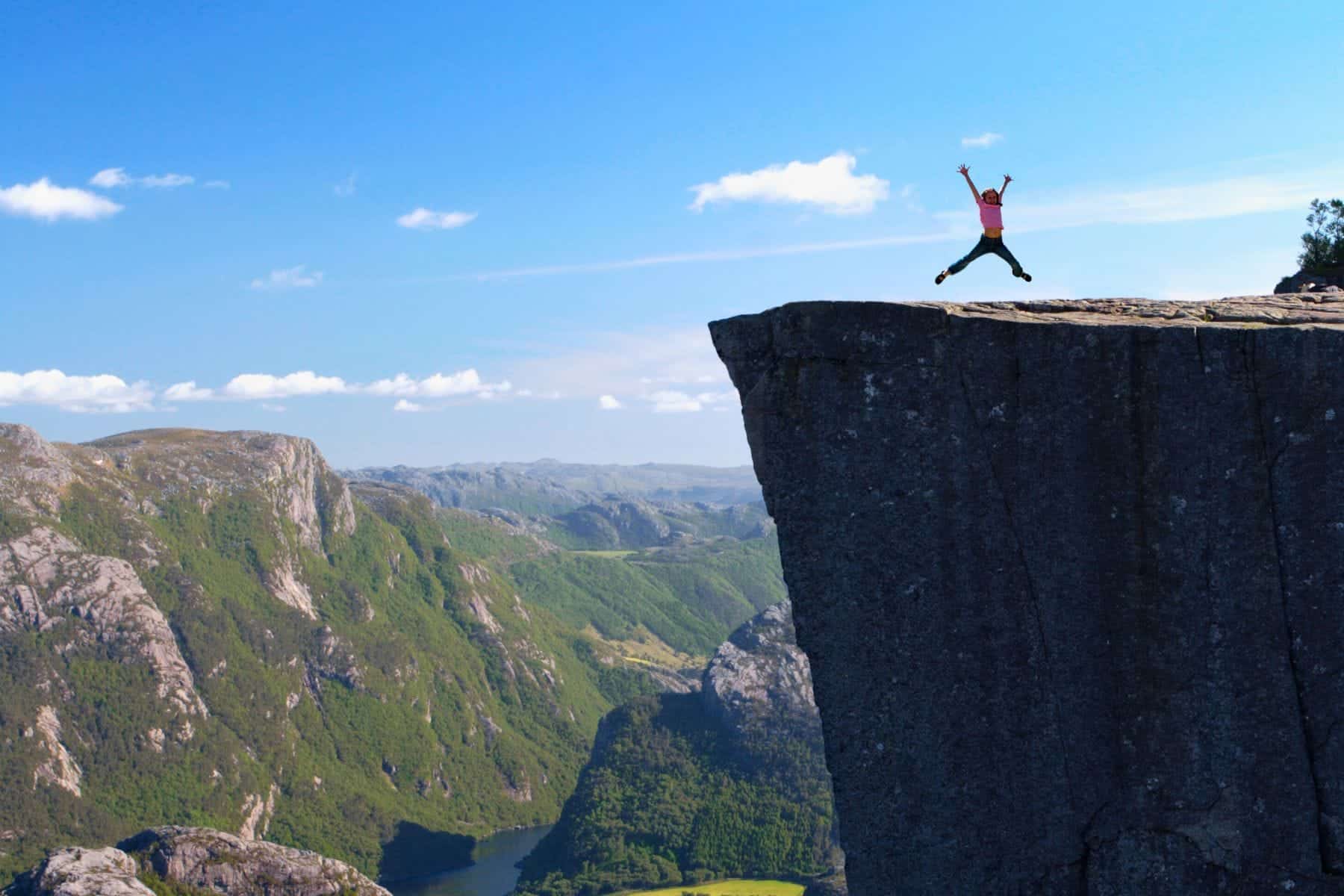
Preikestolen is 604 m high, offering expansive views of Norway. It can be argued to be the nation’s best natural landmark.
You can hike to the top, but it’s quite a challenging undertaking. The trail consists of forests, stone stairways, and swampland, so you must really be prepared to get dirty. The roundtrip journey takes about five hours.
To avoid large crowds, note that the peak season is between June and August. You can visit during these months and still avoid the crowd by hiking very early in the morning or late in the afternoon. The good thing about this period is the long daylight hours. The sun sets relatively late, so you have more time to hike to catch the sunset on top.
Hiking is possible year-round. However, be mindful that the trail is usually slippery during winter. For the best and most colorful views, consider hiking during spring.
It is highly recommended that you join a guided tour when hiking Preikestolen, especially if you’re not an expert hiker. The guides ensure you’re well-prepared for the hike. They also handle the logistics.
Ngorongoro Conservation Area
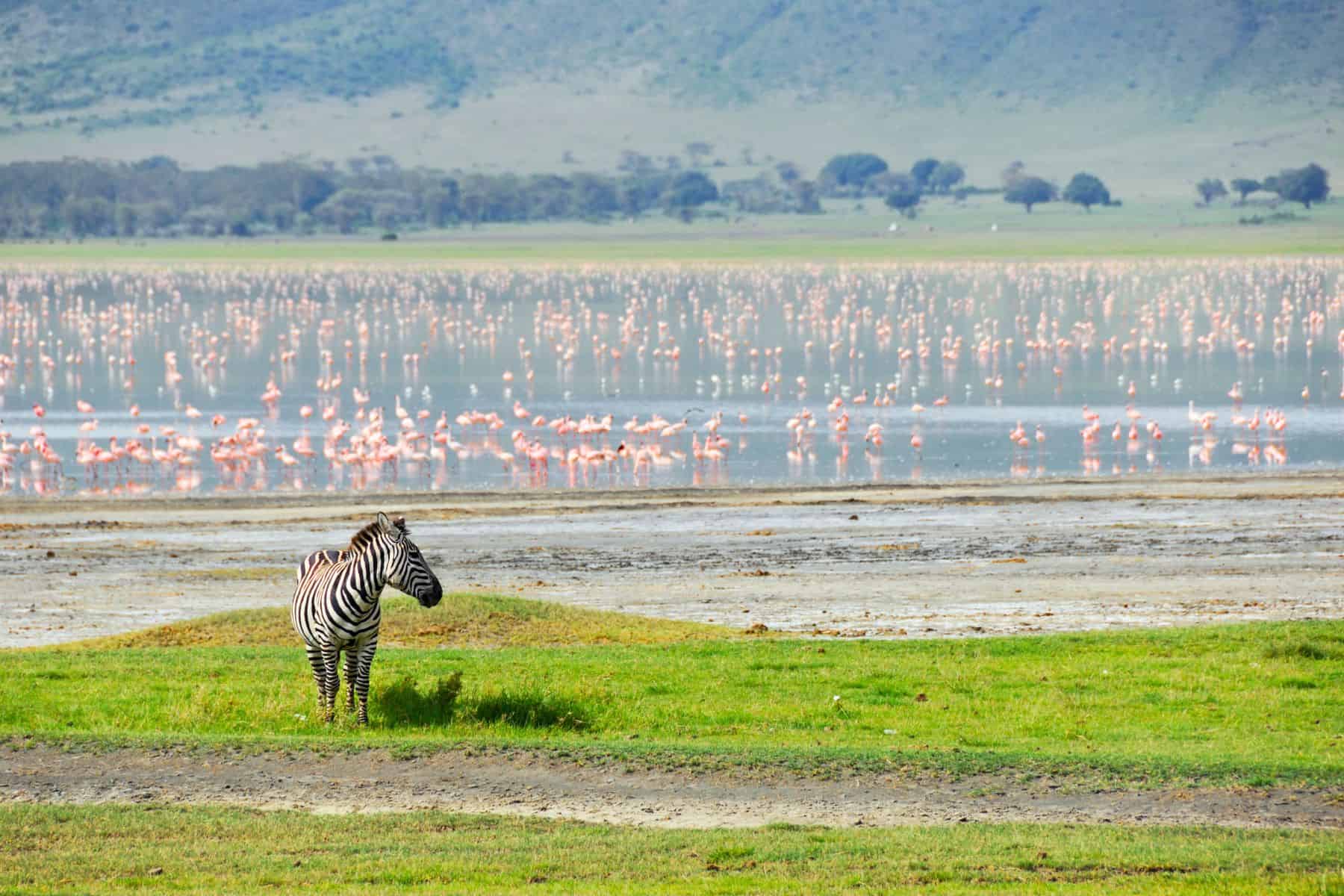
Location: Tanzania
Home to the iconic Ngorongoro Crater and big five game, buffalo, elephant, leopard, lion, and rhino, Ngorongoro Conservation Area is a well-protected wildlife area managed by Ngorongoro Conservation Area Authority (NCAA). It was established as a multi-use land area in the mid-20th century.
The conservation area is of great importance because of its biodiversity. For Tanzania, it is also a significant tourist destination that brings many economic benefits. You can enjoy plenty of activities here, especially if you love the great outdoors. A game drive is one of the best things you can do here due to the abundance of wildlife. If you want to appreciate the views and reconnect with nature, you can go on a walking safari.
Ngorongoro Conservation Area is a UNESCO World Heritage Site, so going on an archeological tour makes sense. It has many prehistoric remains, including the famous Olduvai Gorge and Engaresero Footprints. To learn about the life of the Maasai people who lived in the area centuries ago, you can go on a cultural tour. Specifically, you can explore the designated Maasai Bomas.
Jeita Grotto
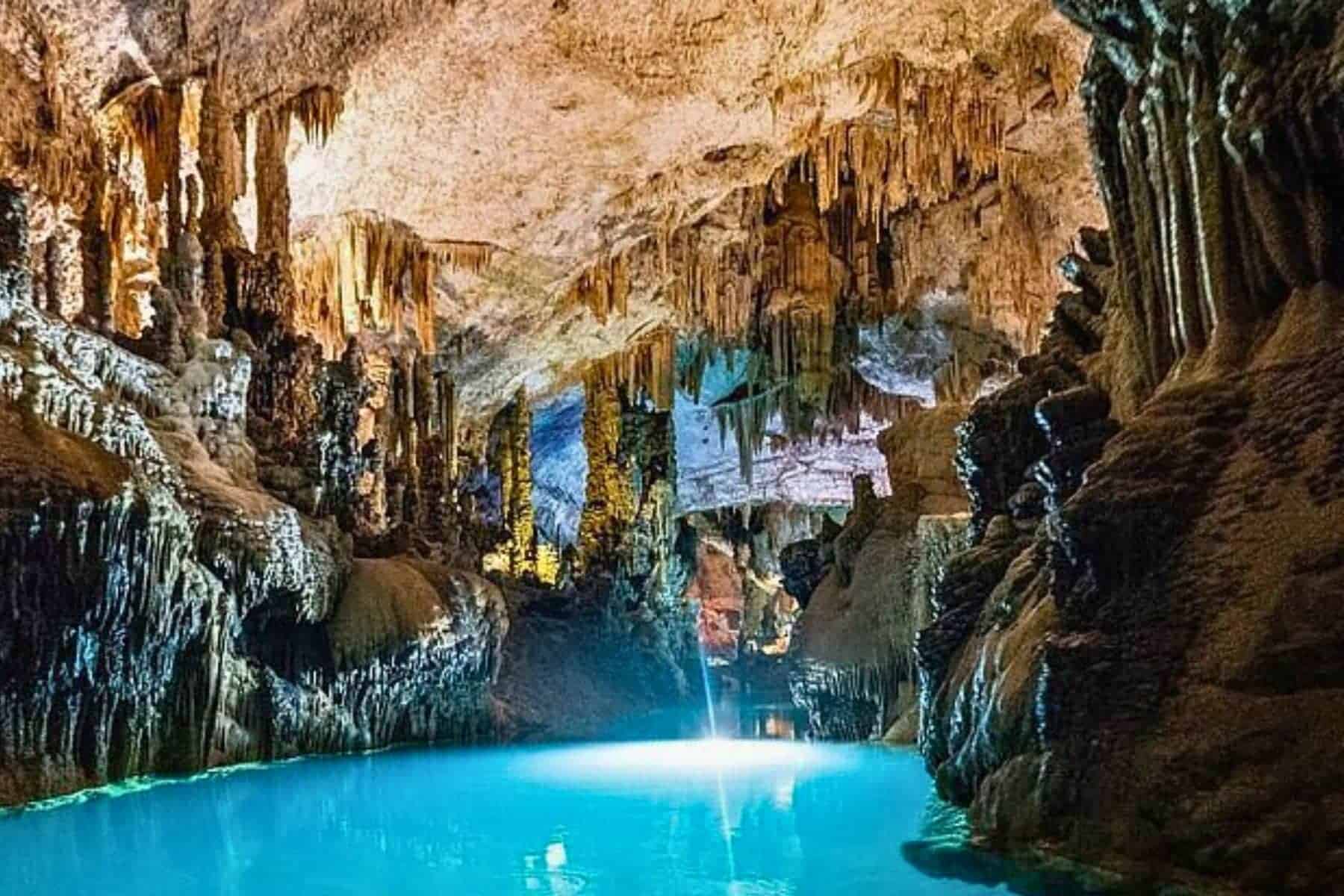
Location: Valley of the Dog River, Keserwan, Bayrut, Lebanon
Jeita Grotto is one of Lebanon’s finest tourist attractions. Discovered in the early 19th century, it is admired for how nature was able to sculpt a marvelous limestone formation.
The lower cave was inaugurated in 1958 for visitors to take a rowboat cruise to see the immaculate formations. It’s a very intimate experience that lets you marvel at the work of nature in serenity.
Meanwhile, the upper cave, launched in 1969, allows tourists to have a walking tour to see extraordinary formations, columns, pillars, stone draperies, and more.
Getting around in the area is pretty easy because of the ropeway and train. Aside from going on a cruise and walking tour, you can catch an informative slideshow in a theater. It is available in various languages. You can also see some pet animals in a tiny zoo. Should you get hungry, you can grab a bite at the onsite restaurant. The souvenir shop offers handmade articles that you can purchase to memorialize your visit.
Jeita Grotto is open daily from 9am to 5pm, except on Mondays. The lower cave may be closed on certain days during winter.
Lake Nakuru
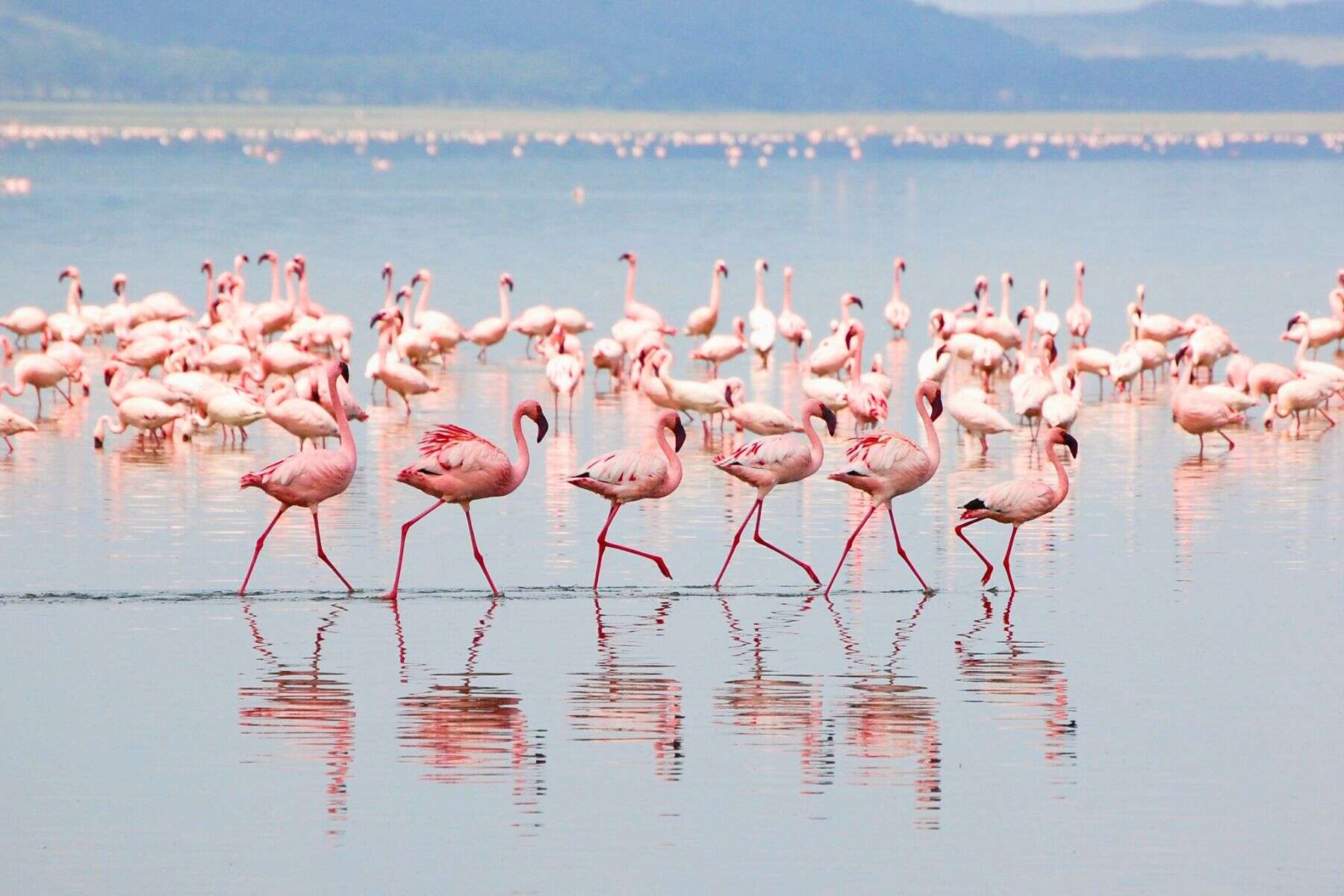
Location: Kenya
Lake Nakuru is part of Lake Nakuru National Park, one of Kenya’s most popular national parks. It is known for the premium game experience it offers. After all, it is one of the only three game parks in the country. Here you’ll find cheetahs, giraffes, leopards, rhinos, waterbucks, and many other animals you don’t get to see every day.
Aside from being a destination for wild game enthusiasts, the national park is famous among bird lovers. It is home to more than 400 bird species, including beautiful flamingos. The lake is one of its most sought-after destinations because of these flamingos. Nevertheless, you can spot plenty of other wildlife species around the lake.
Hiking is another popular activity in the national park. You can trek to certain viewpoints to marvel at the scenic landscapes in all their glory. If you’re into a one-of-a-kind safari experience, you can try gorilla trekking.
Lake Nakuru National Park is a UNESCO World Heritage Site. Meanwhile, Lake Nakuru is a RAMSAR site.
Moraine Lake
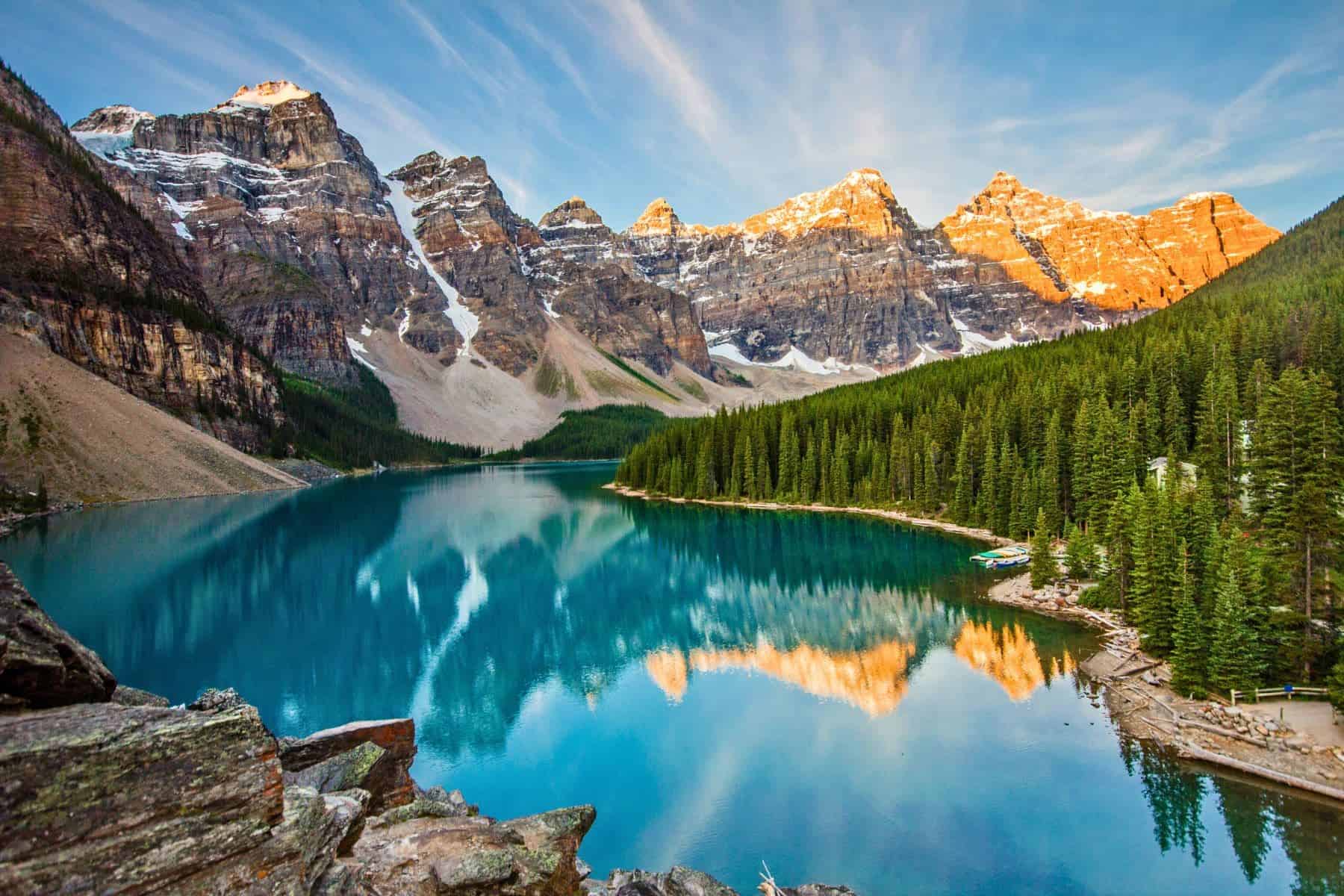
Location: Improvement District No. 9, AB, Canada
Moraine Lake is known for its sparkling blue waters. The surrounding greenery and mountain peaks provide a nice contrast against it, creating a postcard-worthy scenery.
The lake is busy and packed with tourists almost every day, so you have to plan your visit carefully. The best and most efficient way to see the lake is to book a Parks Canada shuttle. Moraine Lake Road is closed to private vehicles, while Parks Canada shuttles are permitted between June and mid-October.
Roam Transit is another transportation option. However, note that it only usually runs to the lake from mid-September to mid-October.
To ensure you can have a hassle-free visit, consider joining a guided tour. Alternatively, you can take the sunrise shuttle Moraine Lake Bus Company offers. It’s not an organized tour but a point-to-point shuttle service to Moraine Lake. It leaves as early as 4am, and you can stay for however long you want.
Canoeing is one of the most popular activities on the lake. The dock is available between mid-June and mid-September.
Angel Falls
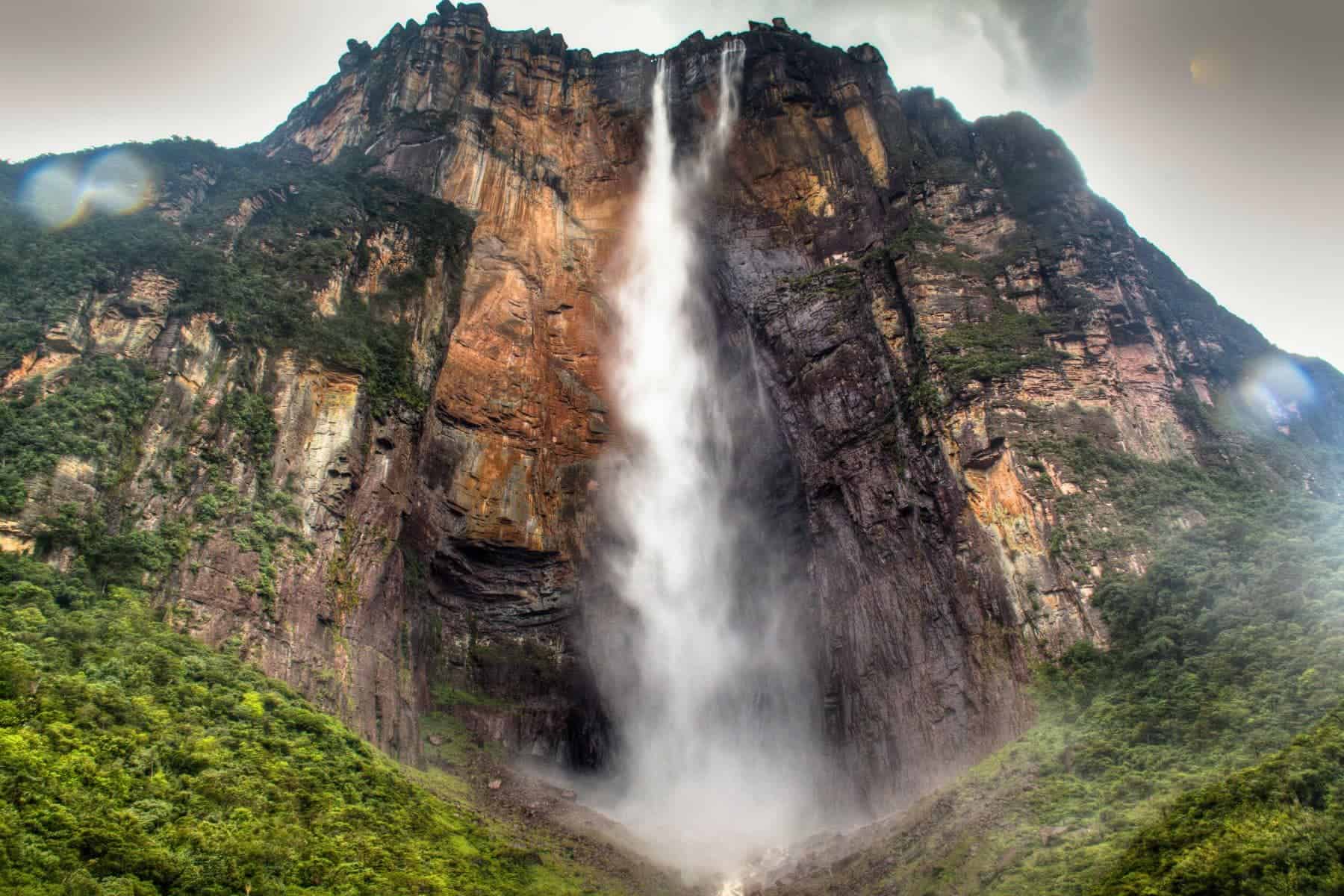
Location: 8011, Bolívar, Venezuela
Dropping from a height of 979 m, Angel Falls is the world’s highest uninterrupted waterfall. It was named after James Angel, the adventurer who accidentally discovered it in the early 1930s.
A tributary of the Carrao River, the falls sit within Canaima National Park, a UNESCO World Heritage Site. Most of the surrounding dense jungle and mountains are still untouched, hence the incredible natural beauty.
This national park is only accessible by air. To get here, you need to board a flight provided by Avior Airlines or RUTACA Airlines. You’ll arrive at Canaima camp.
From Canaima camp, you can go on an excursion to Angel Falls. You can either hop on a boat or fly to the Canaima lagoon. On average, reaching the falls on a motorized canoe takes roughly five hours. You can book your excursion with a tour operator for a worry-free experience. Park lodges also provide hiking tours, excursions to indigenous villages, and boat trips.
The national park is one of Venezuela’s largest national parks. It is home to nearly 600 bird species and 500 flora species.
Mount Yoshino
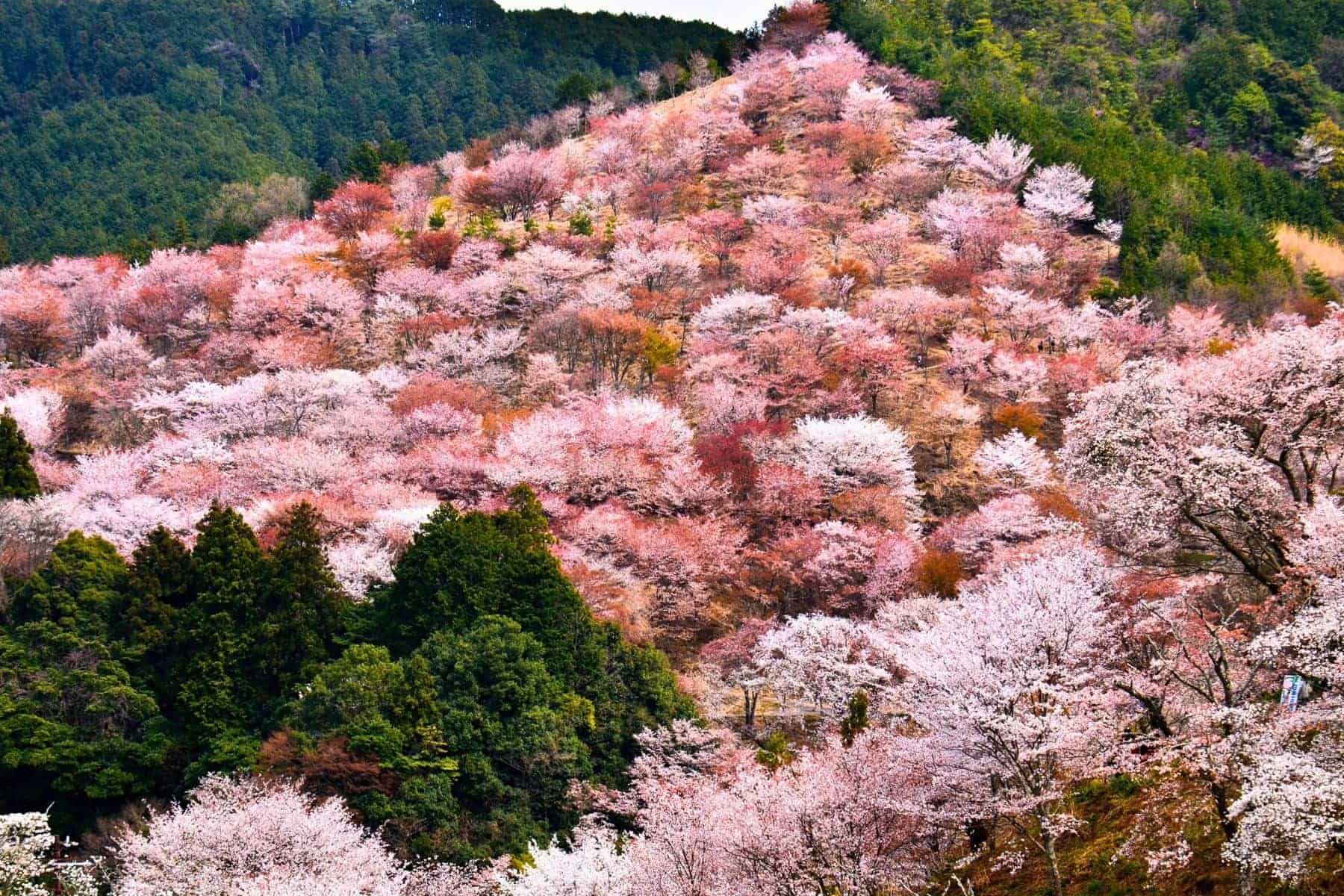
Location: Yoshinoyama, Yoshino, Yoshino District, Nara 639-3115, Japan
Mount Yoshino is arguably Yoshino’s most famous attraction. Particularly, it is most popular during spring. Over 30,000 cherry trees color the town pink during this season.
The cherry blossoms are best viewed from Hanayagura Observatory and Yoshimizu-jinja Shrine. If you prefer a tranquil viewing experience without heavy crowds, you can head to Yoshino Mikumari-jinja near the mountaintop. It features a stunning garden with a weeping cherry tree.
Hanayagura Observatory offers sweeping views all over Yoshinoyama. It is packed with tourists during spring and autumn. A few minutes down the hill, you will find the beautiful landscape designed by tea master Sen-no-Rikyu, Chikurin-in Temple & Garden. This garden is more spectacular than it usually is during spring when cherry trees are in full bloom.
After a long day or week, you can destress in an outdoor hot spring. No Yoshino trip is complete without indulging yourself in this relaxing experience. Yoshinoyama is known for its hot spring hotels.
Göreme Historical National Park (Fairy Chimneys)
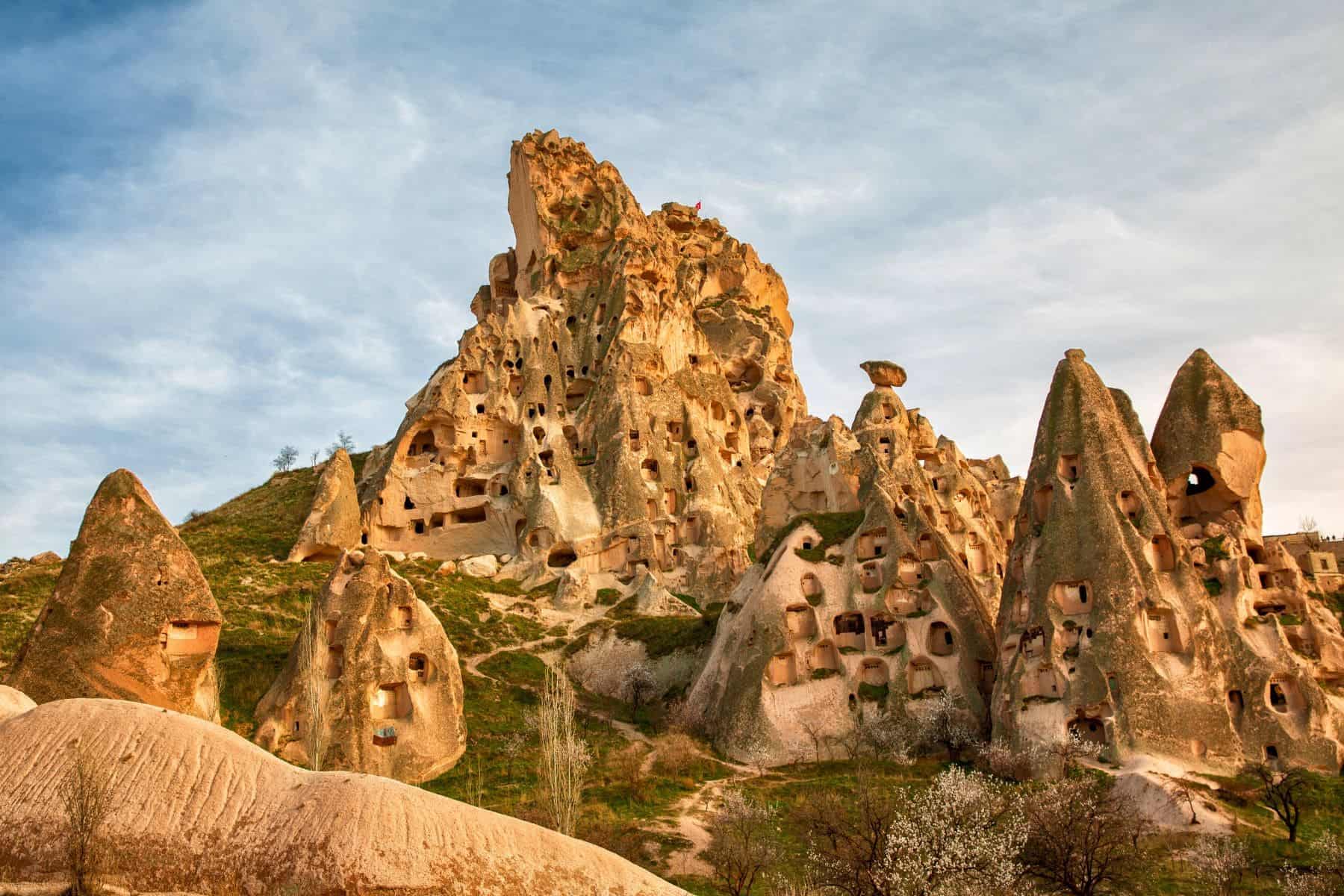
Location: 50180 Göreme/Nevşehir Merkez/Nevşehir Türkiye
Age: Dating back to 3000 BC
A UNESCO World Heritage Site, Göreme Historical National Park is known for its mountain ridges and pinnacles called “fairy chimneys”. The conical rock formations were formed by erosions, which will keep creating new pillars and fairy chimneys. Although a natural wonder, the fairy chimneys include man made churches, underground tunnel complexes and living quarters from earlier times.
These fairy chimneys are what put Cappadocia on the map, attracting millions of tourists. Back in the Roman period, persecuted Christians went here and built a network of living quarters, stables, and storehouses inside the soft rock formation. It is however debated whether christians built the living quarters or if they fled to the already constructed caves by an earlier civilization. Neolithic pottery and tools found in the neighboring town of Kültepe in Cappadocia attest to an early human presence in the region, dating from 3000 BC. When you visit, you’ll still see evidence of inhabitation from the past.
The hot air balloon tours are probably the first thing that comes to mind when considering Cappadocia. Going on one will allow you to appreciate the marvelous beauty of the whole national park.
One of the most famous and gorgeous fairy chimneys areas is Pasabag Valley, located between Göreme and Avanos. It used to be a secluded place and retreat for monks. So, it features a couple of chapels and monasteries.
Abu Simbel
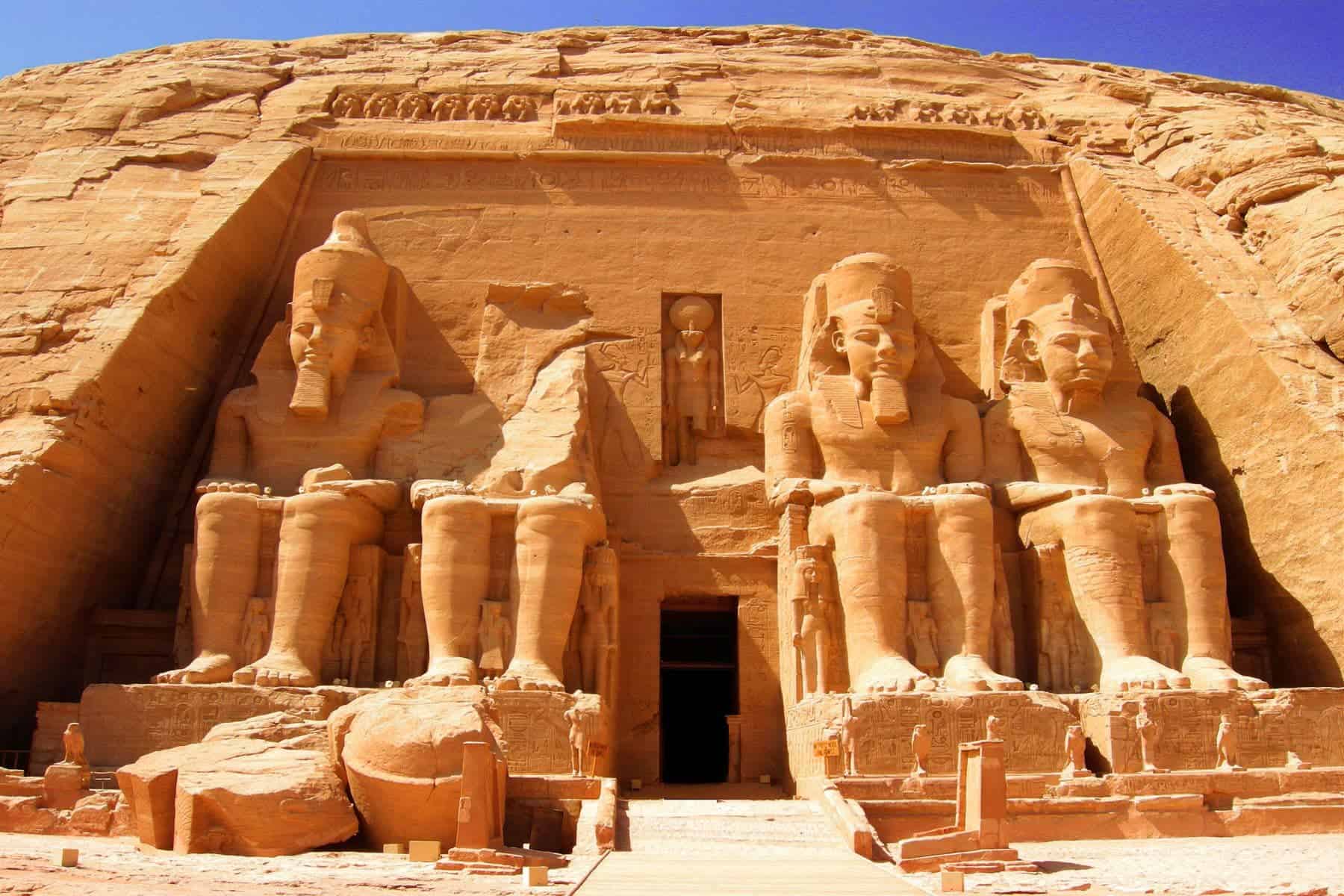
Location: Abu Simbel, Aswan Governorate 1211501, Egypt
Age: Founded approx. 1264 BC
Abu Simbel is one of Egypt’s most significant landmarks. It is most famous for its four seated colossal statues, one of which collapsed due to an ancient earthquake. Nevertheless, the fragments of this collapsed structure are still visible on the ground.
These four statues represent four deities: Amun Ra, Ra Horakhty, Ptah, and Ramesses II. The one destroyed by the earthquake is that of Ramesses II.
The temple was constructed so precisely that every 22nd of February and October, the sun’s rays enter to cross the main hall and illuminate the statues. It is for this reason that admission on these two days is a lot more expensive than on regular days.
A regular adult’s ticket for foreigners costs 400 EGP. Every February 22 and October 22, it costs 700 EGP.
There’s another temple in the area, Small Temple, which is dedicated to Queen Nefertari, Ramesses II’s wife, and goddess Hathor. The former has a colossal statue on the facade.
Hagia Sophia
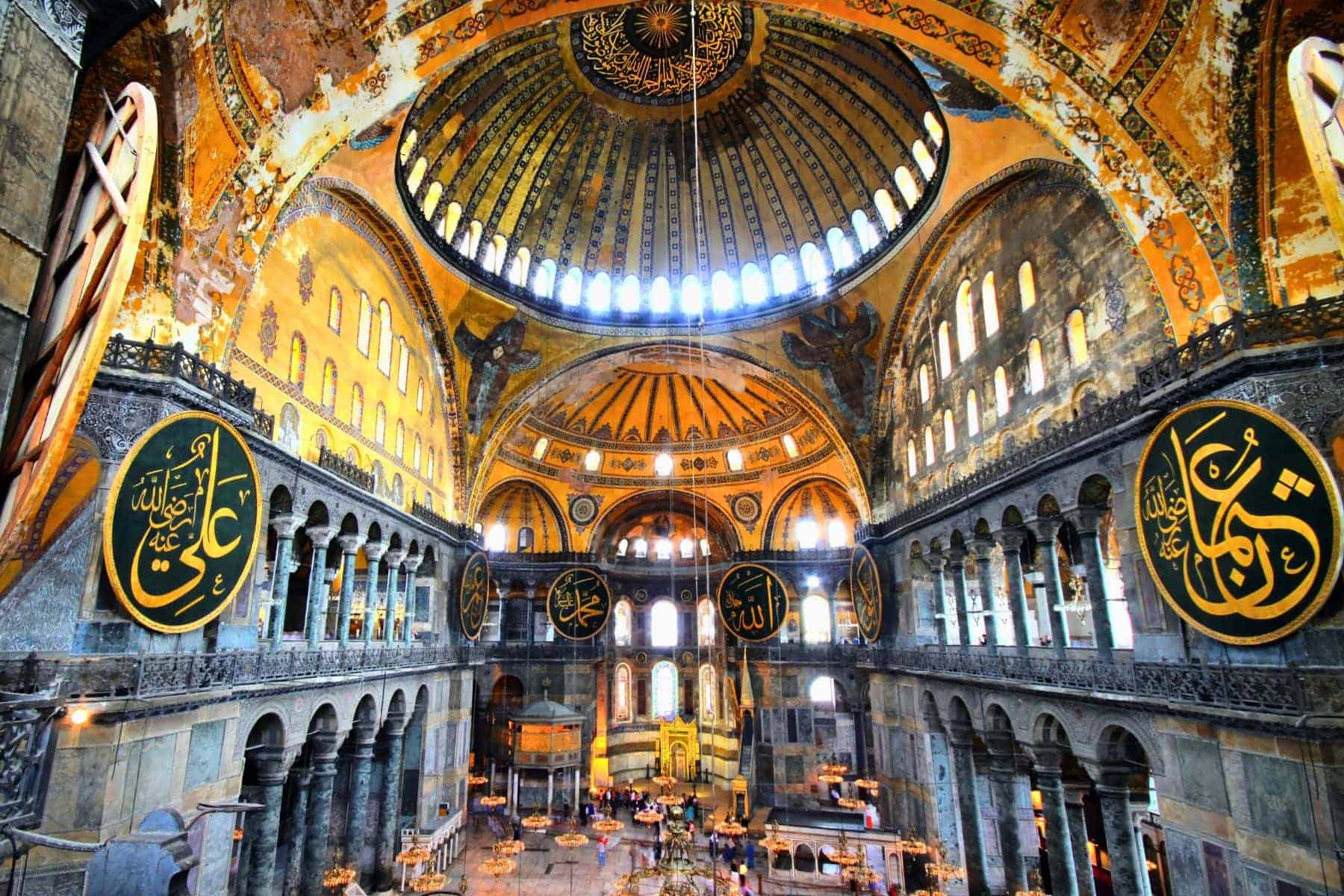
Location: Sultan Ahmet, Ayasofya Meydanı No:1, 34122 Fatih/İstanbul, Türkiye
Age: Completed 537 AD
Once a church and mosque, Hagia Sophia is now an essential Turkish museum. It is a significant symbol of the Byzantine and Ottoman empires. It was once Istanbul’s biggest Eastern Roman church.
Aside from the structure’s rich history and cultural significance, the architecture is pretty impressive. The domes look like they’re hanging in the air— perhaps the most magnificent domes you’ll ever find. The mosaics and marble columns are a sight to behold.
The doors are nothing short of amazing as well. The Imperial Door, the museum’s biggest door, leads from the inner narthex to the main hall. Its bronze frame and oakwood construction are pretty impressive. Meanwhile, the south and west galleries are separated by the Marble Door. Accordingly, one of its sides represents heaven and the other hell. The Beautiful Door, made of bronze, is the landmark’s oldest architectural element.
When the church was constructed, it was called Megale Ekklesia. By the fifth century, it was renamed Hagia Sophia, meaning holy wisdom.
A guided tour of Hagia Sophia will give you a glimpse of history— from the Byzantine to the Ottoman era. While here, ensure you drop by Hagia Sophia Bathhouse, a two-sectioned bathhouse constructed in the mid-16th century. It’s still actively used today.
Masada
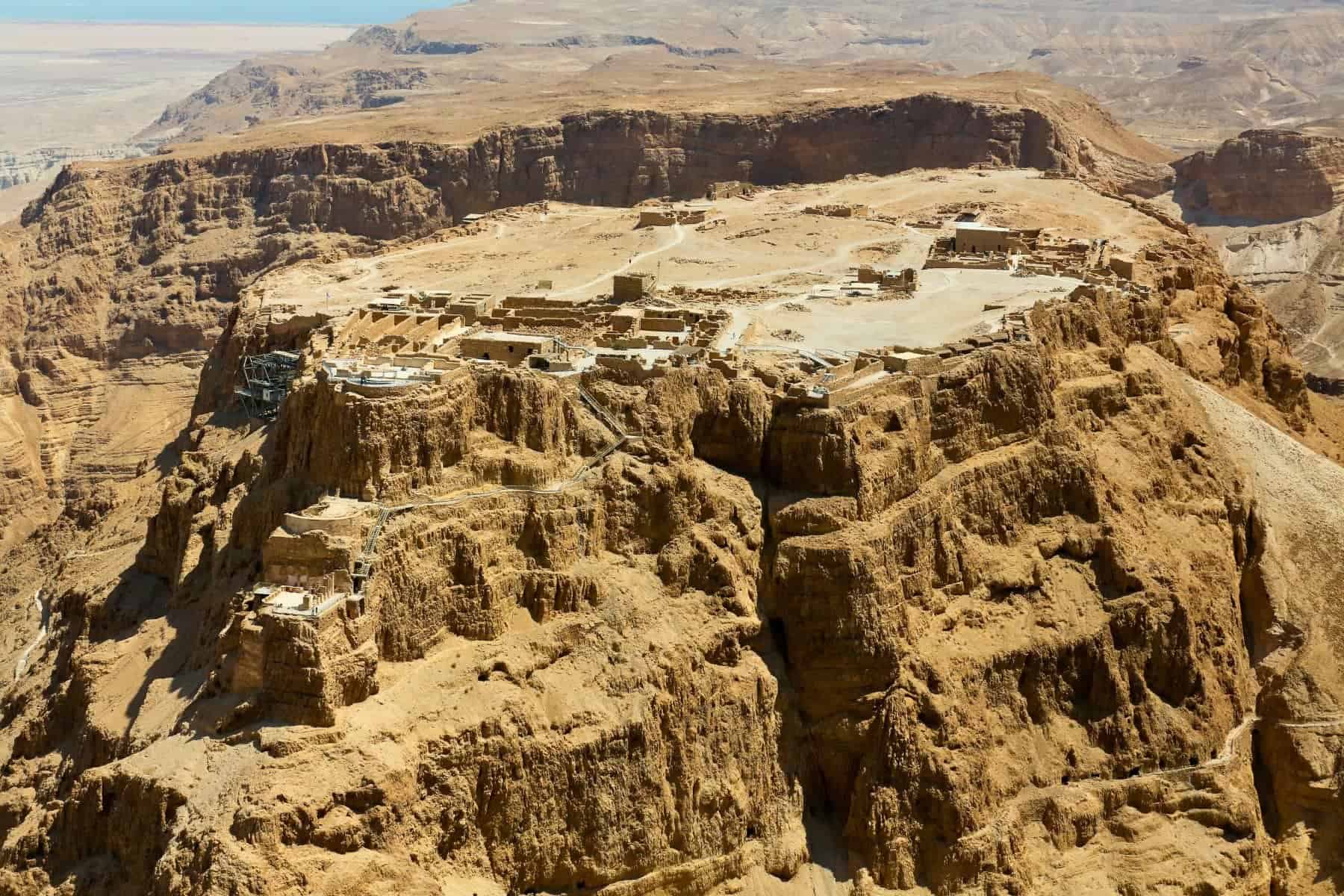
Location: Israel
Age: Founded 1st century BC
Masada, a rugged fortress overlooking the Dead Sea, is an important symbol of Israel’s ancient kingdom. Given its remote location and the harsh weather conditions in the area, it’s been untouched for over 13 centuries until its rediscovery in the early 19th century.
Now a national park, the fortress has been a UNESCO World Heritage Site since 2001. Considerable work has been done in recent decades to restore and conserve the archeological finds in the area, and welcome discerning visitors.
Yigal Yadin Masada Museum is a must-see during your visit. Since 2007, it’s been providing tourists with a unique experience of viewing the archeological finds in the area.
On the western side, a 50-minute light-and-sound show is presented to tell Masada’s story during the final days of the siege. The mountain offers a lovely backdrop for the presentation. It is available from March to October.
The national park’s hours vary seasonally. During summer, it is open from 8am to 5pm on Saturdays through Thursdays, and from 8am to 4pm on Fridays and holidays. During winter, it is open from 8am to 4pm daily except on Fridays and holidays when the operating hours are from 8am to 3pm. The last entry is one hour before closing time.
Nazca Lines
Location: Between the towns of Nazca and Palpa in southern Peru
Age: Estimated to be more than 2000 years old
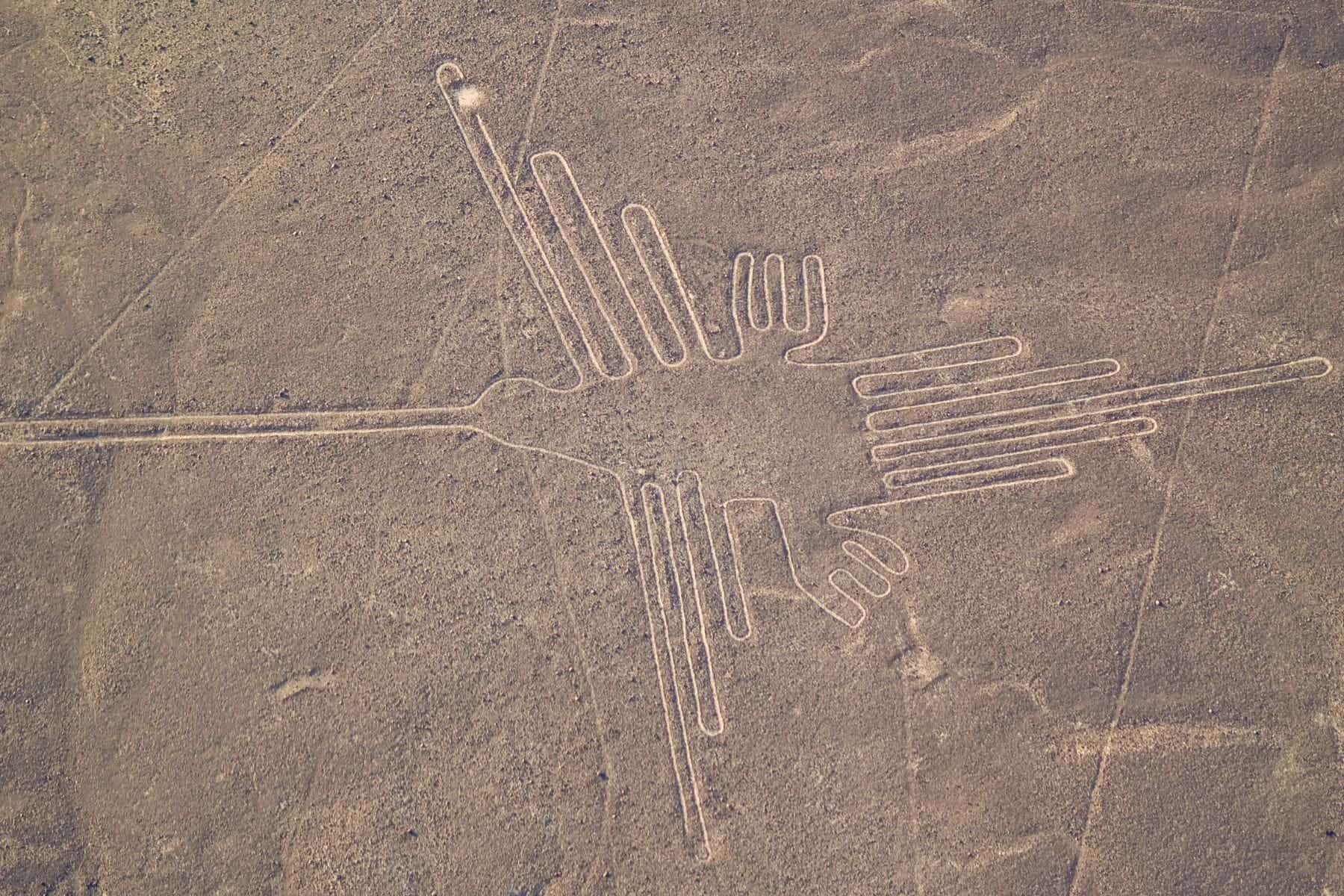
Consisting of huge anthropomorphic, geometric, and zoomorphic drawings that are best viewed from a distance above, Nazca Lines are believed to have been made by Nazca culture people over 2,000 years ago. The reason behind the drawings is still a subject of debate, which is exactly what piques the interest of many.
The drawings, which look like they’re carved on the earth’s surface, lie in the Nazca Desert, one of the planet’s driest places. Looking at them from above, they seem like a giant puzzle that could mean a thousand different things. The hummingbird is the most easily recognizable geoglyph. Other figures you’ll see include a condor, dog, and hale.
Various groups offer flight packages that let you see the geoglyphs from the sky. Prices for a 30-minute experience range from 80 USD to 85 USD. If you’re not into flying or you have a limited budget, you can still see Nazca Lines in all their glory by going up the viewing tower. The views aren’t as majestic as they are from a plane, but it’s better than nothing.
Mogao Caves
Location: 2RR5+HMR, Dunhuang, Jiu Quan Shi, Gansu, China, 736206
Age: First constructed in 366 AD
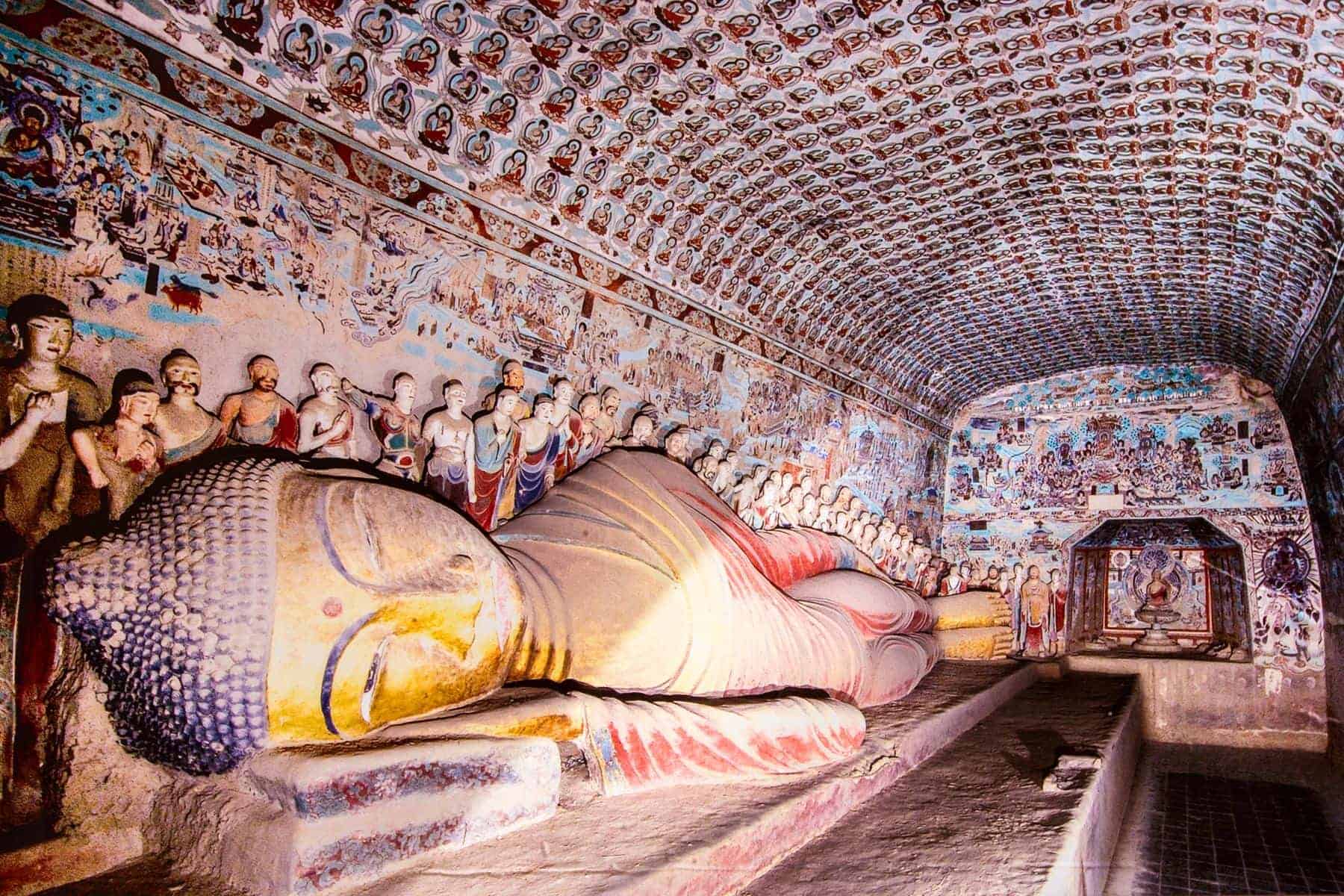
Mogao Caves is a UNESCO World Heritage Site known for its murals and sculptures, showcasing centuries of fascinating Buddhist art. This system of over 700 caves boasts rich Buddhist history and heritage. It’s been part of the World Heritage List since 1987.
At the dawn of the 20th century, over 50,000 artifacts were uncovered upon the discovery of Library Cave. These artifacts were since then distributed to different libraries and museums around the world.
To truly appreciate the art pieces at the site, spending at least three hours is highly recommended. Before visiting the caves, you’d want to drop by Mogao Caves Digital Exhibition Center first. Here you can watch documentaries.
The earliest caves are Northern Wei, Northern Zhou, and Western Wei. Each has a central pillar around which Buddhists would gather to pray. The pieces of artwork tell the story of the people and rulers of Dunhuang back in the day.
Ciudad Perdida
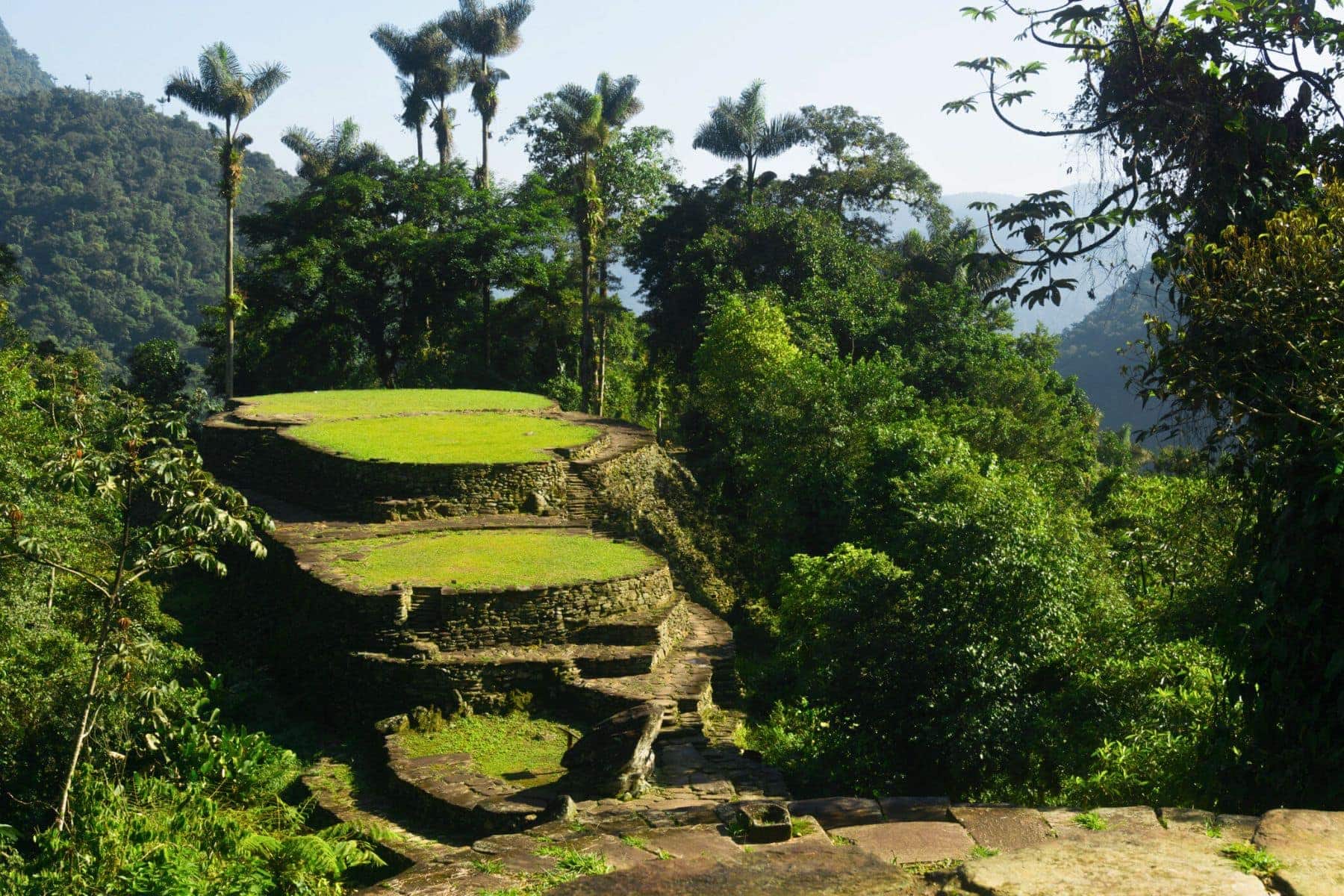
Location: Zona Bananera, Magdalena Colombia
Age: Founded around 800 AD, some 650 years earlier than
If you seek an exciting outdoor adventure, consider going to Ciudad Perdida. Located in the Sierra Nevada de Santa Marta, it is only accessible by a four-day trek. Helicopters are an alternative mode of transportation.
The Sierra Nevada de Santa Marta has been a UNESCO Biosphere Reserve since 1979. Four indigenous communities, Arhuaco, Kankuamo, Kogui, and Wiwa, still inhabit the area. During your trek, you’ll get to know more about their cultures and traditions. You’ll also encounter plenty of flora and fauna, including endemic birds.
Tours vary in length, but the four-day tour is a popular option. With this tour, you’d spend two days going up and two days going down. You’ll reach Ciudad Perdida on the third day, where you can meet the indigenous leader, Mamo.
If you want to spend more time in the area, the six-day tour might be for you. There’s less pressure for you to complete the trek immediately. At the same time, you’ll have more time to appreciate the serenity and learn more about the lives of indigenous people.
Historic Ensemble of the Potala Palace
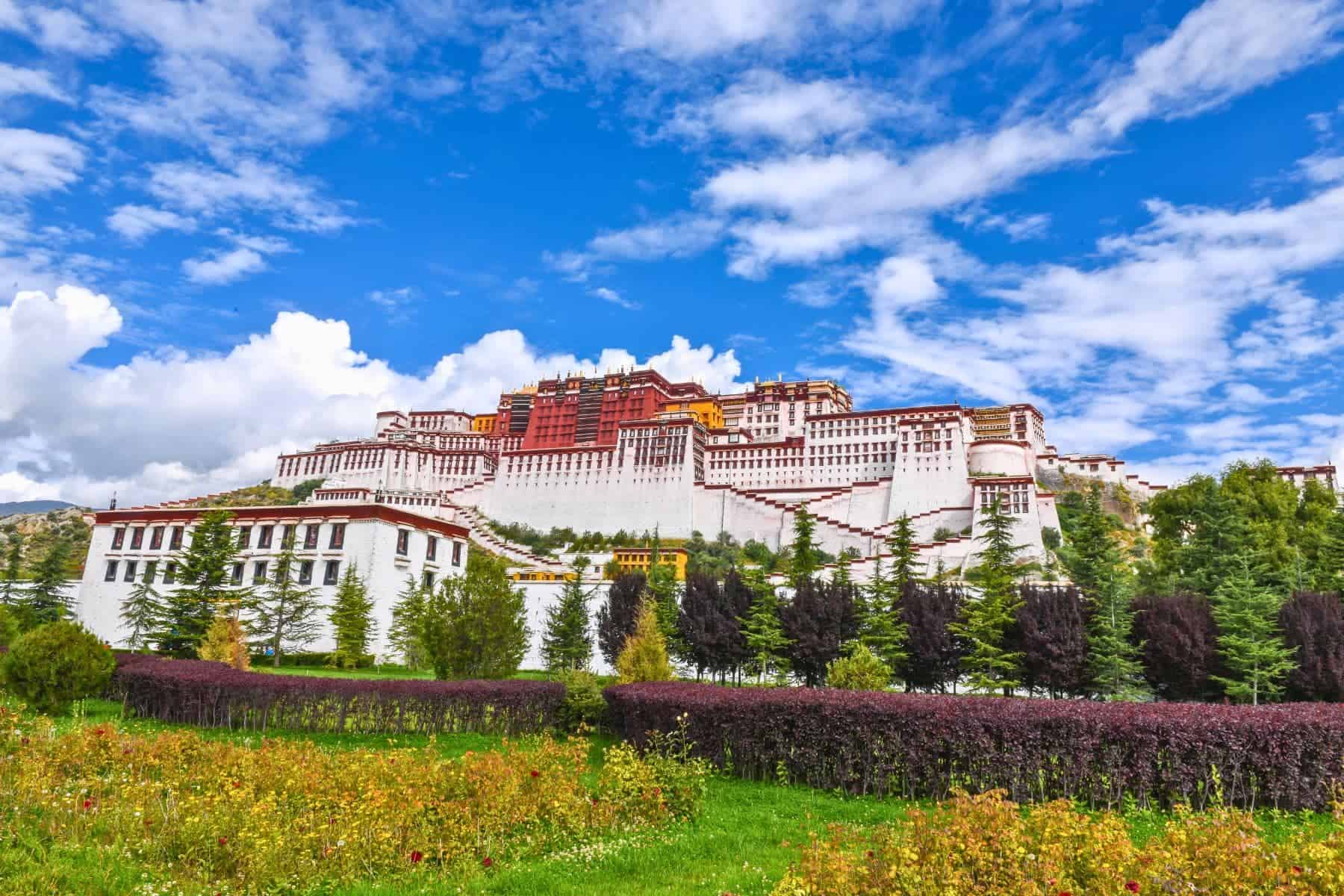
Location: 35 Beijing Middle Rd, Lhasa, Tibet, China, 850000
Age: Established 1649
The Historic Ensemble of the Potala Palace is one of the most important symbols of Tibetan culture. It’s been the Dalai Lama’s winter palace since the seventh century.
The palace complex sits atop Red Mountain and consists of the White and Red Palaces, and ancillary buildings. The Red Palace houses the tombs of eight Dalai Lamas, and numerous statues and chapels.
Over the centuries, the complex has retained many original features. Many of these features have been well-preserved. It also houses thousands of diverse cultural relics, including murals that offer a glimpse of Tibetan history and culture. Inside Maitreya Chapel, you’ll find shelves featuring ancient Buddhist scriptures.
Many Tibetan Buddhists flock here for their pilgrimages. You can visit any time of the year, but note that peak season is between June and October. Tickets for July and August even usually sell out early. To avoid heavy crowds, consider visiting between November and mid-February.
Leptis Magna
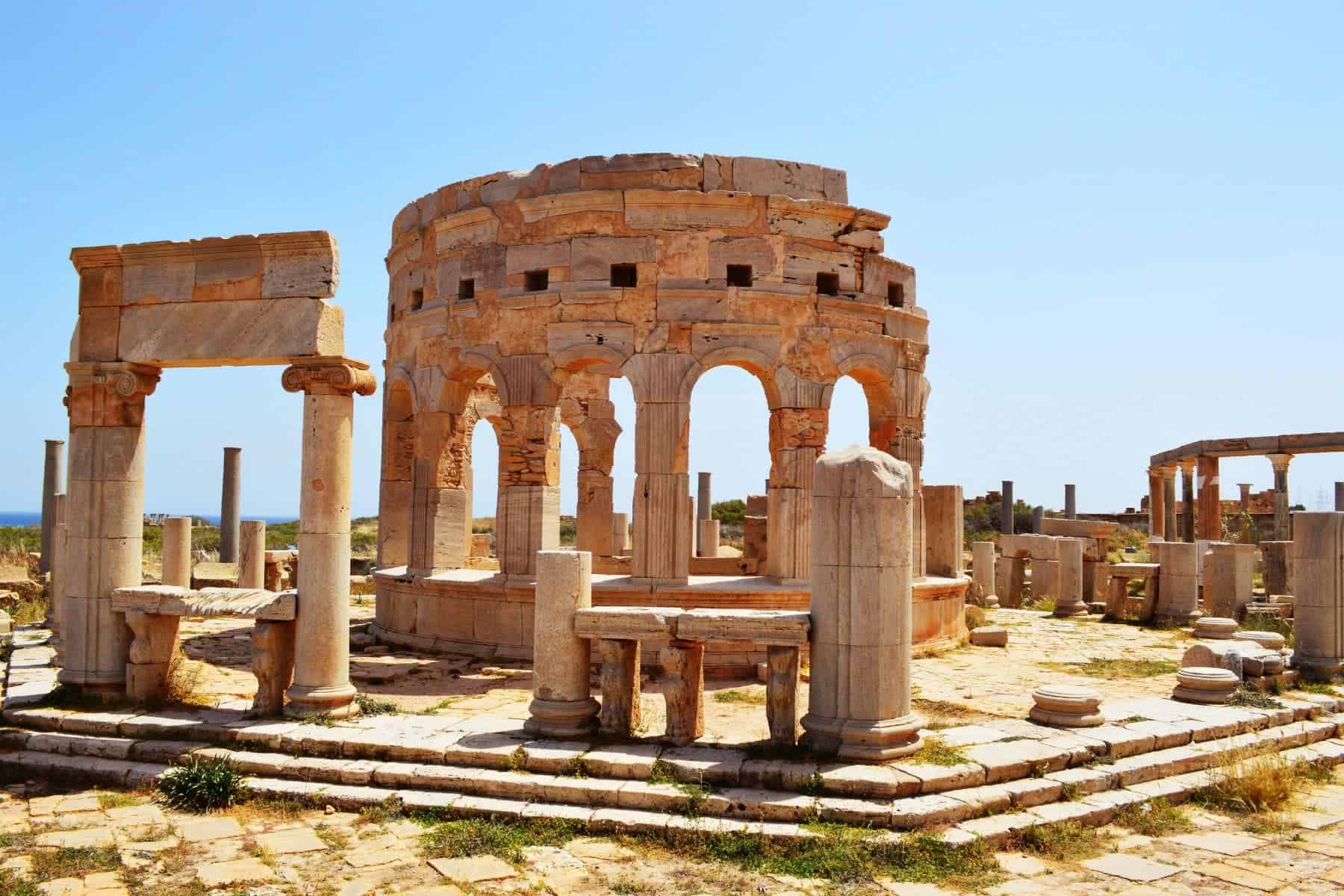
Location: Libya
Age: Founded 7th century BC. Ca. 2700 years old.
A Mediterranean archaeological site, Leptis Magna is a not-so-popular yet impressive attraction in Libya. Adorned by Septimius Severus, it used to be one of the most stunning cities of the Roman Empire. It features monuments, residential areas, and storehouses. These remains are some of the finest from the Roman Empire.
In 1982, the site was designated a UNESCO World Heritage Site. Prior to that, earlier in the 1900s, the Libyan Antiquities Service put in the work to study and preserve the remains. Italian archaeologists joined the efforts. Come late 20th century, Roman villas on the outskirts were unearthed.
The pieces of artwork and archaeological finds uncovered in the area are showcased at Leptis Magna Museum. These items include statues of Apollo, Pollux, Zeus, and other mythological characters. Pottery and jewelry pieces are also plentiful. Further, the museum houses what’s believed to be the world’s biggest coin treasure, Misrata Coin Treasure. It has at least 100,000 coins, weighing 6,000 kg.
Konark Sun Temple
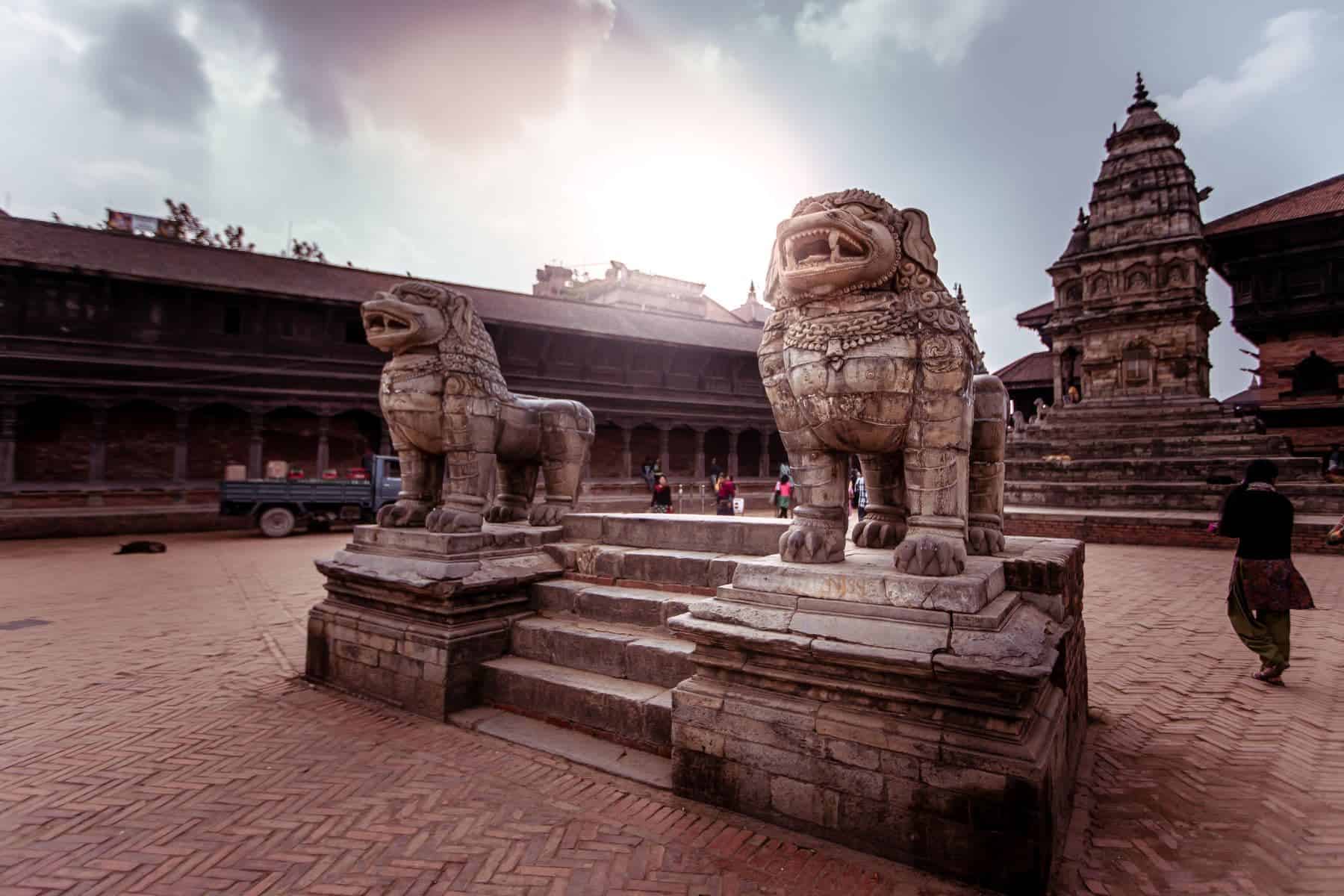
Location: Konark, Odisha 752111, India
Age: Completed c. 1250
Konark Sun Temple is a symbolic 13th-century landmark on the Bay of Bengal. A UNESCO World Heritage Site since 1984, it is one of India’s most popular Brahman sanctuaries.
This temple is dedicated to the sun god, Surya. An excellent example of Kalinga architecture, it was constructed in the form of a chariot with 24 wheels and 6 horses. All 24 wheels are of the same size but have different carvings. Two wheels are used as accurate sundials, which were widely used in ancient times to tell time.
The temple walls feature images of dancers, deities, elephants, and mythical creatures. Nata Mandapa, the roofless dancing hall, is beautifully carved with images of dancers and musicians.
At Konark Museum, you’ll see sculptures from the temple ruins, and other antiquities and artifacts spread across four galleries. It is open daily from 9am to 5pm, except on Fridays.
When entering a place of worship, removing your footwear is a sign of respect. Shoe stands are available outside temples. Leather articles may not also be allowed in most temples.
To maximize your visit and learn more about Konark Sun Temple, you can hire an experienced tour guide. Major tourist centers have English-speaking guides with fixed rates.
Svalbard Global Seed Vault
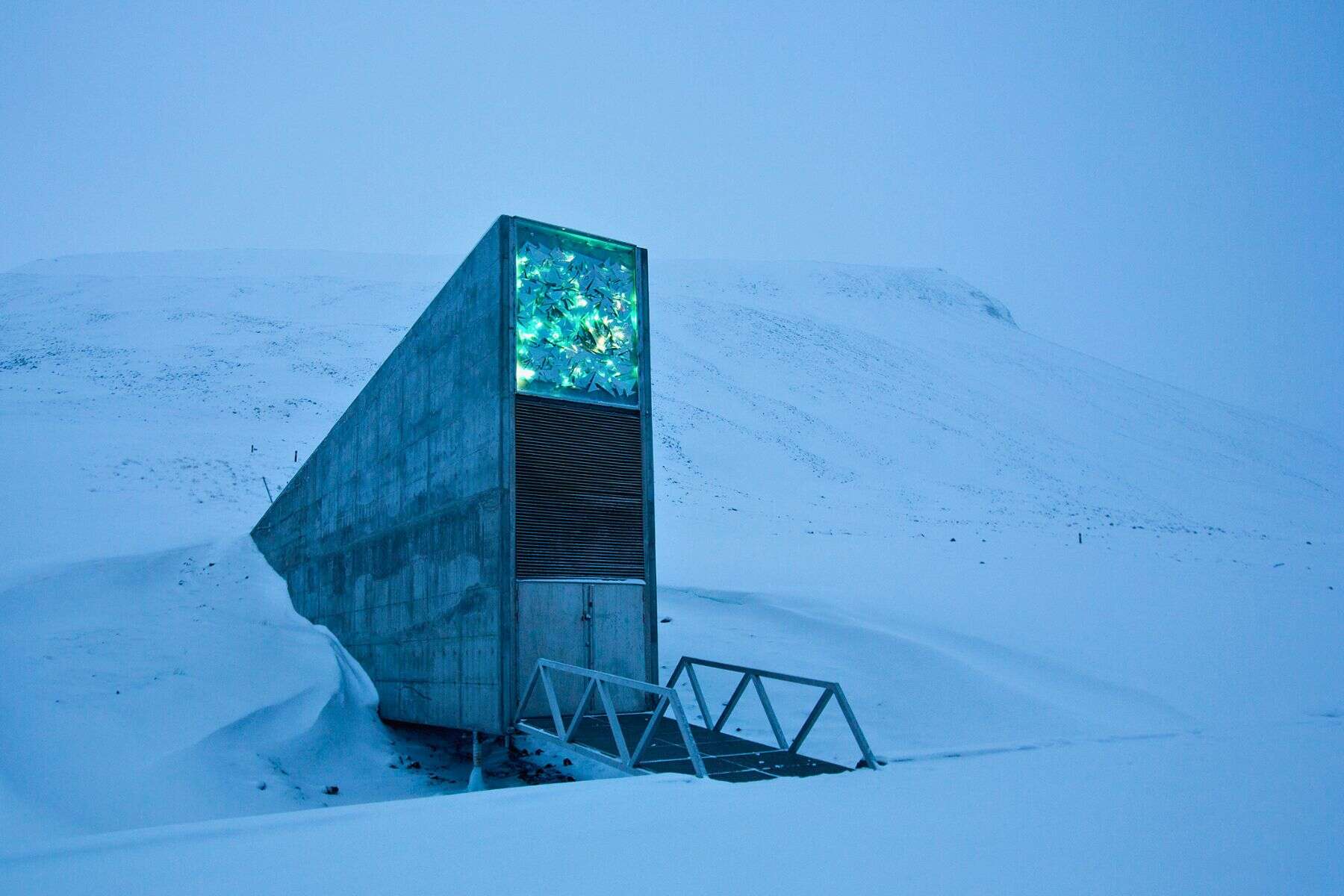
Location: 9170, Svalbard & Jan Mayen
Age: Opened 2008
A free storage facility for seed duplicates from various countries and genebanks, Svalbard Global Seed Vault is committed to conserving plant genetic diversity to help ensure food security. It is grounded on the principle of crop diversity, ensuring that food crops can adapt to the ever-changing climate and other environmental factors.
The vault has no volunteer opportunities like genebanks but encourages people and organizations to help. Specifically, you can contribute to the cause by actively using diverse seeds, and facilitating cooperation with genebanks and research institutions. Advocacy and public policy are also ways to get involved.
While the facility isn’t open to visitors, organized, guided tours are available to take you near the entrance.
Svalbard Global Seed Vault is the world’s biggest storage facility of its kind. The Norweigan government inaugurated it in 2008. In celebration of its 10th anniversary in 2018, the Seed Vault Summit was held, and attended by depositors and partners from around the globe.
Quinta da Regaleira
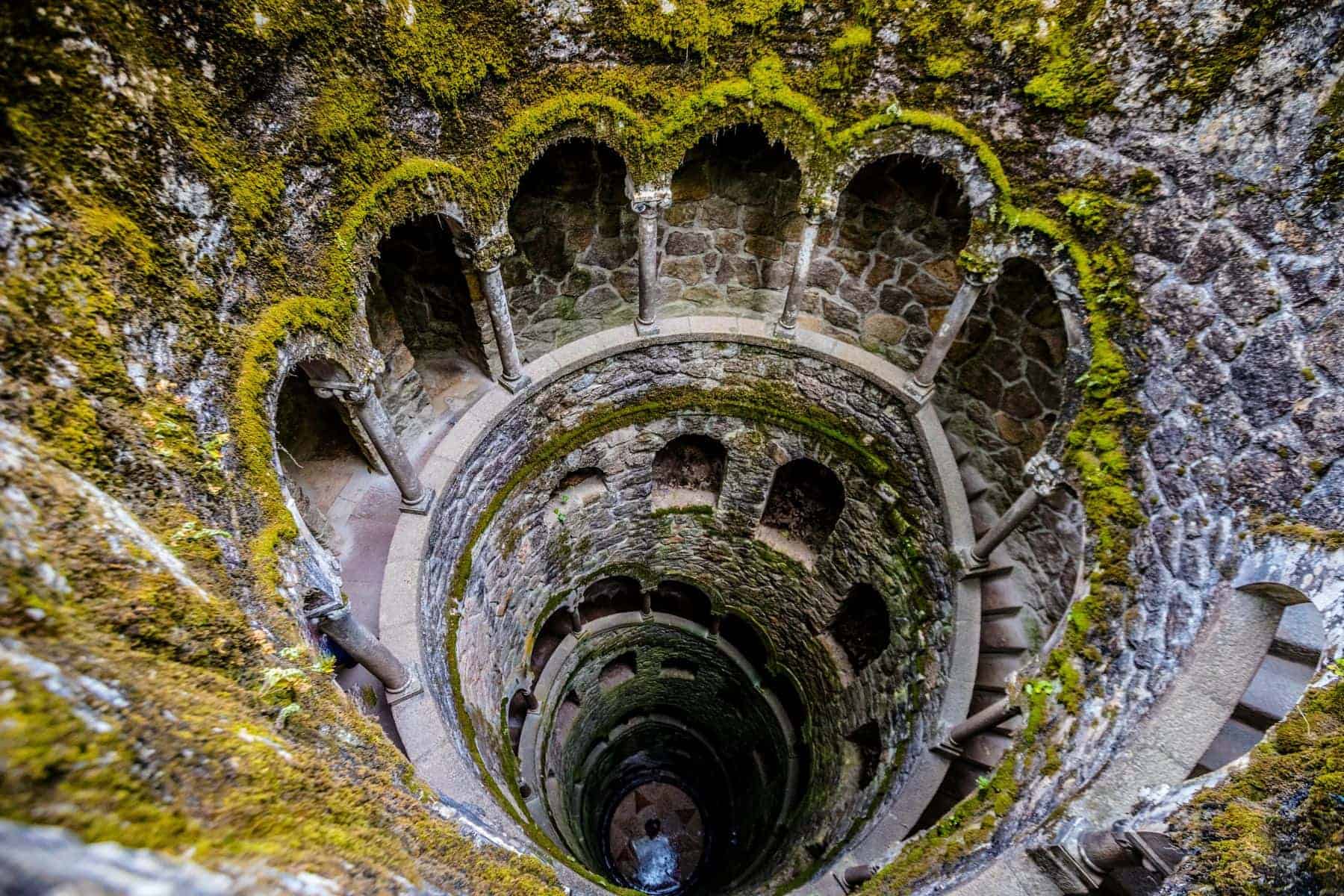
Location: R. Barbosa du Bocage 5, 2710-567 Sintra, Portugal
Age: Finished ca. 1912
Quinta da Regaleira was designed by Italian architect Luigi Manini in the late 19th century. He did so with the help of the owner, Antonio Augusto de Carvalho Monteiro, whose cultural and scientific interests are reflected in the structure. The result of their collaboration is a combination of Classical, Manueline, Medieval, and Renaissance styles.
Opening hours vary seasonally. For October through April, it is open from 10am to 6:30pm. Hours during the months of May through September are from 10am to 7pm. The last entry is at 5:30pm throughout the year.
You can purchase your tickets online. A single-entry self-guided tour ticket is valid for up to 120 days upon purchase. Audio guides are available for rent at the ticketing office, subject to availability. 30 listening points are spread across Quinta da Regaleira.
After your tour, you can grab a bite or some refreshments at the onsite cafe. It offers indoor dining, but you can also enjoy al fresco dining on the spacious garden terrace.
To grab your souvenir items, you can visit the gift shop. It is open daily from 10am to 12pm and from 1pm to 6pm.
Sumela Monastery
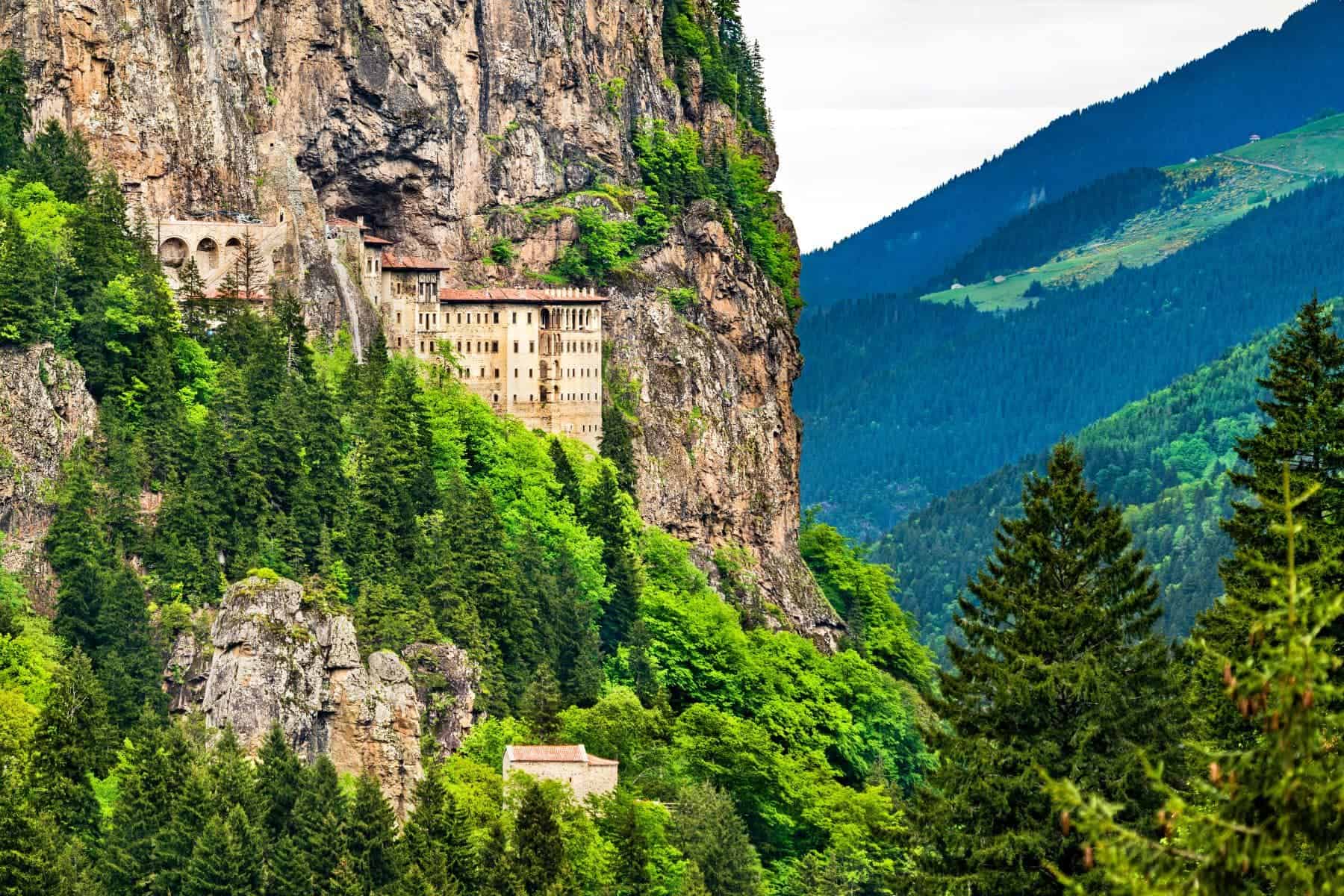
Location: Altındere, Altindere Valley National Park, 61750 Maçka/Trabzon, Türkiye
Age: Built 385 AD
An ancient monastic complex sitting 1,200 m high on the cliffs of Altindere Valley, Sumela Monastery. Its construction began when Barnabas, a monk, built the first two rooms in 385 AD. Byzantine Emperor Justinian commanded its expansion some centuries later. After it was looted and burnt in 650 AD, Comnenids restored and further expanded it.
By 1923, the complex was completely abandoned and turned into a museum. The first mass since then was conducted in 2010, upon the authorization of the Turkish government. Since then, church service has been allowed once a year. Many pilgrims flock here just to attend the annual mass.
Regular tours are offered from Trabzon. You can go on a self-guided tour if you don’t want to join an organized one. Firstly, you have to take a minibus from Trabzon to Macka and from Macka to Altindere National Park. If you prefer point-to-point transfers, you can take a cab.
Kampong Thom
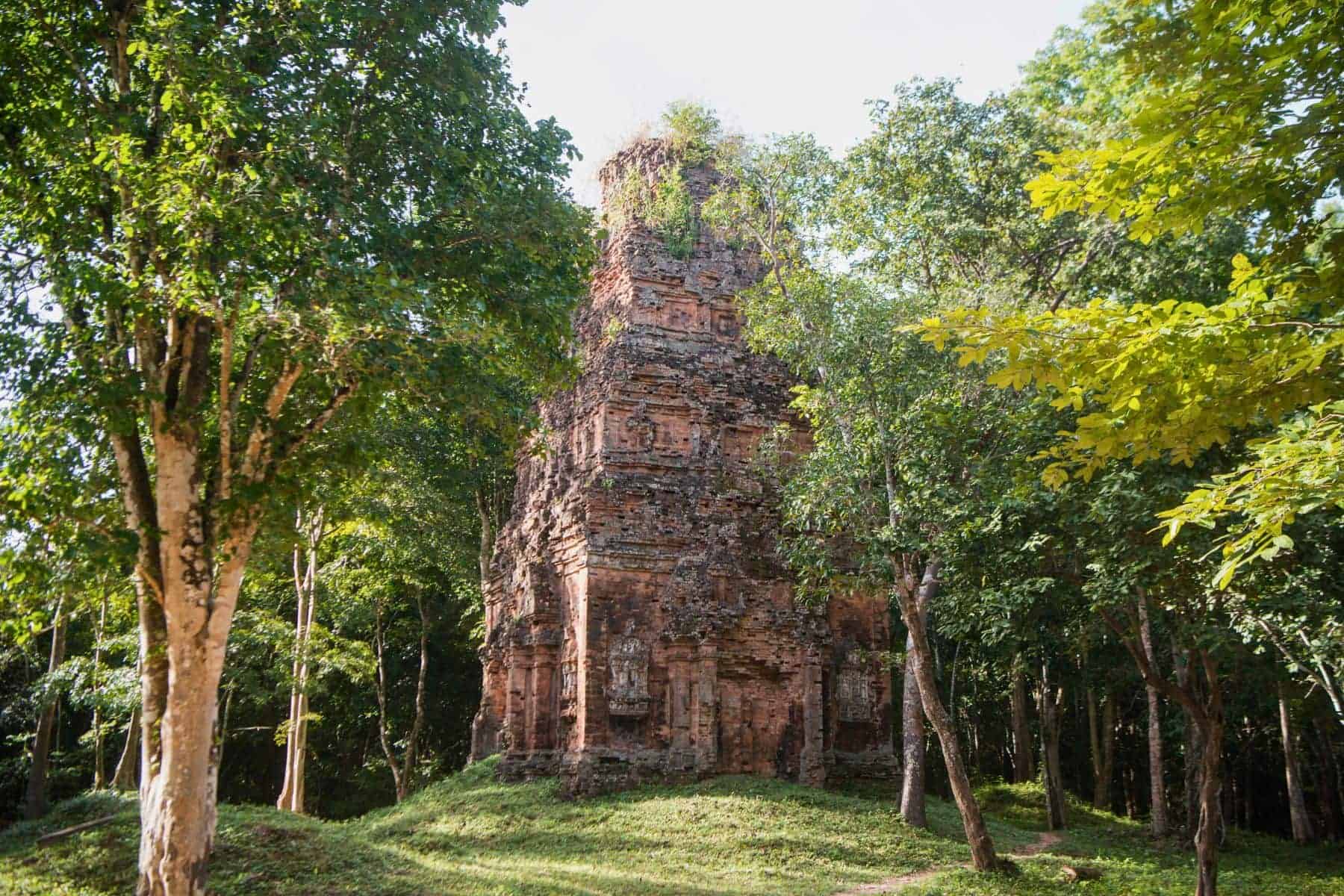
Location: Cambodia
Age: Built in the 7th century AD
Kampong Thom is abundant with historical landmarks. It is home to Sambor Prei Kuk, an ancient city known for having roughly 200 brick temples.
Phnom Santuk comprises four mountains and numerous Buddha statues, including ones reaching nirvana. Buddha statues can also be found at Wat Kampong Thom. The colorful fences here are a treat to the eyes.
At Prasat Kuhak Nokor, you’ll find structures made of laterite and sandstone. Wat Kdei Deum offers a different level of serenity with its ancient temple and two ponds. Prasat Andet, a seventh-century temple dedicated to Hirihara, is another must-see for its impressive architecture and ornaments.
When planning your visit, it’s best to go to Sambor Prei Kuk before heading to the Angkor complex. The ancient city’s architecture significantly inspired that of the Angkor civilization.
An artificial resort, Prey Pros Resort, is worth visiting, especially during a festival. It’s also the place to be for various outdoor activities, such as boating, fishing, and swimming.
Jardin botanique de Montréal
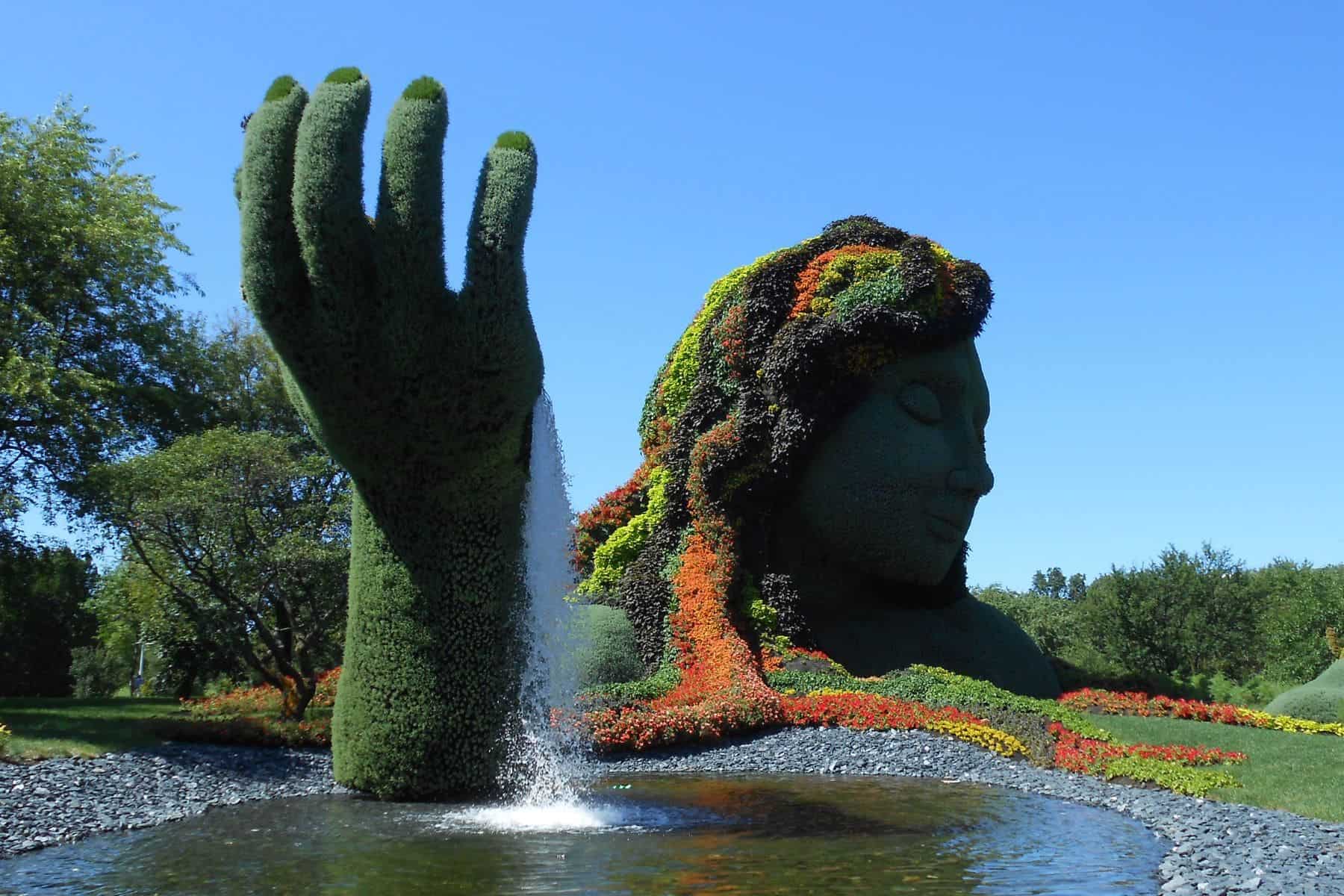
Location: 4101 R. Sherbrooke E, Montréal, QC H1X 2B2
Age: Opened 1931
Considered one of the world’s finest botanical gardens, Jardin botanique de Montréal is a leading attraction in Montreal. It has a massive collection of about 20,000 taxa., 800 of which are part of the International Union for Conservation of Nature (IUCN) Red List of Threatened Species.
Some of the most fascinating collections here are the cultural gardens. The massive Japanese Garden combines plants with stone and water, idealizing nature as a whole. Meanwhile, the Chinese Garden strikes a perfect balance by playing with the concept of yin and yang. First Nations Garden is significant in Montreal’s culture, as it’s dedicated to Quebec’s First Nations.
A regular adults’ admission ticket costs 22.75 USD. Hours vary seasonally, so ensure you check the official website when planning your visit.
Rules and regulations apply to all visitors to protect the botanical garden’s integrity and beauty. Of course, picking plants is strictly prohibited. Picnicking is allowed in designated areas. However, note that large items, such as barbecue grills, camping chairs, and coolers, are prohibited. The use of drones within the vicinity is also prohibited.
Palenque
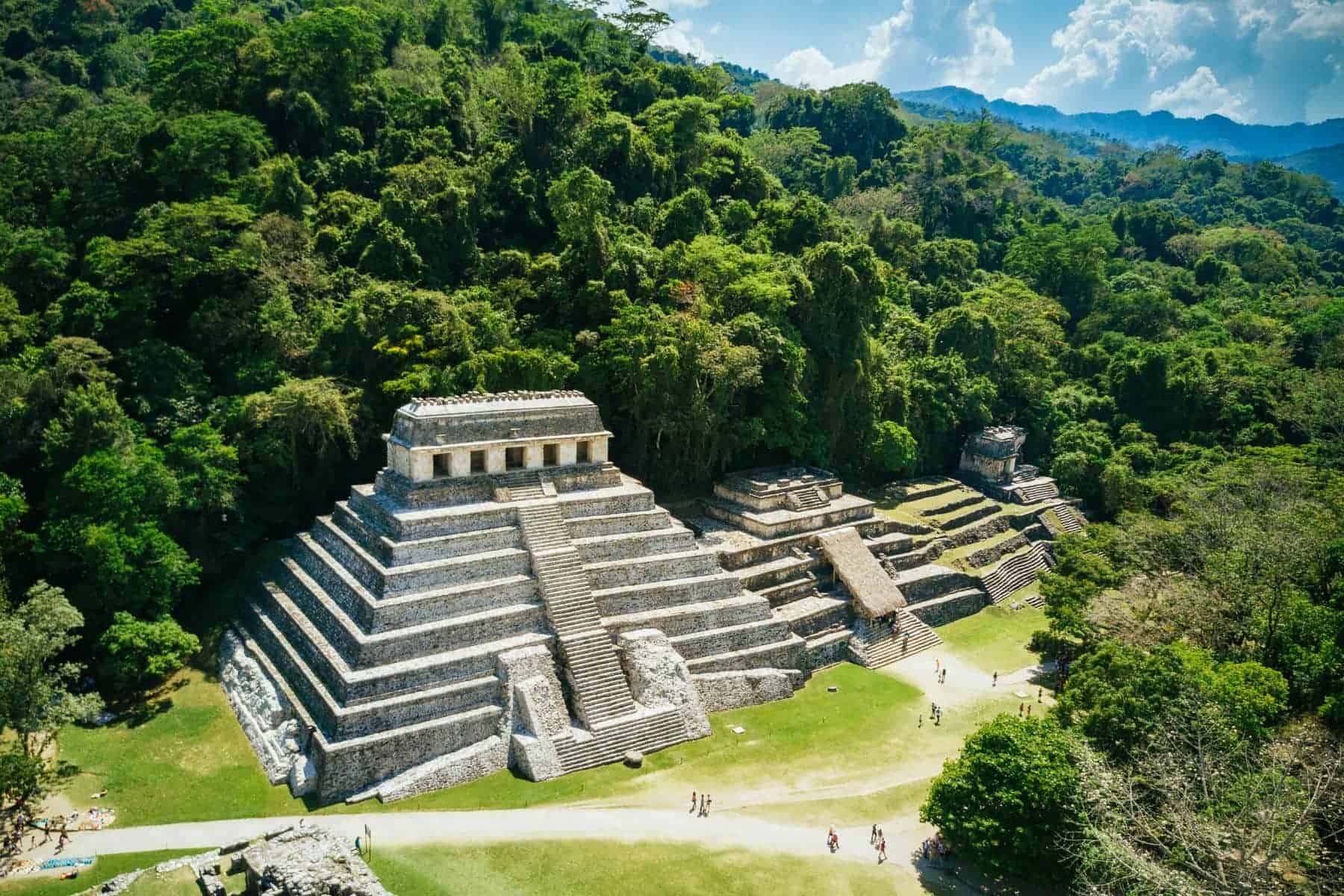
Location: Carretera a Palenque- Zona Archaeologica Km. 8, 29960 Palenque, Chis., Mexico
Age: Dates back to 200-600 AD
Palenque is arguably the most beautiful ancient Mayan ruin. With a significant amount of discoveries revealing a lot about the site’s history and Mayan culture, it’s also one of the most studied Mayan ruins. It has evidence of engineering principles ahead of its time, such as an aqueduct and footbridges.
A thriving city in the seventh century, Palenque now features ruins of temples, sculptures, and pyramids. It was inscribed in UNESCO’s World Heritage List in 1987.
The palace, one of the best examples of Mayan architecture, is the first thing you’d notice when you arrive. Part of it is a four-story tower that looks magnificent even from afar.
The Temple of the Sun is yet another impressive structure within the complex. Well-preserved over the centuries, it’s beautifully carved with hieroglyphic inscriptions. It’s dedicated to the sun god. Meanwhile, the Temple of the Cross, a small but equally fascinating ruin, is dedicated to the god of rain and agriculture.
This archaeological site is open from 8:30am to 5pm. The entrance fee costs 5 USD. If you want to hire an expert guide, you can inquire at the visitor kiosk.
Easter Island
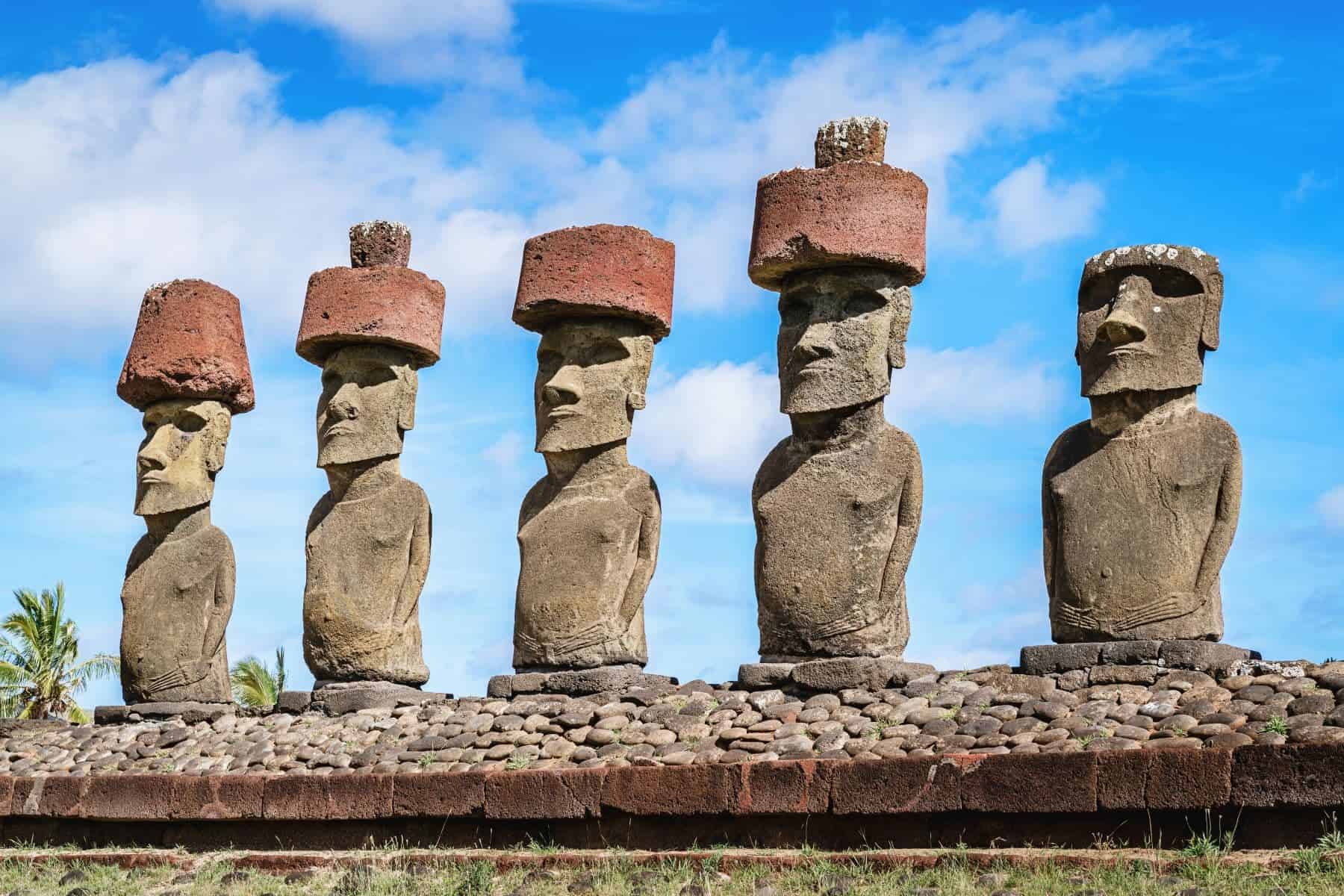
Location: Easter Island, Valparaíso, Chile
Age: Moai statues date back to roughly 1100 and 1650 AD.
With only less than 10,000 inhabitants and a remote location, Easter Island is a popular destination for tourists seeking to escape urban life and enjoy serenity. Covering most of it is Parque Nacional Rapa Nui, a lush national park.
The eerie statues or Moais spread across the island are popular among tourists. Each statue has distinctive features, so it can be easily identified with the ancestor it represents.
Various trekking routes are available for you to explore. If you’re up for the challenge, try the physically demanding 7-km Patrimonial Route. It takes roughly four hours to complete. You can also climb Mount Terevaka for about three hours.
Given the immaculate state of Easter Island’s ocean, scuba diving is also a popular activity. The rich marine life and crystal clear waters make diving and snorkeling fun and exciting.
Getting here isn’t that easy, as Lan is the only airline flying directly to the island. Four to seven flights fly to or from Santiago weekly; and two flights fly to or from Papete, and to or from Lima weekly.
Less Known Natural Landmarks
Serengeti National Park and Maasai Mara (The Great Wildebeest Migration)
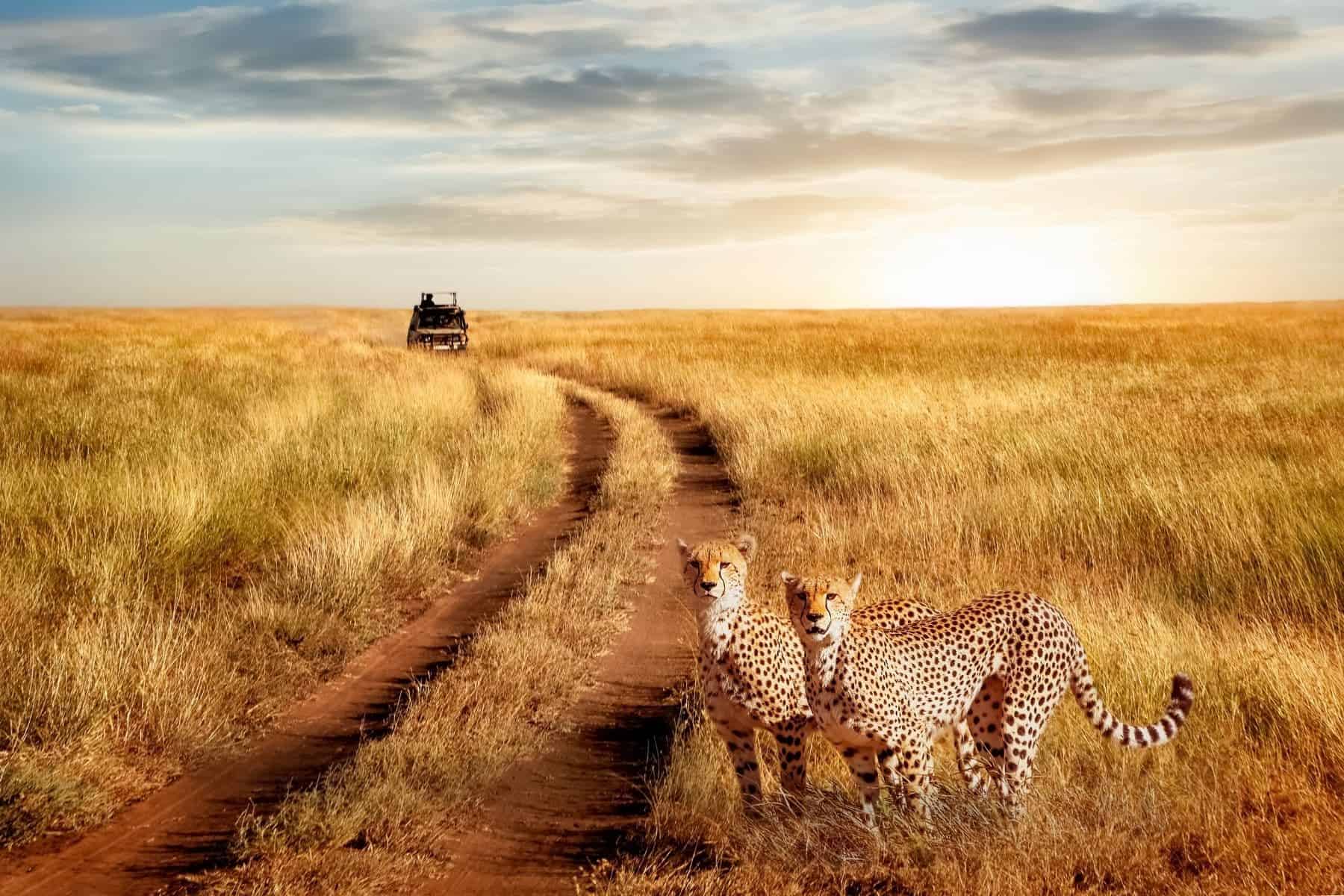
Location: Tanzania / P3H8+5GV, Mara Rianta, Kenya
Serengeti National Park and Maasai Mara are two of Africa’s most diverse ecosystems. Also, they’re among the world’s best destinations for safari big game viewing and famous for the great wildebeest migration.
The great wildebeest migration, occurring between July and October, is a must-see. It is probably one of the greatest natural sights on earth. Millions of animals and about 500 bird species inhabit Serengeti National Park.
Days-long safari experiences are available for tourists. If you have limited time, you can go fot a three-night safari in Maasai Mara. It includes various activities, such as bush walks, cultural visits, and day game drives. Complete meals and drinks are also included.
Serengeti National Park has several safari areas, one of which is Grumeti Game Reserve. Created by the Tanzanian government in 1994, it’s designed to protect the wildebeest migration route. It’s one of the few areas offering walking safaris with experienced guides. During the experience, you can learn more about the species living there and the numerous ways indigenous plants may be used medicinally.
Plitvice Lakes National Park
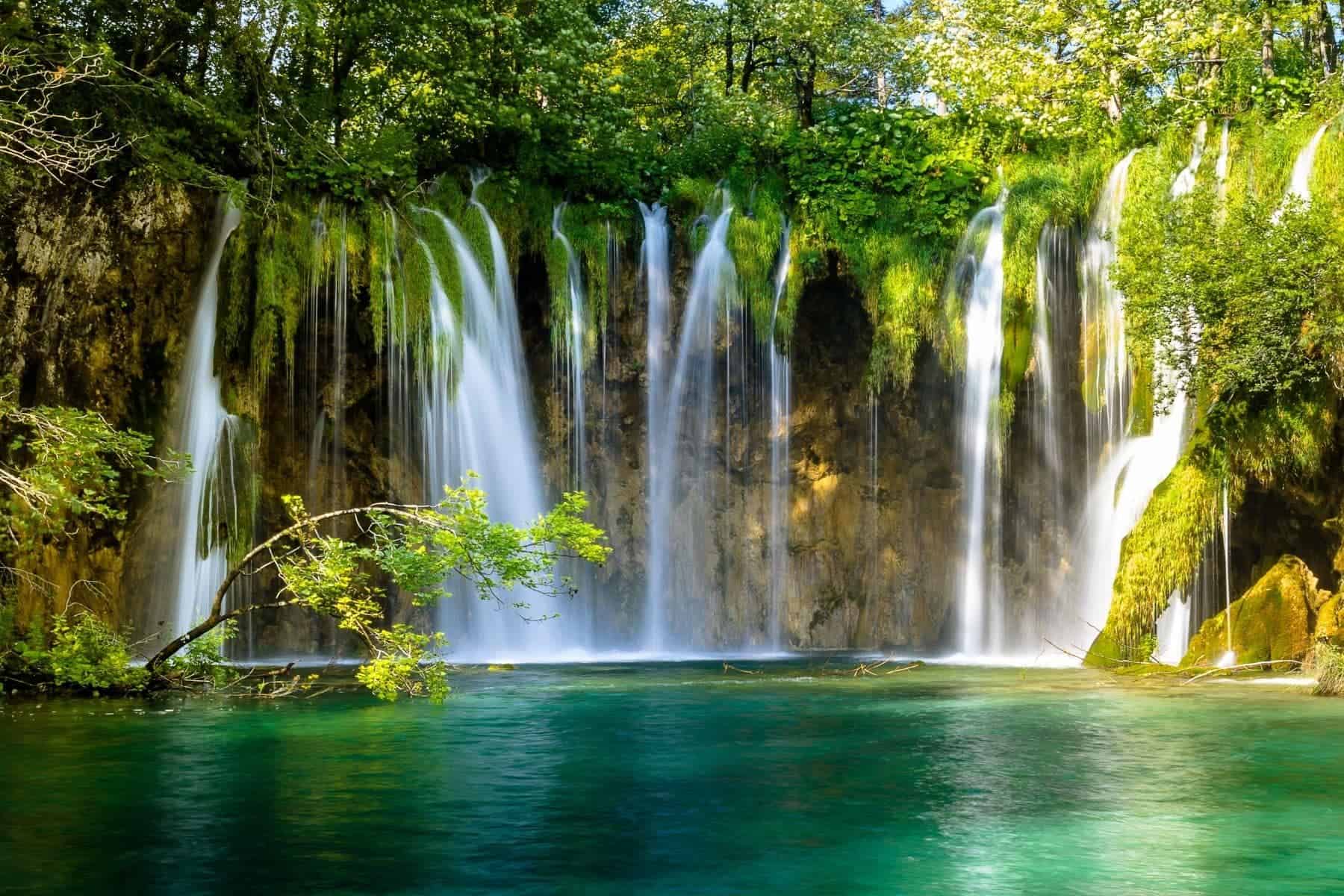
Location: Croatia
Inaugurated as a national park in 1949, Plitvice Lakes National Park is the Croatia’s oldest national park. It became famous for tufa formation, a process by which tufa barriers and subsequently lakes are formed. For that, it was designated a UNESCO World Heritage Site in 1979.
The national park is mostly covered in forest vegetation, while the lakes only comprise less than 1%. The entire lake system is divided into two parts: the Upper Lakes and Lower Lakes.
Plitvice Lakes National Park is open year-round. Various lake tour programs are offered for visitors. If you’re up for a whole day tour, consider getting the K Program. It consists of an 18.3-km trail that takes about six to eight hours to finish. Meanwhile, the shortest trail, measuring 3.5 km, is offered under A Program. It lasts for two to three hours.
During your tour, you’re expected to follow all rules and regulations listed on the information panels. More importantly, ensure you leave no trace of your visit and take nothing from the site.
Hamilton Pool Preserve
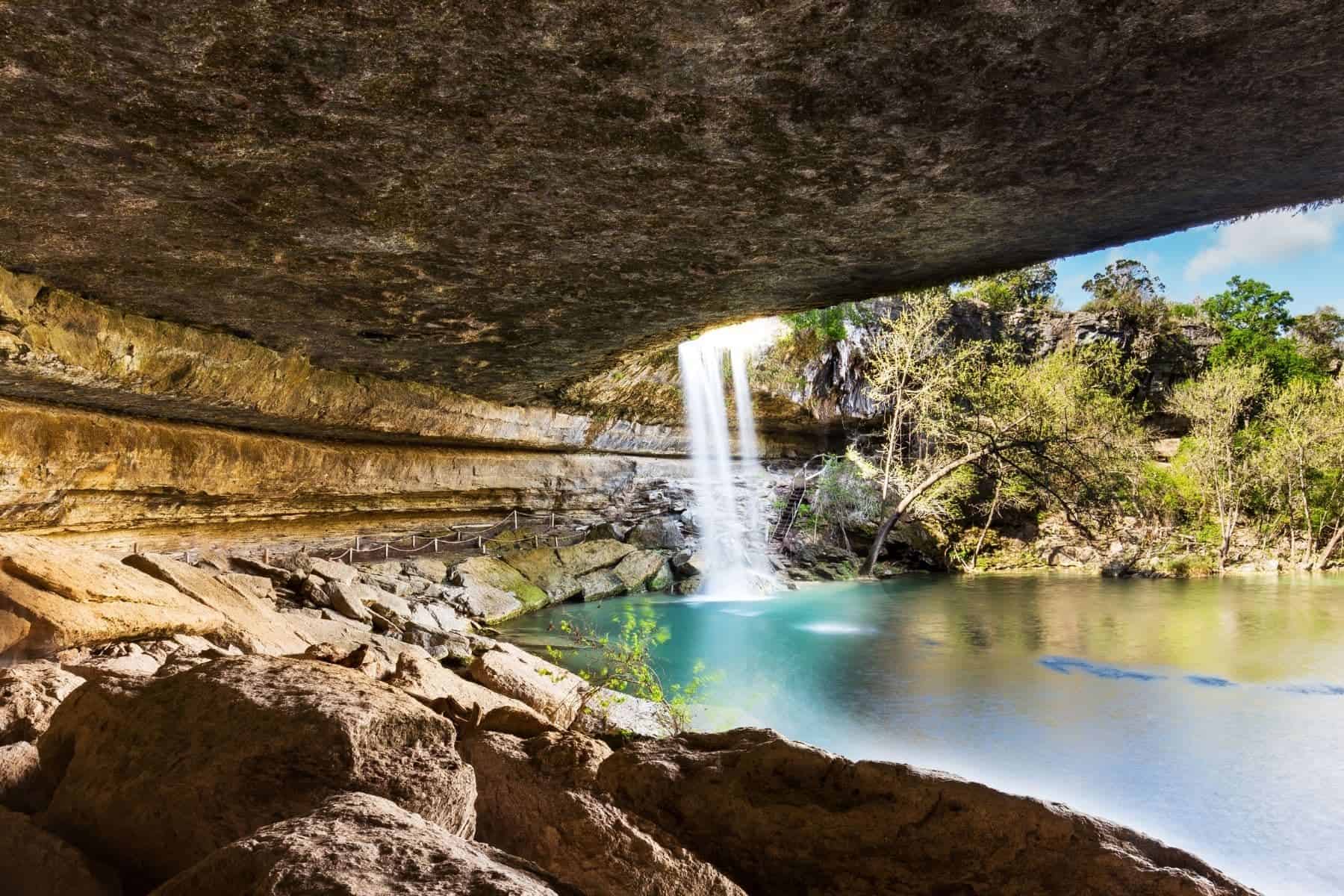
Location: Texas 78620, USA
Hamilton Pool Preserve is a well-preserved historical swimming hole. Its water level remains pretty constant despite the waterfall slowing down during dry season. Providing a scenic escape from urban life, it is surrounded by various flora and fauna. Fish species are also plentiful.
You need to make a reservation to visit this preserve. Morning reservation period is from 9am to 12:30pm, while the afternoon reservation period is from 2pm to 5:30pm. No entry is permitted after 12:30pm for the morning session and after 5:30pm for the afternoon session. You’re expected to have exited the premises 30 minutes after each session.
You’re allowed to bring one car for each reservation. Only a maximum of eight people is allowed per session. If you need to reschedule your reserved session, ensure you do it a day prior.
To reserve your slot, book it online and pay 12 USD. Upon arrival at the preserve, you need to pay an entrance fee per head. Only cash is accepted for the entrance fee. The fee for each adult aged 13 to 61 is 8 USD. Those aged 62 and above only need to pay 3 USD. Children aged 12 and below are entitled to free entrance.
Ok Jökull (The First Officially Extinct Glacier, Iceland)
Location: Ok Glacier, 311, Iceland
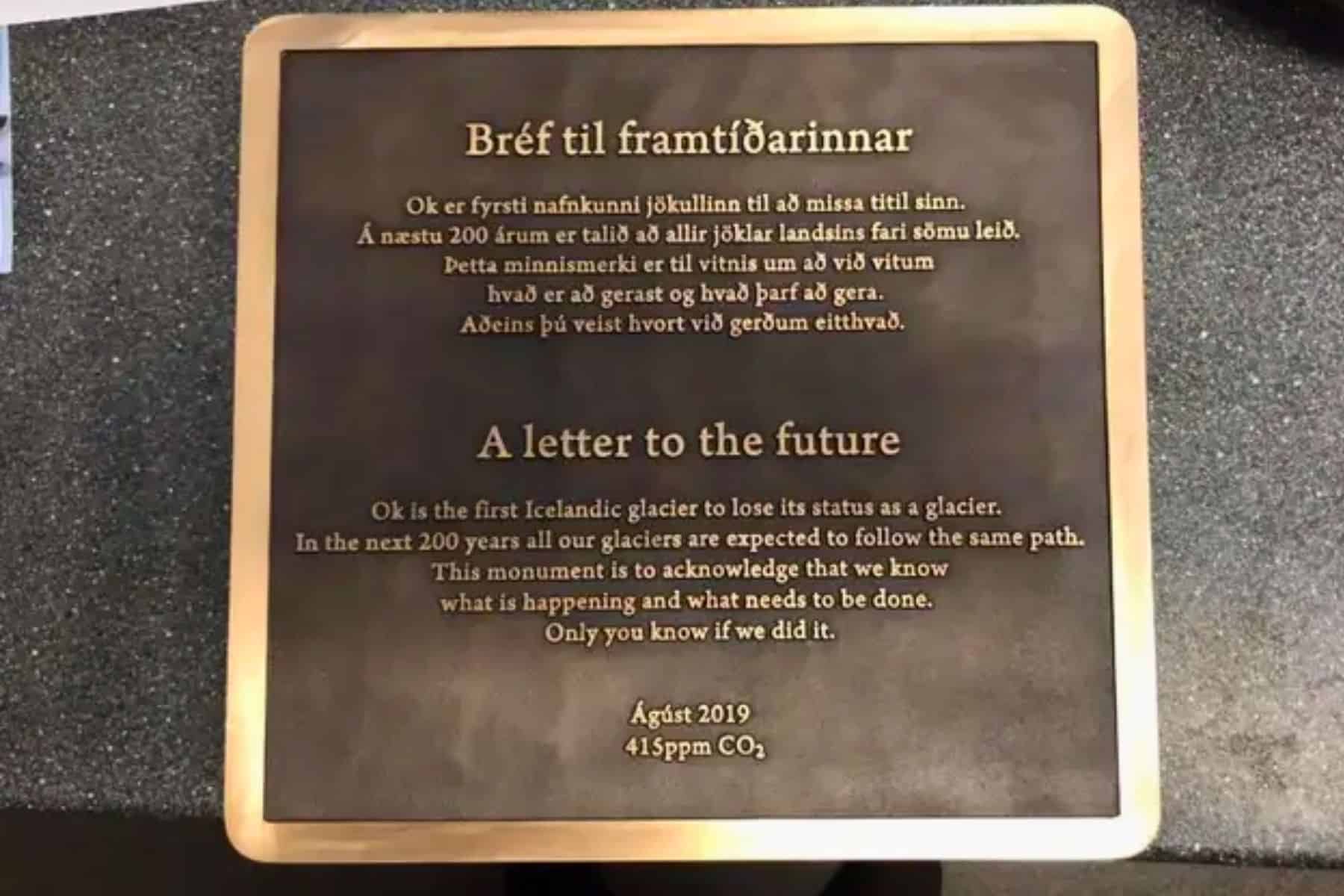
Ok glacier is an ancient glacier in Iceland that was officially declared extinct in 2014 due to global warming. Unfortunately, given the climate crisis, it won’t be the last one to melt.
A team of researchers created a memorial plaque to memorialize the glacier’s extinction. It occupies the site where the glacier stood. The plaque’s inscription is a message to the future, warning about the current dilemma on climate change. Essentially, it’s a call to action for every visitor.
Further, the plaque says “415ppm CO2”, which is the ratio of greenhouse gases in the atmosphere at the time of inscription in 2019. The last time the earth had this much carbon dioxide was roughly 3 million years ago, which was before there were ever humans on the planet. It’s a reminder that people are now living in environmental conditions they’ve never been exposed to before. The unfortunate reality is that the number is likely to increase in the years to come.
Umshiang Double-Decker Root Bridge
Location: 7M2C+GQ5, Nongriat, Meghalaya 793111, India
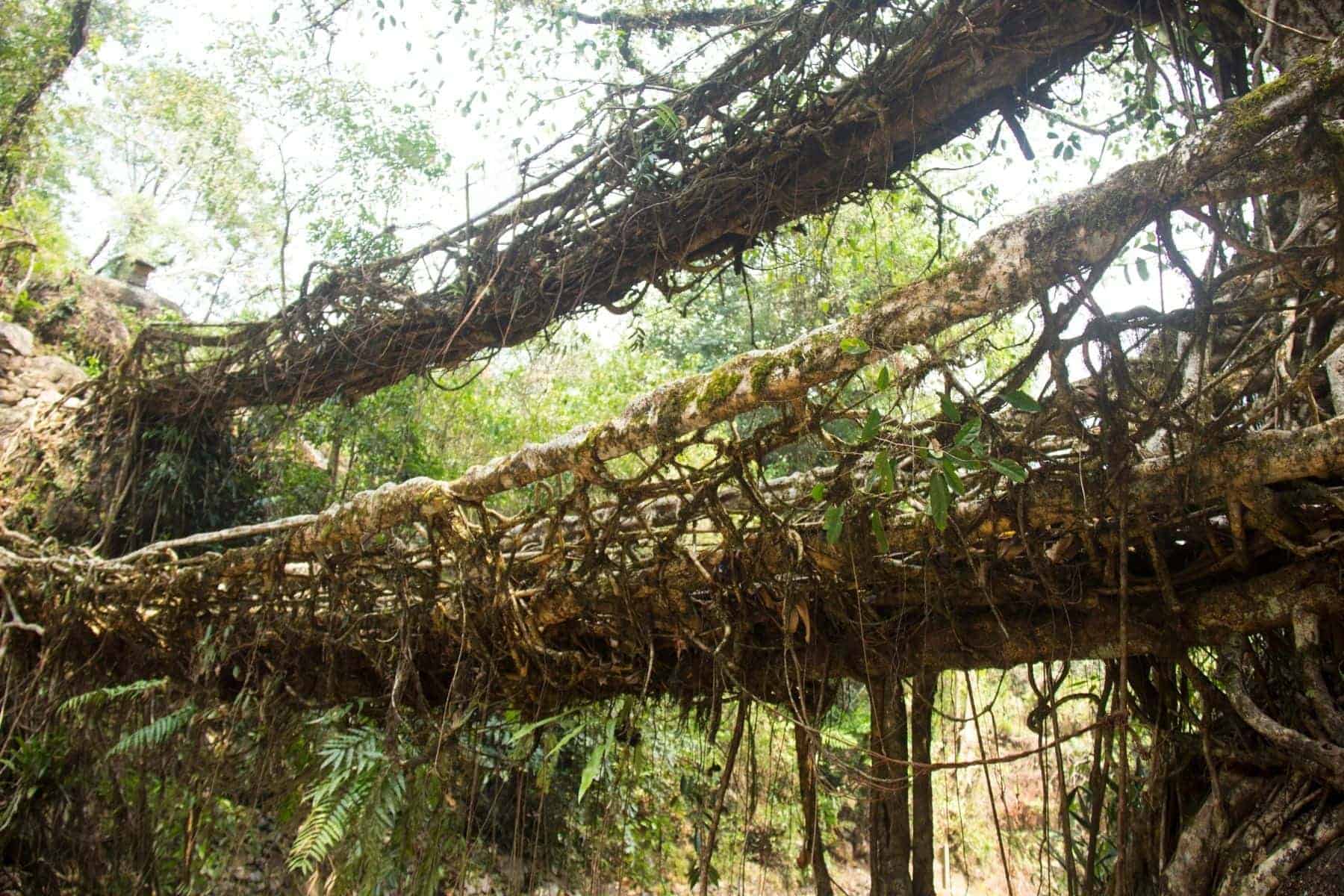
Umshiang Double-Decker Root Bridge is one of the most impressive bridges in Meghalaya. Although not gigantic or considered a fine engineering marvel, it’s pretty appealing because of its literal connection to nature or natural construction.
This bridge was patiently formed out of a rubber tree’s roots. A sliced-up betul nut tree trunk was used to guide the rubber trees’ roots until they reached the other side. As the plant grows, so do the roots, which then become strong enough to walk on. This process usually takes 10 to 15 years.
Stones were placed on the roots to create a clear path. As the roots grow around the stones over the years, the bridge only becomes stronger.
What makes Umshiang Double-Decker Root Bridge special and better than a modern, well-engineered bridge is that it requires little to no maintenance. It comprises two bridges with one above the other.
Galápagos Islands
Location: Islas Galápagos Ecuador
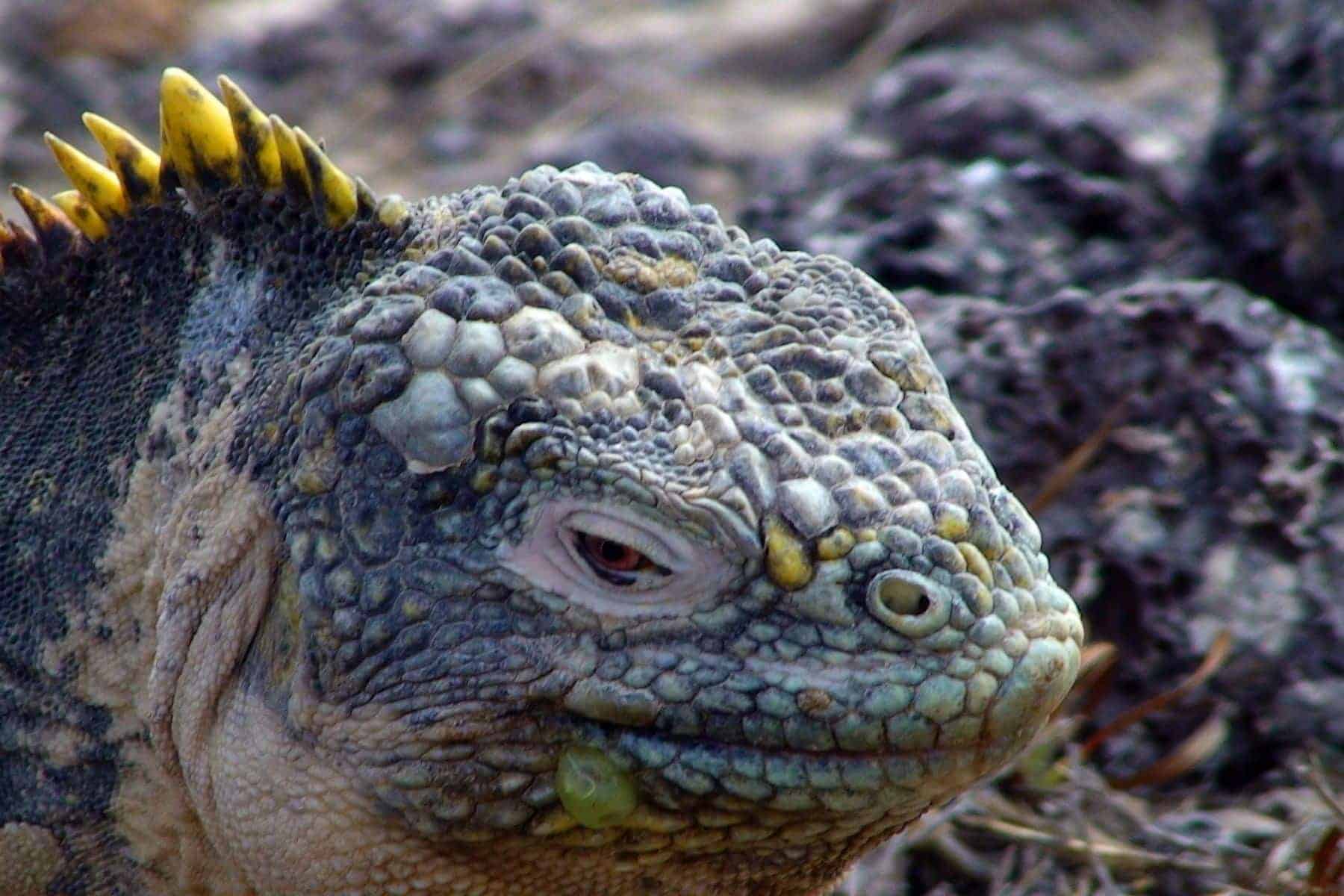
A group of islands sitting at the confluence of three ocean currents, the Galápagos Islands is considered a living museum and showcase of evolution. What makes it unique is the still ongoing seismic and volcanic activity revealing the processes that led to the islands’ formation. These processes are what inspired Charles Darwin’s infamous theory of evolution by natural selection.
The confluence of major ocean currents means marine life is abundant on the islands. The only lizard swimming in the sea, Galapagos marine iguana, can be found here.
There are various ways to explore this incredible group of islands. You can go on a luxury cruise if you have the budget for it. A typical cruise is all-inclusive, so you can enjoy good food and drinks on board, and try different activities as you move from one island to another. You can kayak on calm bays or snorkel to appreciate the vibrant marine life.
To protect the islands and ensure visitors a hassle-free trip, tourists are required to be accompanied by certified naturalist guides throughout their visit. Their primary role is to enforce rules and regulations put in place to preserve the islands’ natural beauty as they tour you around. Each guide can handle a maximum of 16 tourists.
Mount Chimaera (Eternal Fires)
Location: Kuzdere, 07980 Kemer/Antalya, Türkiye
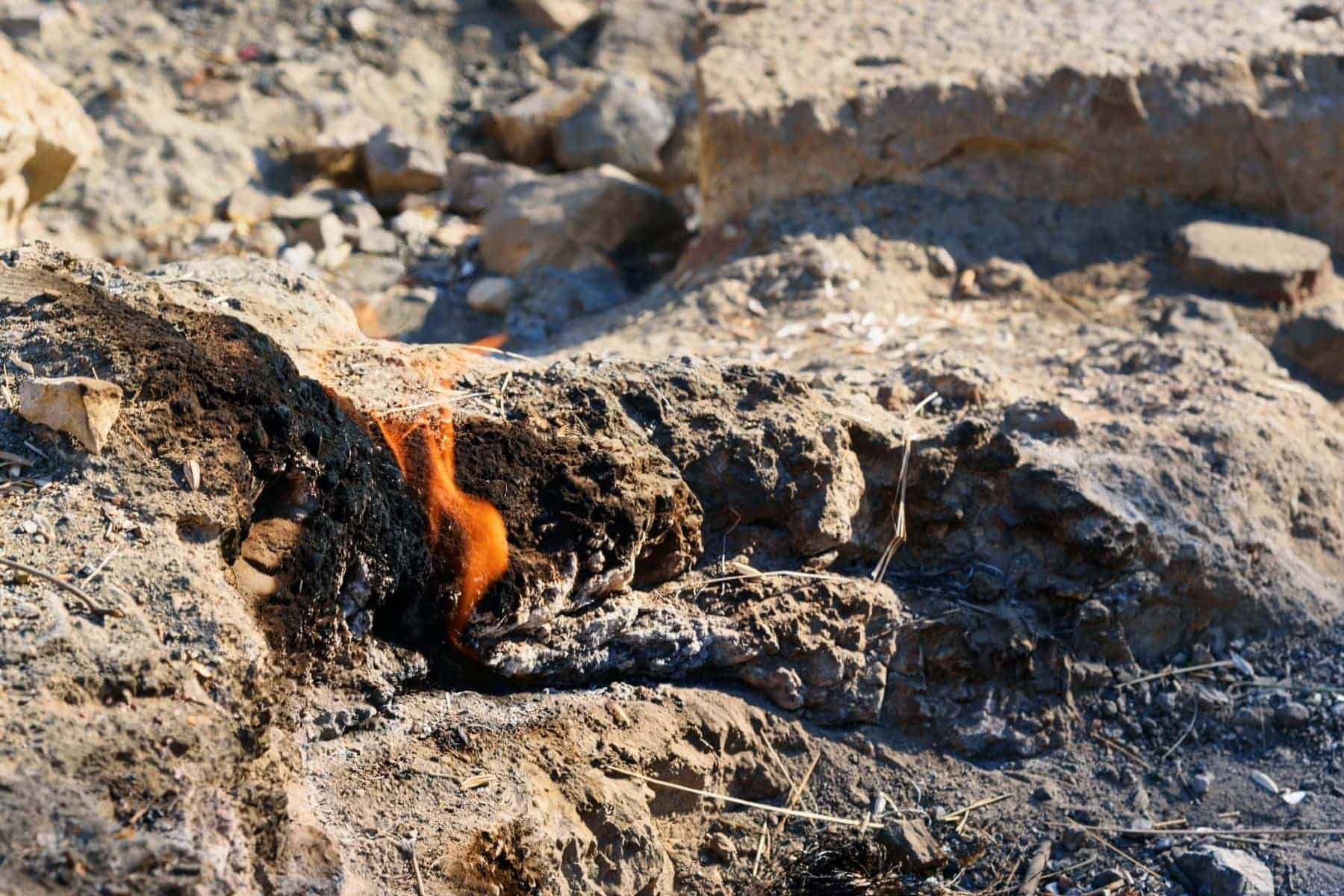
Mount Chimaera is known for the eternal fires phenomenon, a never-ceasing fire caused by methane emissions. The fires have been burning since ancient times. Nevertheless, they’ve become less powerful and look much like flames.
Right below the fires are the ruins of the Temple of Hephaestus, the Greek god of fire. At the dawn of Christianity during the Byzantine period, a basilica was constructed over the remains.
By the entrance of the site, you’ll find a fifth-century church. You’ll climb the hilltop from the entrance to see the so-called eternal fires. The climb typically takes 30 minutes. Lush trees shade the pathway, so you don’t have to worry much about the sun burning your skin on a hot day.
The best time to see the fires is at night when they’re more illuminated than they are in the day. Opening hours vary seasonally, but the site is typically open to visitors day and night.
Bay of Fundy
Location: Nova Scotia, Canada
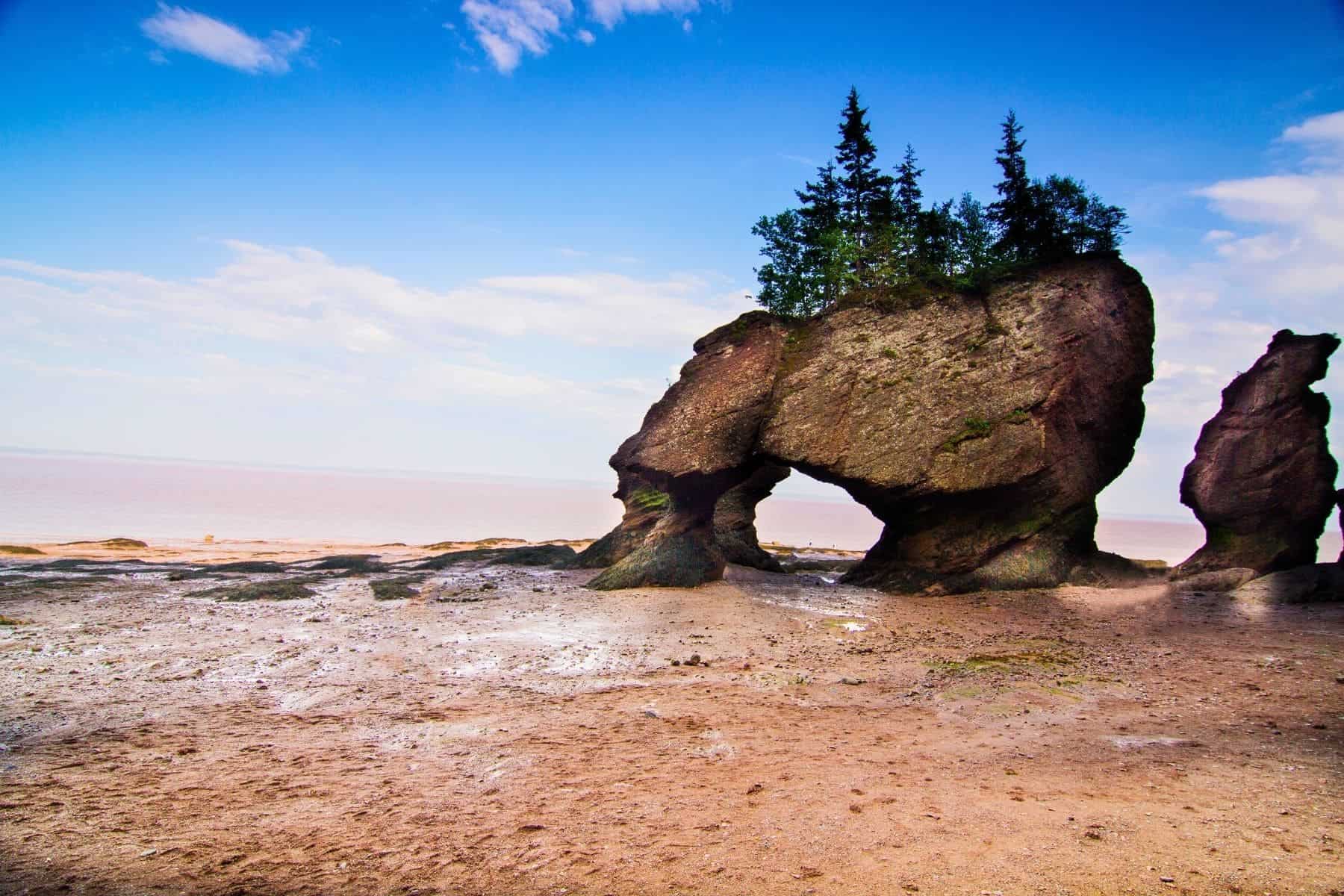
Known for having the world’s highest tides, Bay of Fundy is one of the most fascinating natural wonders on the planet. The tides vary in height, ranging from 3.5 m and to a whopping 16 m. These tides create a force equivalent to 8,000 locomotives. As this force stirs up nutrients from the ocean floor, it provides food for various animal species inhabiting the area.
Numerous activities await you here. If you’re visiting between June and October, don’t miss a whale-watching tour. Various tours departing from different areas are available. You don’t have to worry about marine life during your tour because these activities observe the Bay of Fundy Marine Tour Operators Code of Ethics, which prohibits chasing and harassing whales.
To explore underwater and discover the incredible life under the sea, you can try scuba diving. One of the best diving spots is Deer Island, which you can easily access by ferry. Since the water temperature ranges from 0C to 2C, it’s highly recommended that you wear a dry suit during your dive.
Milford Sound
Location: Southland 9679, New Zealand
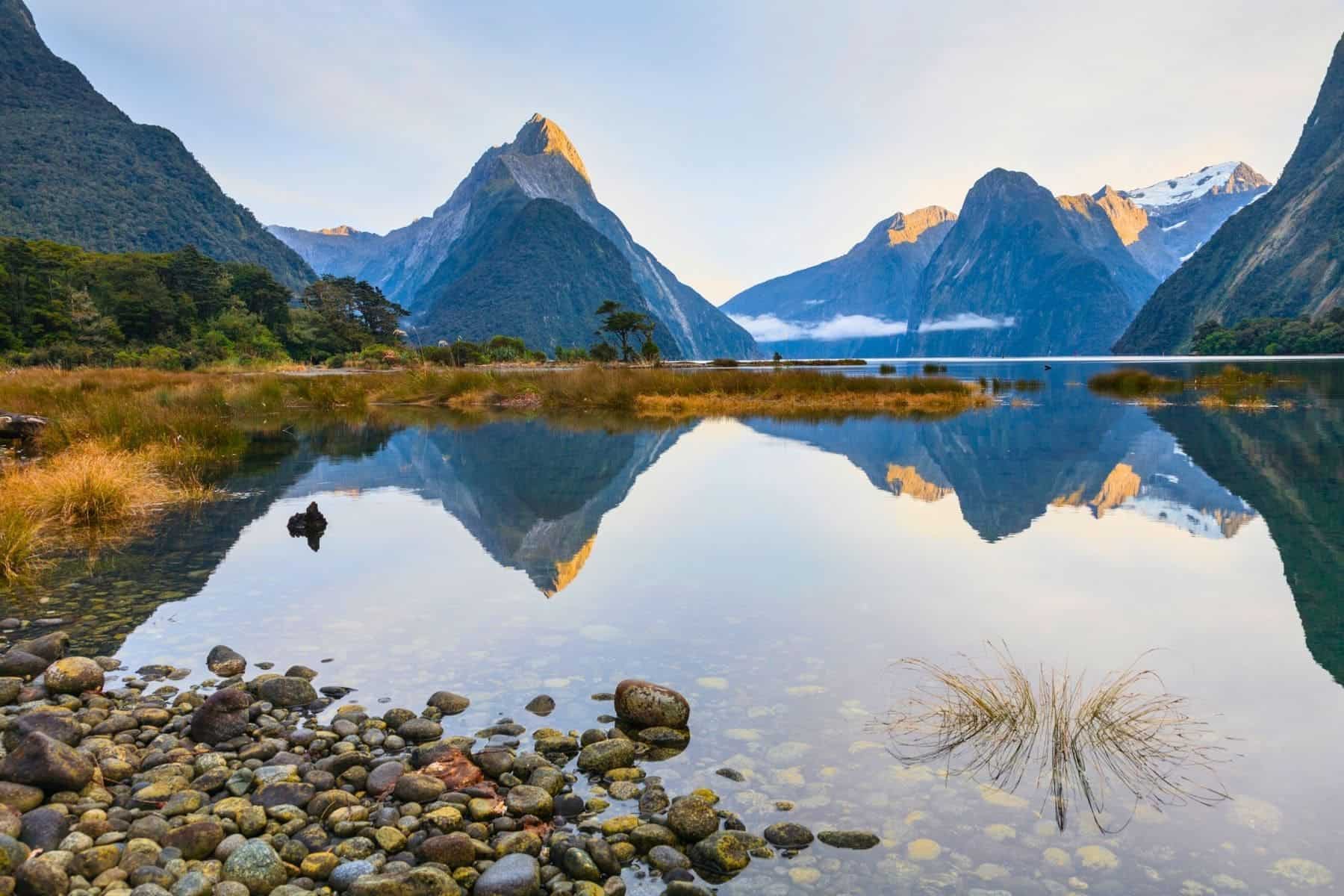
Milford Sound is Fiordland National Park’s best-kept secret. Although remote, it’s New Zealand’s only fiord accessible by road. Its captivating beauty makes the journey worth it.
The story of this natural wonder began when Maori people living in South Island uncovered it. They’d travel to the area to fish and hunt. It was inscribed in UNESCO’s World Heritage List in 1990, along with the rest of Fiordland.
Milford Sound is abundant with wildlife. Walking tracks and cruises will take you to different habitats and get up close with various animals, such as dolphins, penguins, seals, and more.
Plant life in the area is also pretty rich. Under the sea, you’ll be quite fascinated by black coral. Over 60 varieties are present. On land, you’ll find more than 700 native plants you won’t find anywhere else.
There are various modes of transportation to get to the fiord. For the most cost-effective option, you can ride a bus. You may upgrade your bus ride to a coach tour that includes a cruise along Milford Sound. If you prefer to take a scenic drive on your own, that’s also an option. For those with more than enough budget, flying and admiring Fiordland National Park from above is possible.
Oyamel Fir Forest, Mexico – The Monarch Butterfly Migration
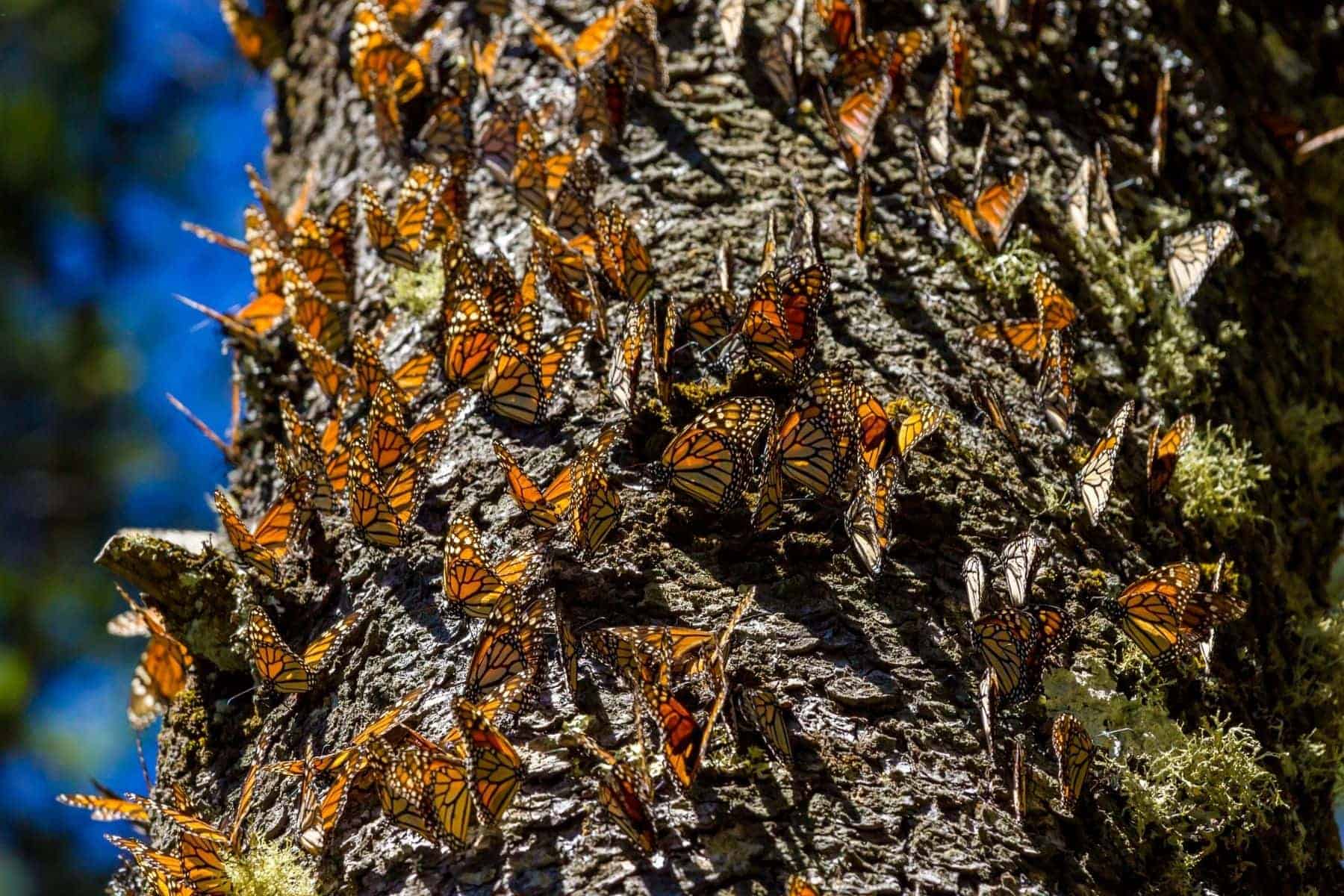
Location: Cerro Altamirano, Sierra Chincua, Cerro Pélon
Oyamel fir forest is home to the Monarch butterfly migration. Only growing at high altitudes, Oyamel firs are located at an altitude of at least 2,400 m high. Monarch overwintering sites are only situated on 10 to 12 isolated mountaintops.
This ecosystem is Mexico’s most endangered type of forest, with only 2% of the original forest remaining. It thrives in cold and wet environments, so it adapted as the earth warmed, moving to higher altitudes.
Monarch butterflies are behaviorally and physically adapted to the same conditions as oyamel firs. Although they are tropical butterflies, they can resist freezing in the cold. However, they can only survive at certain temperature levels. They can freeze to death if temperatures drop to mid-to-low 20 F.
The Monarch Butterfly Biosphere Reserve is an initiative committed to protecting monarch butterflies hibernating in the forest. Thousands of tourists visit the reserve annually, which contributes to the livelihood of the indigenous communities in the area.
General Sherman
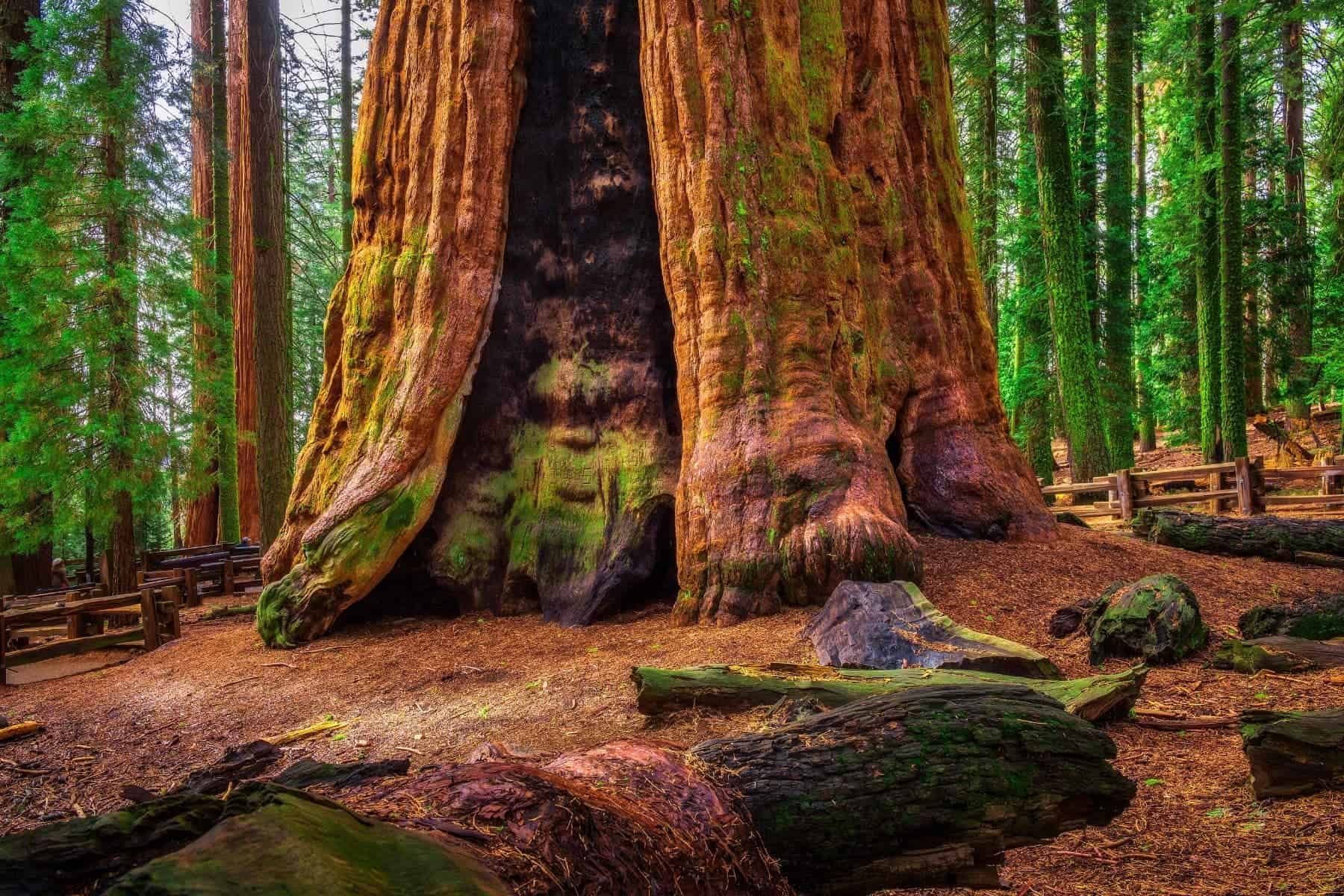
Location: California 93262, USA
General Sherman in Sequoia National Park is the biggest tree worldwide, standing at 83 m tall. At the base, it has a diameter of 11 m.
The Main Trail, which is 0.8 km long, features exhibits showcasing the natural history not only of this tree but of giant sequoias in general. It’s a paved pathway, so you won’t necessarily have difficulties hiking it. There’s also a wheelchair-accessible trail to accommodate everyone who wishes to see this natural attraction.
The tree has shallow roots, which are protected by a fence. During your visit, you’re expected to observe the proper distance from these roots by staying on the trail.
There are plenty of other sequoias worth seeing in the area. Congress Trail, a paved loop starting near General Sherman, allows you to see these trees. Meanwhile, Big Trees Trail offers interpretive exhibits about giant sequoias.
The main parking area for visitors features various facilities, such as food storage lockers and restrooms. Trash bins are also available.
Þingvallavatn
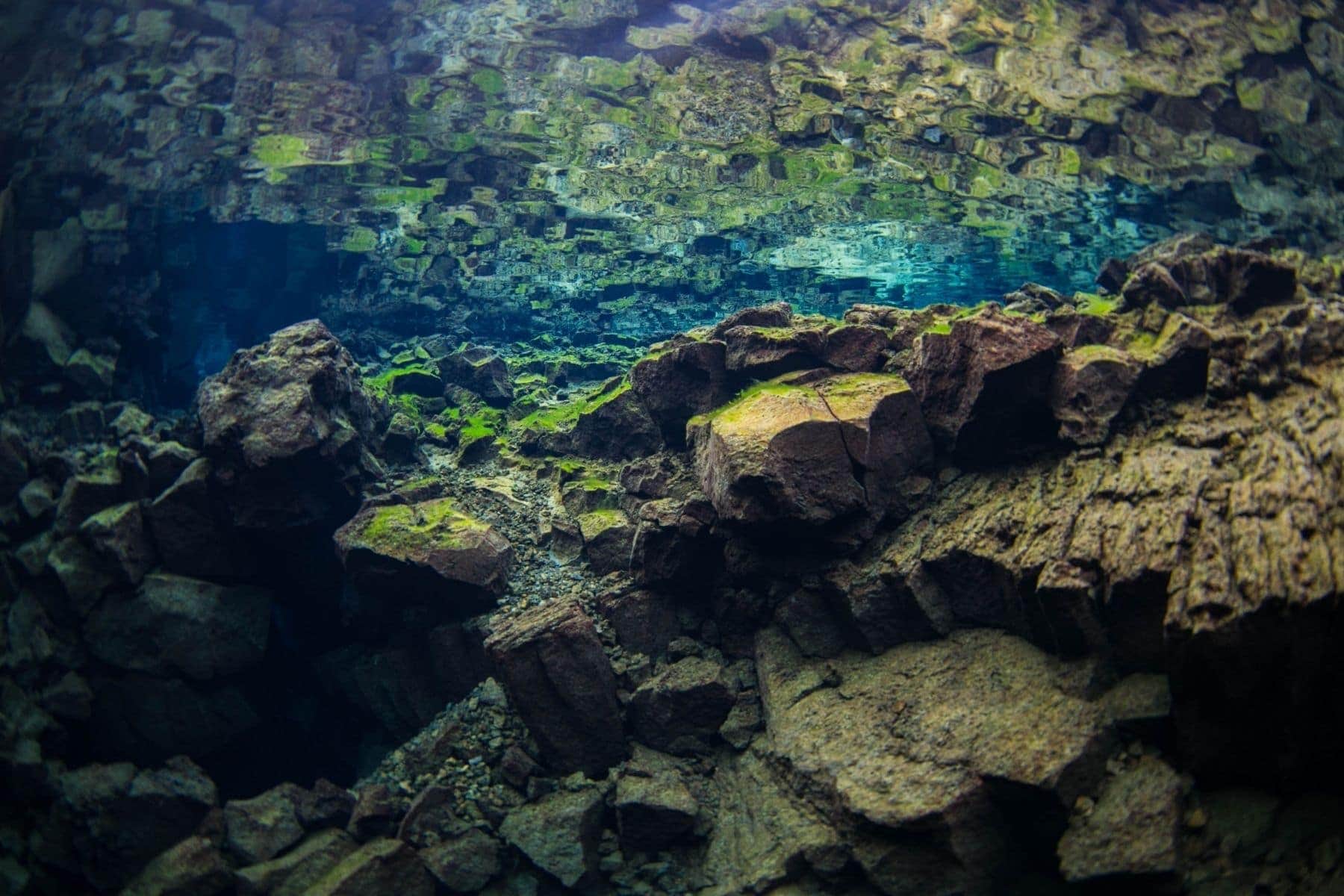
Location: Þingvellir, Iceland
A rift valley lake partially within Thingvellir National Park, Þingvallavatn is Iceland’s biggest natural lake. It covers about 84 sq. km. Its deepest part has a depth of 114 m.
This lake is home to four morphs of Arctic Char, which are excellent examples of species that can evolve to adapt to a secluded habitat. Other species on the lake include brown trout and three-spine stickleback.
One of the best activities around the lake is scuba diving. David’s Crack and Silfra Fissure are the area’s main diving spots. The former resembles a gorge formation across the Mid-Atlantic Rift. Only a few tour operators are qualified to provide tours on this dive site. Sitting between the Eurasian and North American tectonic plates, the latter is known for its crystal clear glacial water from the Langjokull ice cap.
Various organized tours are available, such as the Golden Circle & Snorkeling. It combines an exploration of the Golden Circle and snorkeling in the famous Silfra Fissure. The experienced guide can take your photos underwater to memorialize your experience.
Fingal’s Cave
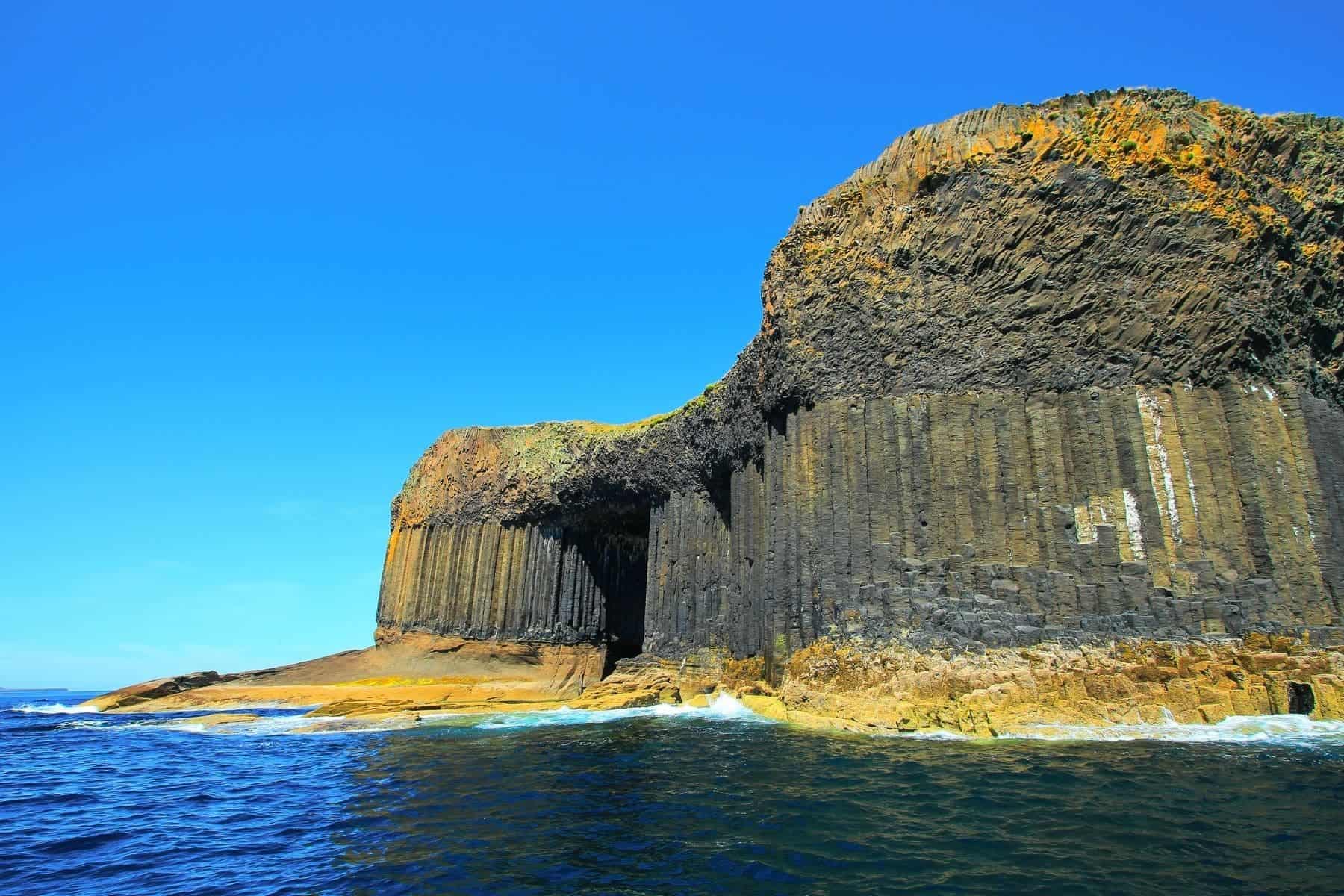
Location: Isle of Staffa, United Kingdom
Fingal’s Cave is one of the UK’s most popular sea caves. Its estimated length ranges from 69 m to 82 m. Meanwhile, the arched roof is believed to be somewhere between 20 m and 22 m above sea level.
The arched roof yields impressive natural acoustics harmoniously echoing the sound of ocean waves. Accordingly, the cave may have once been connected to the Giant’s Causeway in Northern Ireland through a lava flow.
This natural wonder became a sought-after destination when Sir Joseph Banks rediscovered it in the 18th century. It’s part of Staffa, which has been under the care of the National Trust for Scotland since 1986. In 2001, Staffa was inscribed as a National Nature Reserve.
Tiree Sea Tours offers a three-hour cruise that can take you to Fingal’s Cave. It’s an organized tour for a small group of up to 16 people. Rates start at 50 GBP per head, but prices may change depending on the season.
Seegrotte
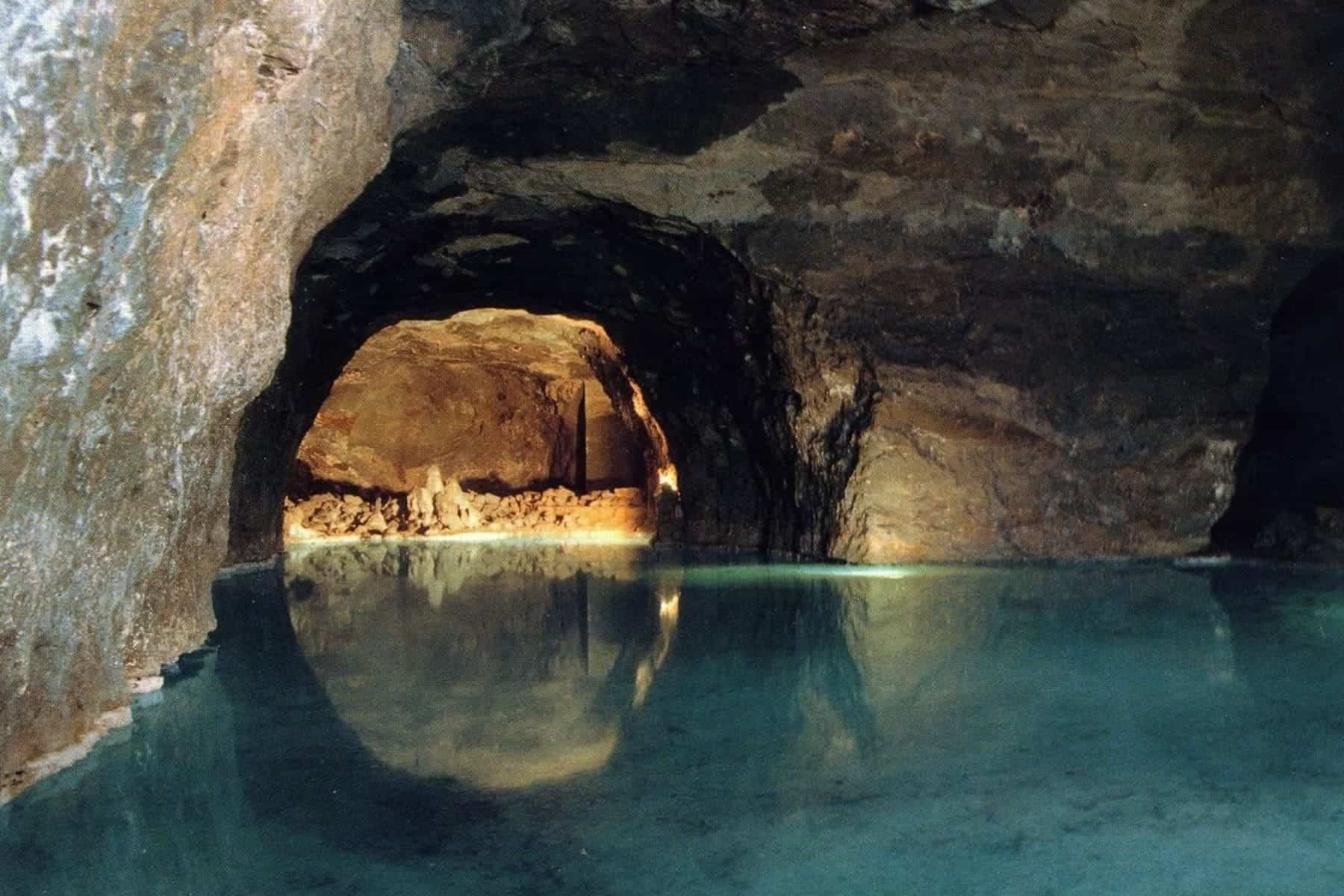
Location: Grutschgasse 2a, 2371 Hinterbrühl, Austria
Seegrotte used to be a gypsum mine. For over 80 years now, it’s been one of Austria’s most beloved destinations. The mystical nature of its tunnels and underground passages has already drawn millions of visitors from around the world.
Gypsum mining in the cave lasted from 1848 to 1912. An inrush of water caused by an explosion resulted in the end of operations. Nevertheless, it allowed for the formation of Europe’s biggest underwater lake.
Friedrich Fischer bought the abandoned mine and opened it to the public in 1932. Operations had to stop a few years later because of World War II. It started welcoming visitors again in 1984.
Seegrotte has two levels. The upper level is home to an airplane model, festival room, museum, and tower. It’ll give you an insight into how gypsum was mined back in the day. Meanwhile, 60 m below the earth’s surface, the lower level features Europe’s biggest underwater lake. You can take a guided tour of the lake on a boat.
Lake Natron
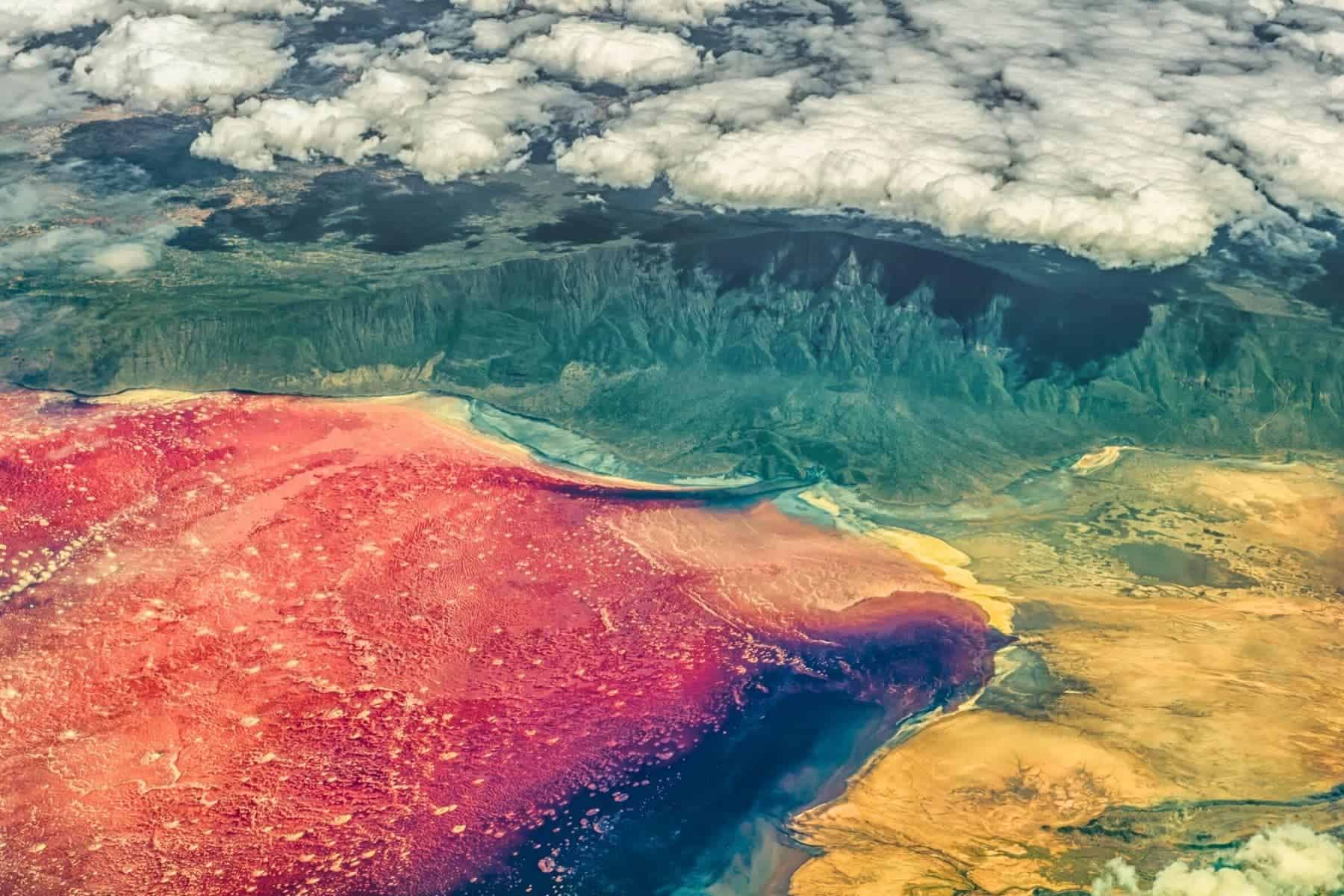
Location: CW39+555, Ngorongoro, Tanzania
Lake Natron lies on the border between Tanzania and Kenya. With its warm water, it’s a suitable breeding ground for Rift Valley flamingos. In fact, there are more than a million flamingos here.
The lake is the heart of Lake Natron Camp, an ecological camp with abundant wildlife. It offers various opportunities for recreation and relaxation. You can enjoy a glass of wine while dipping in the natural pool.
If you’re up for an adventure, you can go on a hike. The Ngare Sero Source Adventure Hike takes you to the Ngare Sero Gorge. It lasts four to six hours, so a packed lunch is a must. Rift Valley Day Hike, another six-hour hike, rewards you with sweeping views of the region by the time you reach the top. This trip leaves before dawn, so a picnic breakfast is part of the experience.
Moreover, you can see the well-preserved hominid footprints speculated to have been left between 5,000 and 19,000 years ago. After your adventures, you can get a rejuvenating massage from one of the locals.
Jigokudani Monkey Park
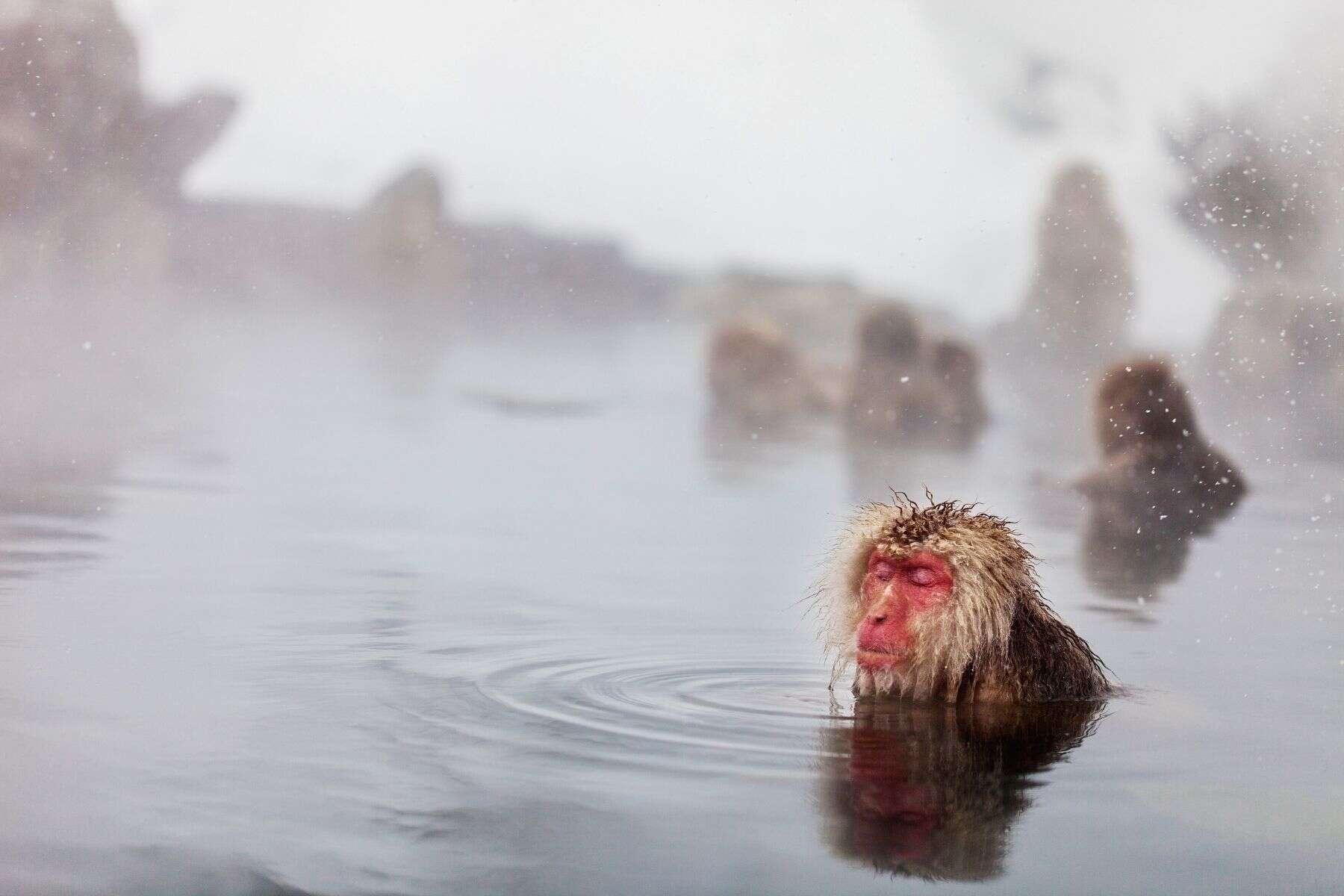
Location: 6845 Hirao, Yamanochi, Shimotakai District, Nagano 381-0401, Japan
Since its foundation in 1964, Jigokudani Monkey Park has been known for its wild monkeys. It allows you to see monkeys up close and observe their biology in a natural habitat. For this reason, it’s always been popular among photographers and researchers.
The monkeys here aren’t caged within fences, so they can freely come, go, and develop naturally. They can choose to stay in the park or just come occasionally for the food provided by the management and visitors.
Jigokudani Monkey Park is open during summer from 8:30am to 5pm. During winter, it is open from 9am to 4pm. Holidays aren’t fixed, and there might be unexpected closures depending on the weather. A single adults’ ticket costs 800 JPY. If you’re part of a group of at least 20 people, it only costs 680 JPY. For children aged 6 to 17, a single ticket costs 400 JPY. Kids aged below 5 are entitled to free admission as long as an adult guardian accompanies them.
Trümmelbach Falls
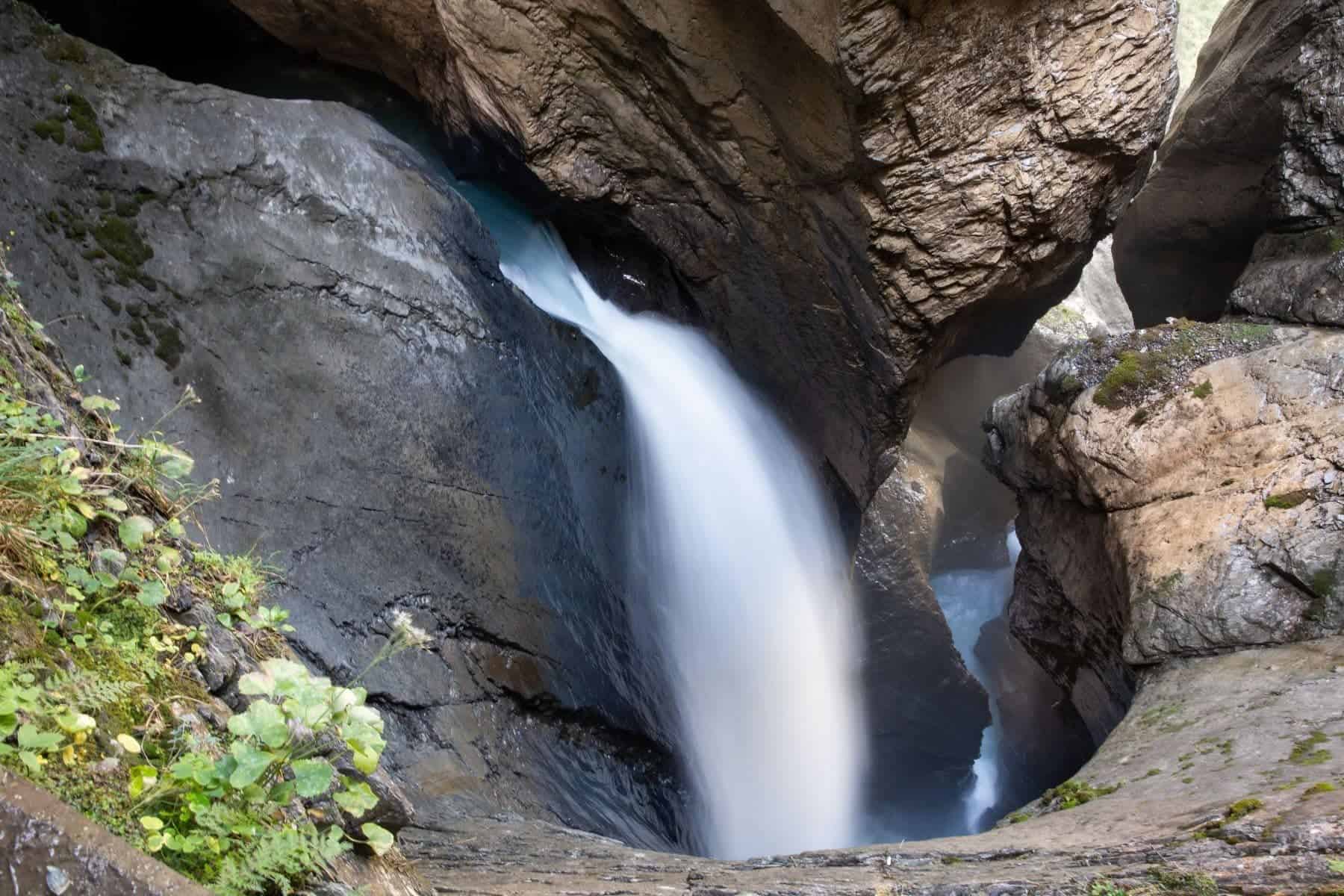
Location: 3824 Lauterbrunnen, Switzerland
Trümmelbach Falls is a group of glacial waterfalls inside a mountain. These waterfalls are Europe’s biggest subterranean waterfalls. They’re the only glacial waterfalls accessible underground by a lift, paths, and tunnels.
The waterfalls are among the 72 waterfalls of Lauterbrunnen Valley. The water falls at a speed of up to 20,000 liters per second, so the sight is pretty much impressive.
A paved path and plenty of stairs allow you to explore the entire cavern and see the waterfalls from different angles. Thanks to the high railings, it’s also safe for kids aged 4 and above to explore the cavern. However, note that some parts may be slippery. Extra caution must be taken to prevent accidents.
Trümmelbach Falls are usually open daily from 9am to 5pm during the months of April through November and from 8:30am to 6pm during the months of July and August. However, hours are subject to change depending on weather conditions.
Altai Mountains
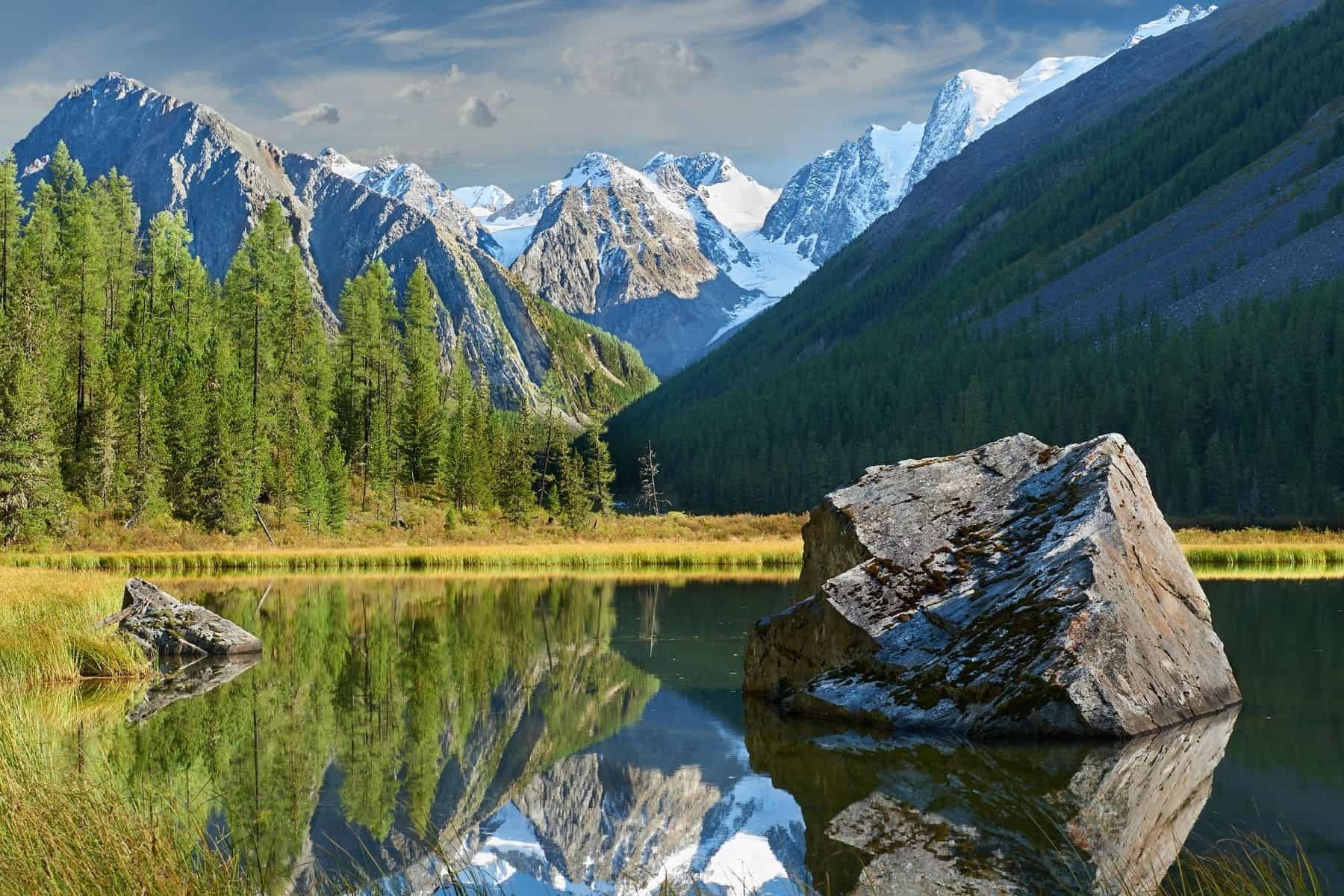
Location: Mongolia
Altai Mountains is a complex mountain range in Central Asia, spanning from the Gobi Desert to West Siberian Plain. While it’s mainly part of Russia, it sits near the border with China, Kazakhstan, and Mongolia.
The mountain system’s highest point is Belukha, which is about 4,500 m high. It’s completely covered with snow from top to bottom.
The mountain range sees a long and extremely cold winter season. On the other hand, summer is relatively short and even cool in higher portions. The plant life here is quite impressive. The area has four distinct vegetation zones: alpine, mountain forest, mountain steppe, and mountain sub-desert. Meanwhile, animal life conforms to vegetation patterns.
Many exciting activities await you at the Altai Mountains. You can try climbing, hiking, and snowboarding. If you’re into water-based recreation, you can try diving, fishing, and kayaking. Swimming is also possible. During spring, you can marvel at the incredible views of maralnik, a type of rhododendron.
Railay
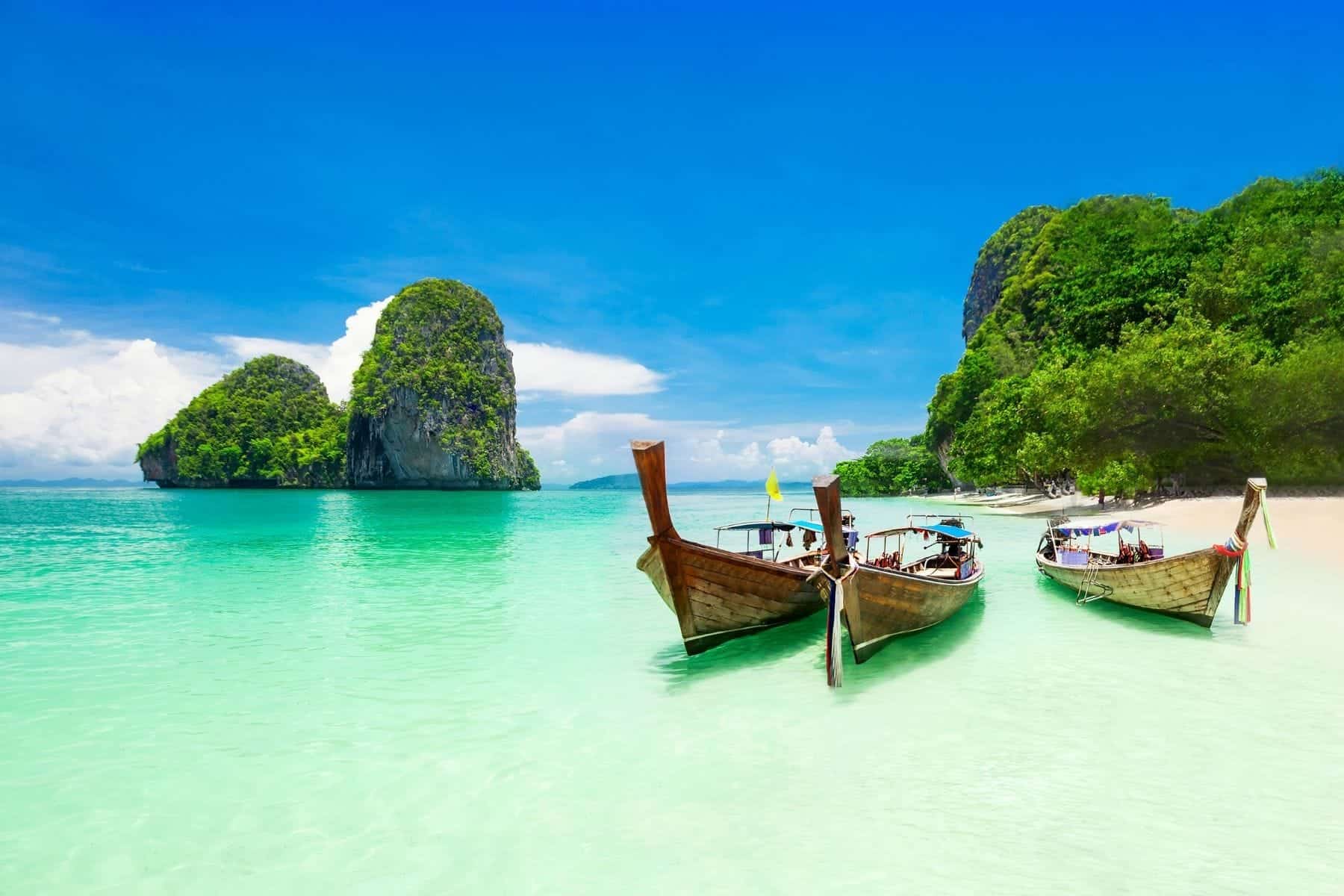
Location: Ao Nang, Krabi, Thailand
Railay is one of Thailand’s most famous beaches. Beautifully surrounded by limestone cliffs, it offers a nice change of scenery for tourists seeking to escape the hustle and bustle. On top of that, it’s remotely located away from the mainland.
The beach has three main areas. Railay West has an abundance of limestone cliffs. The sunset views in this area are spectacular. Railay East is a renowned rock climbing destination because one of the cliffs here is suitable for rock climbing. The third part, Phra Nang Cave Beach, houses Phra Nang Cave. Inside the cave is a shrine of Phra Nang, which is worshipped by sailors.
Aside from rock climbing and watching the sunset, you can try sea kayaking, snorkeling, and whitewater rafting. You can also go on a jungle trek and an elephant trek.
Getting to Railay has become a lot easier since the opening of Krabi Airport in 2000. From this airport, you can take a cab to Ao Nang. From Ao Nang, you can hop on a boat directly to the beach.
Rainbow Mountains (Zhangye National Geopark)
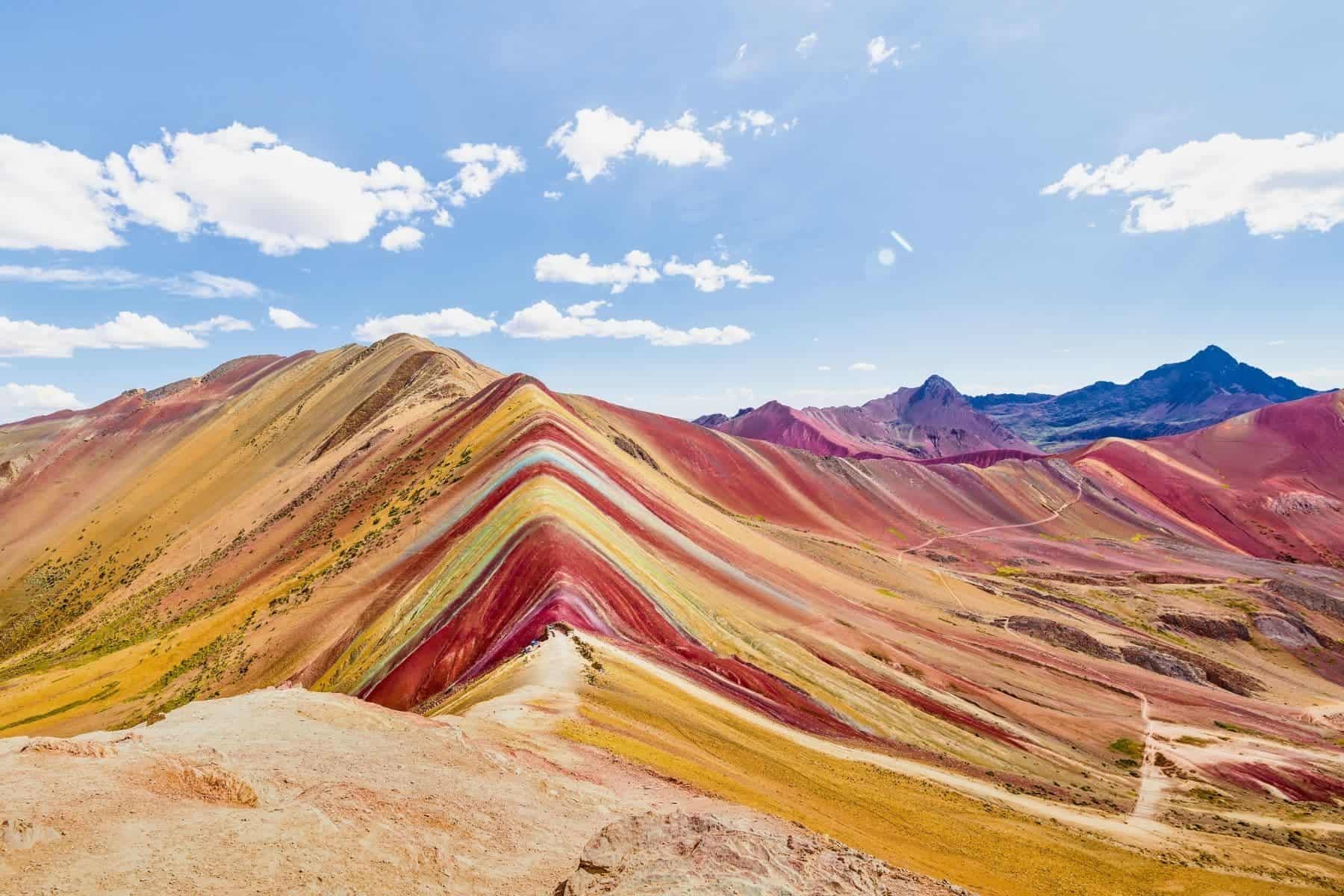
Location: W48J+CW7, Sunan Yugur Autonomous County, Zhangye, Gansu, China, 734019
Known for its rainbow mountains, Zhangye National Geopark is generally a breathtaking geological wonder in Gansu. The colorful rock formations look like a painting, whether from afar or up close. There’s blue, green, red, white, and yellow. For its impressive beauty, the landform has been designated a UNESCO World Heritage Site.
The rainbow mountains cover an area of about 510 sq. km within the national geopark. The science behind the colors is that mineral deposits were exposed through erosion. These deposits have various colors that offer a stunning contrast against natural light.
Scientists and researchers are still studying the formations to understand their origins. They can provide insights into the planet’s geological history. For that, the park is considered a living laboratory.
Zhangye National Geopark has multiple well-maintained boardwalks and viewing decks. You can marvel at the picturesque views from one of these platforms. For your convenience, the park offers shuttle buses going around the premises.
Great Blue Hole
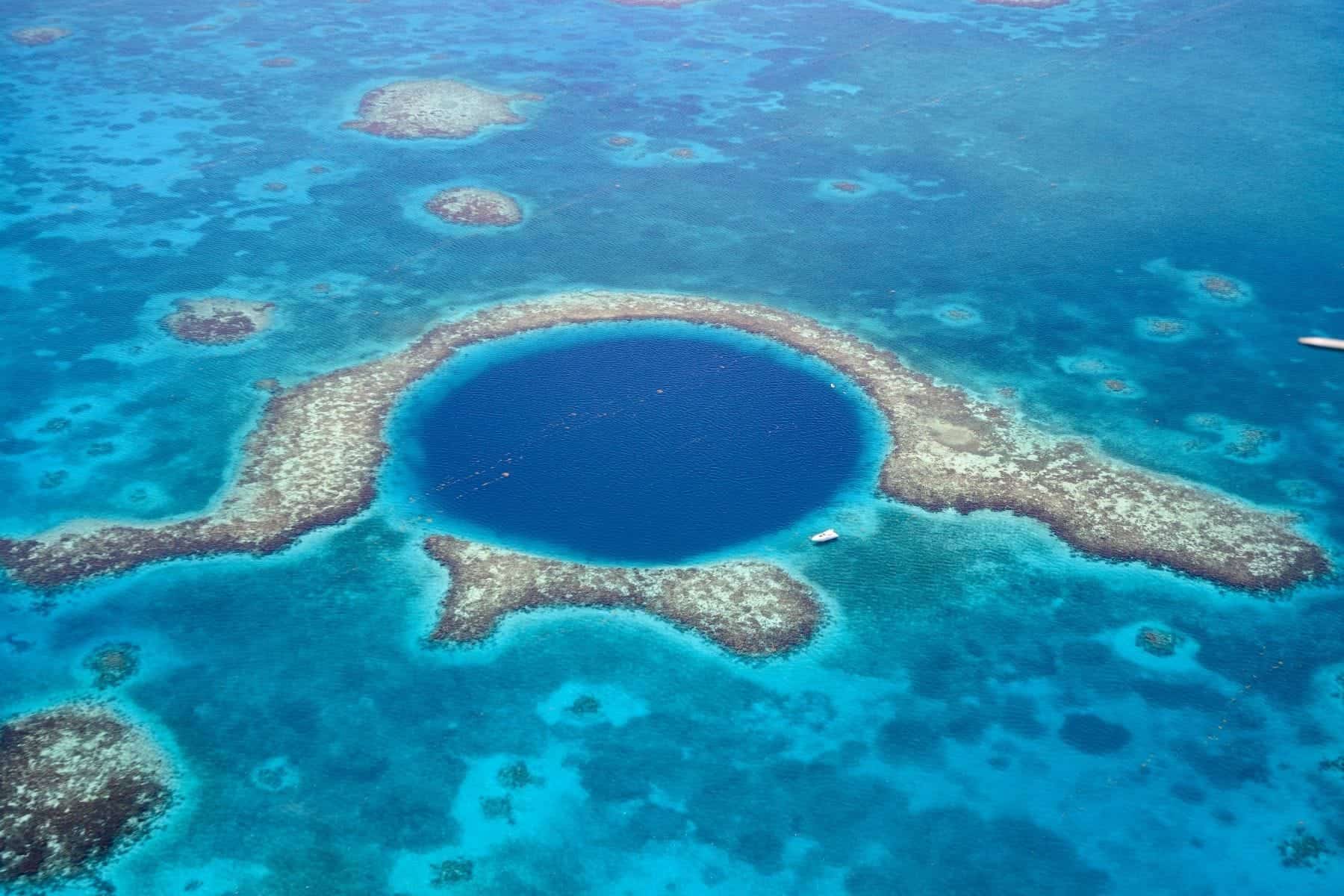
Location: Great Blue Hole
Great Blue Hole is the world’s most popular blue hole. Jacques-Yves Cousteau, who called it 1 of the 10 best dive sites worldwide, is credited for its fame. It is part of the Belize Barrier Reef Reserve System, which has been a UNESCO World Heritage Site since 1996.
The hole lies in Belize’s lighthouse reef atoll. It was originally a limestone cave thousands of years ago. As the water level rose, the cave flooded, and its roof collapsed. The deepest part is 124-m deep.
Of course, Great Blue Hole is a world-renowned dive spot. It’s easy to reach from the shore. The lack of current also makes it appealing for freediving. So, unsurprisingly, it draws thousands of diving enthusiasts from around the world. You’ll see plenty of Caribbean reef sharks and nurse sharks underwater. Plenty of marine flora also surrounds the hole. If you’re not into diving deep into the ocean, you may also snorkel around the hole.
Waitomo Glowworm Caves
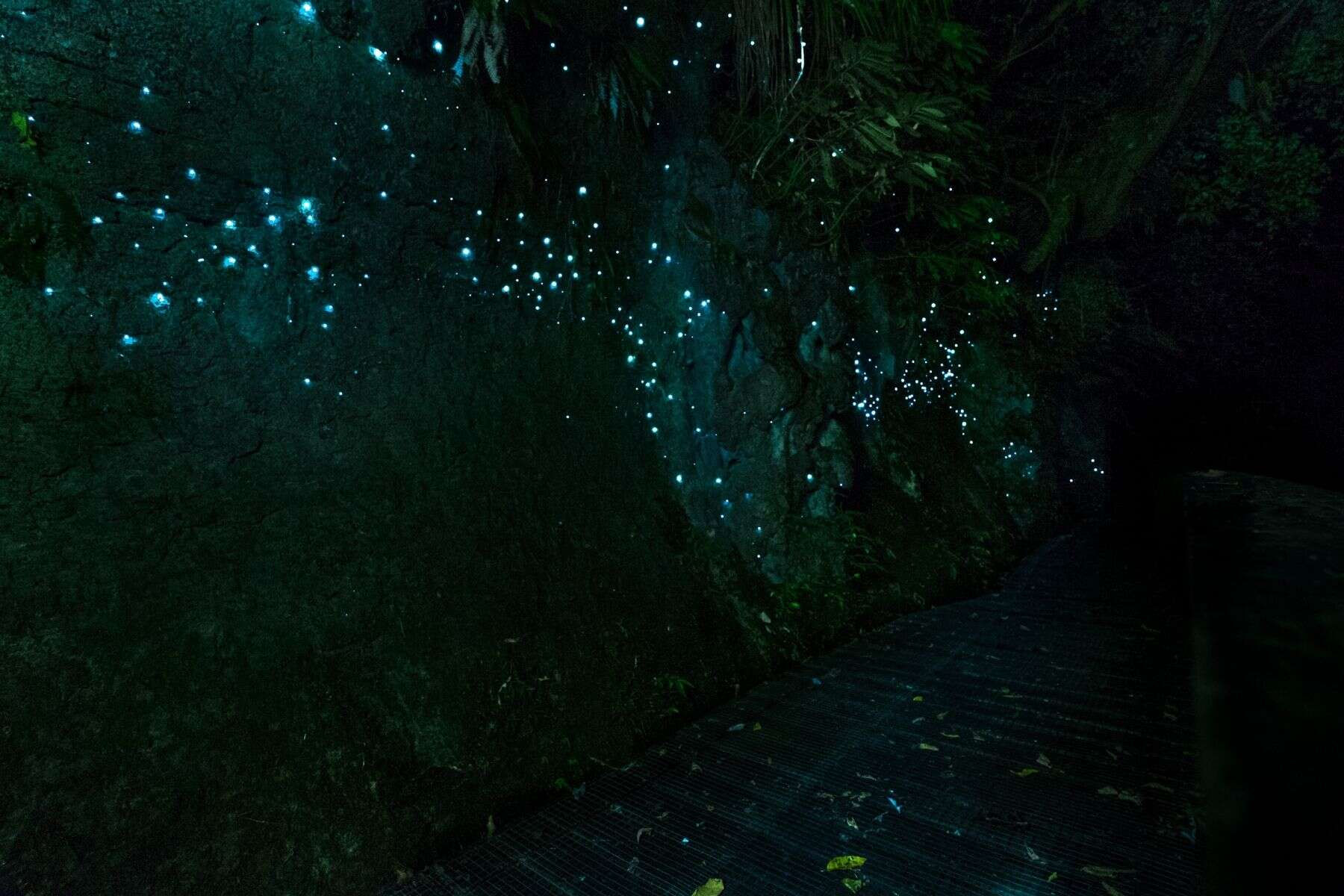
Location: 39 Waitomo Village Road, Waitomo Caves 3977, New Zealand
Filled with thousands of glowworms, Waitomo Glowworm Caves are considered some of New Zealand’s most fascinating natural attractions. You can marvel at these wonders by going on a tour, which takes you to two main levels: upper and lower. The former is the dry area featuring stunning cave formations. Meanwhile, the latter features the cathedral, stream passages, and of course, glowworms.
Most guides are direct descendants of the Maori chief who first explored the caves, so you can expect to learn a lot from them. Their stories reveal a lot about the site’s rich history.
An adult’s pass costs 62 NZD, while a child’s costs 28 NZD. For a family of two adults and two kids, a group pass costs 154 NZD.
Black water rafting is one of the best experiences you can have here. Black Labyrinth allows you to explore the cave in all its glory on a tube. If you’re up for a more adrenaline-pumping adventure, you can do Black Abyss.
Waitomo Glowworm Caves are relatively easily accessible from some major cities. The nearest one is Hamilton, which is only a one-hour drive away. Auckland is 2.5 hours away.
Beautiful Places to visit before they Disappear
Great Barrier Reef
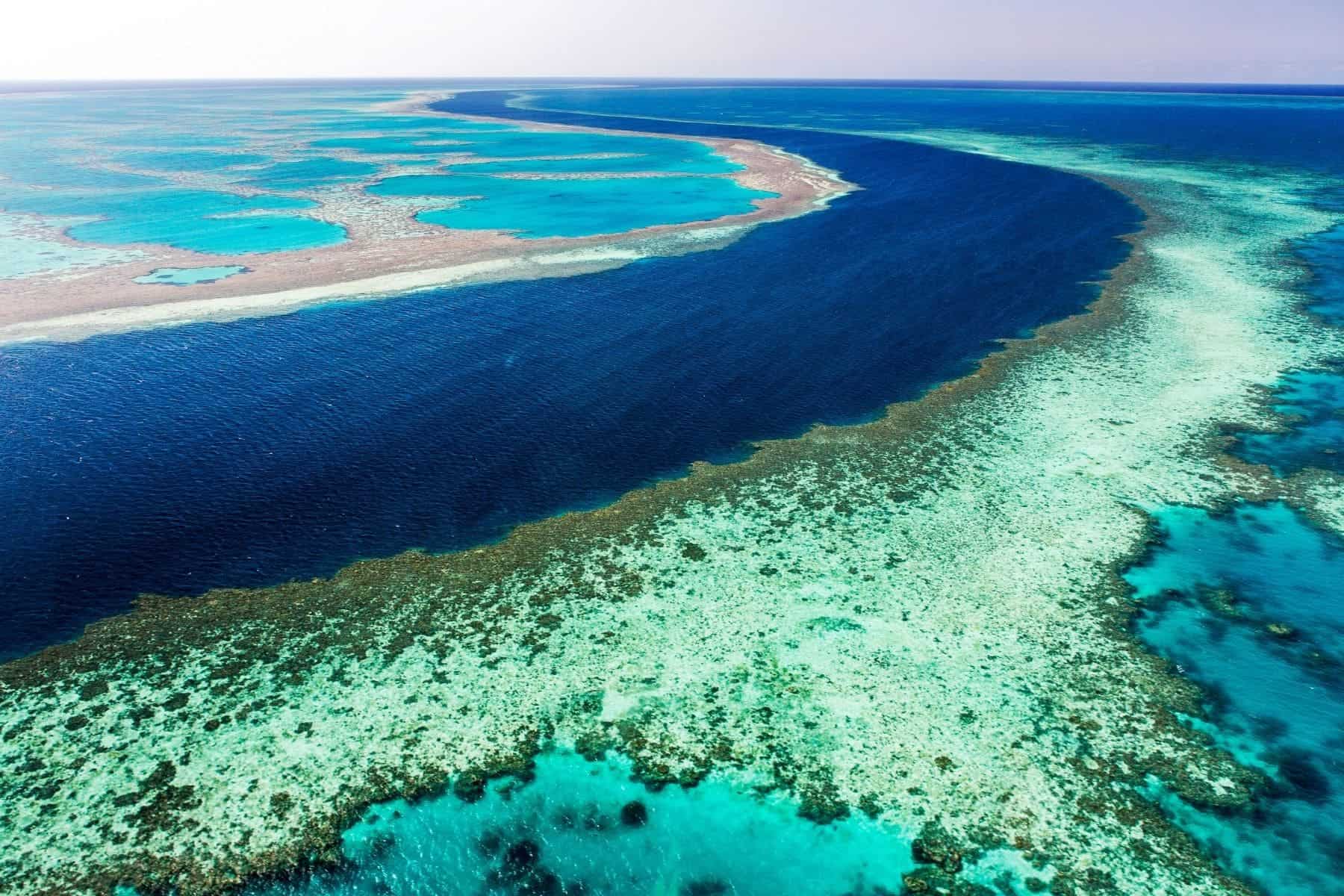
Location: Off the east coast of the Queensland mainland, Australia
Disappearing: 2050, if damage to the reef progresses as it is today.
Great Barrier Reef, featuring the biggest collection of coral reefs globally, is arguably Australia’s best natural wonder. Aside from having thousands of fish and mollusk species, and individual reef systems, it serves as a habitat for threatened marine creatures, such as the large green turtle and sea cow.
Of course, the best way to appreciate this massive coral reef system is to go scuba diving or snorkeling. One of the most famous dive sites in the area is Heron Bommie. Jacques Cousteau named it 1 of the top 10 dive spots worldwide.
No matter your skill level, there’s a dive tour suitable for you. Diving experiences usually depart daily from major cities and island resorts, which are within 20 to 60 minutes away from a dive spot via boat ride.
Glass-bottomed boat viewing is good enough for those who do not feel like going underwater. If you prefer an aerial view of this natural marvel, you can book an aircraft tour.
Amazon Rainforest
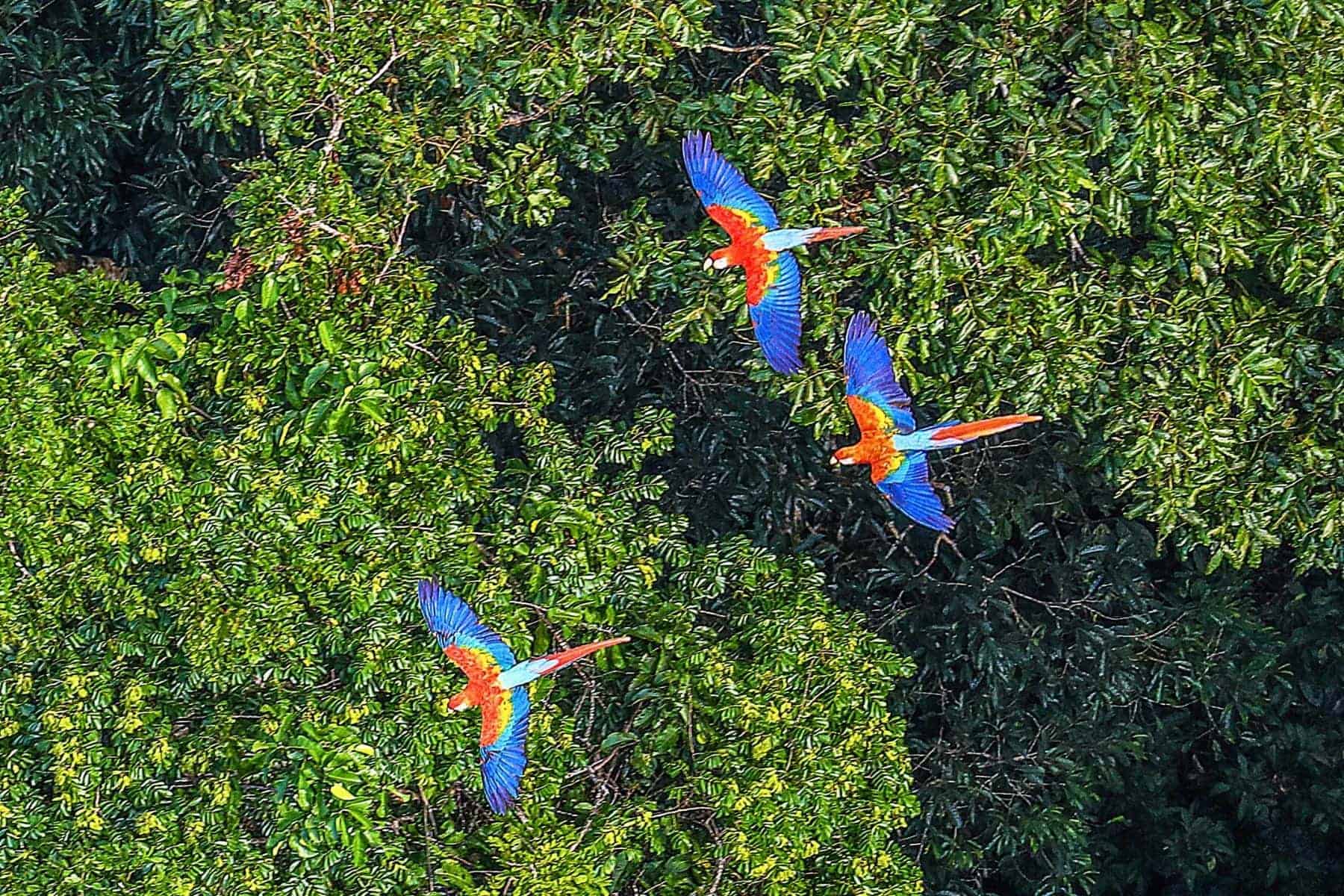
Location: Codajás, State of Amazonas, 69450-000, Brazil
Disappearing: 40% gone by 2050. The world’s rainforests will be gone by 2100.
A massive biodome covering 1.6 billion ac of dense forests in the Amazon River Basin, Amazon rainforest spans eight countries: Bolivia, Brazil, Colombia, Ecuador, Guyana, Peru, Suriname, Venezuela; and one overseas territory of France, French Guiana. It is home to about 50% of the world’s remaining tropical forests. As such, it has a crucial role in the planet’s health and combating the climate crisis.
The rainforest is unsurprisingly the richest biological reservoir globally. Millions of plant and animal species live here. Some forms of life in the area even remain unrecorded and unrecognized by science. Trees include numerous species of acacia, laurel, myrtle, and more. Meanwhile, wildlife includes capybara, jaguar, red deer, and more.
You can do plenty of activities in the Amazon rainforest without harming the planet. You can view and observe wildlife in natural habitats. If you want to learn more about local culture and ways of life, you can interact with indigenous tribes.
Glacier National Park
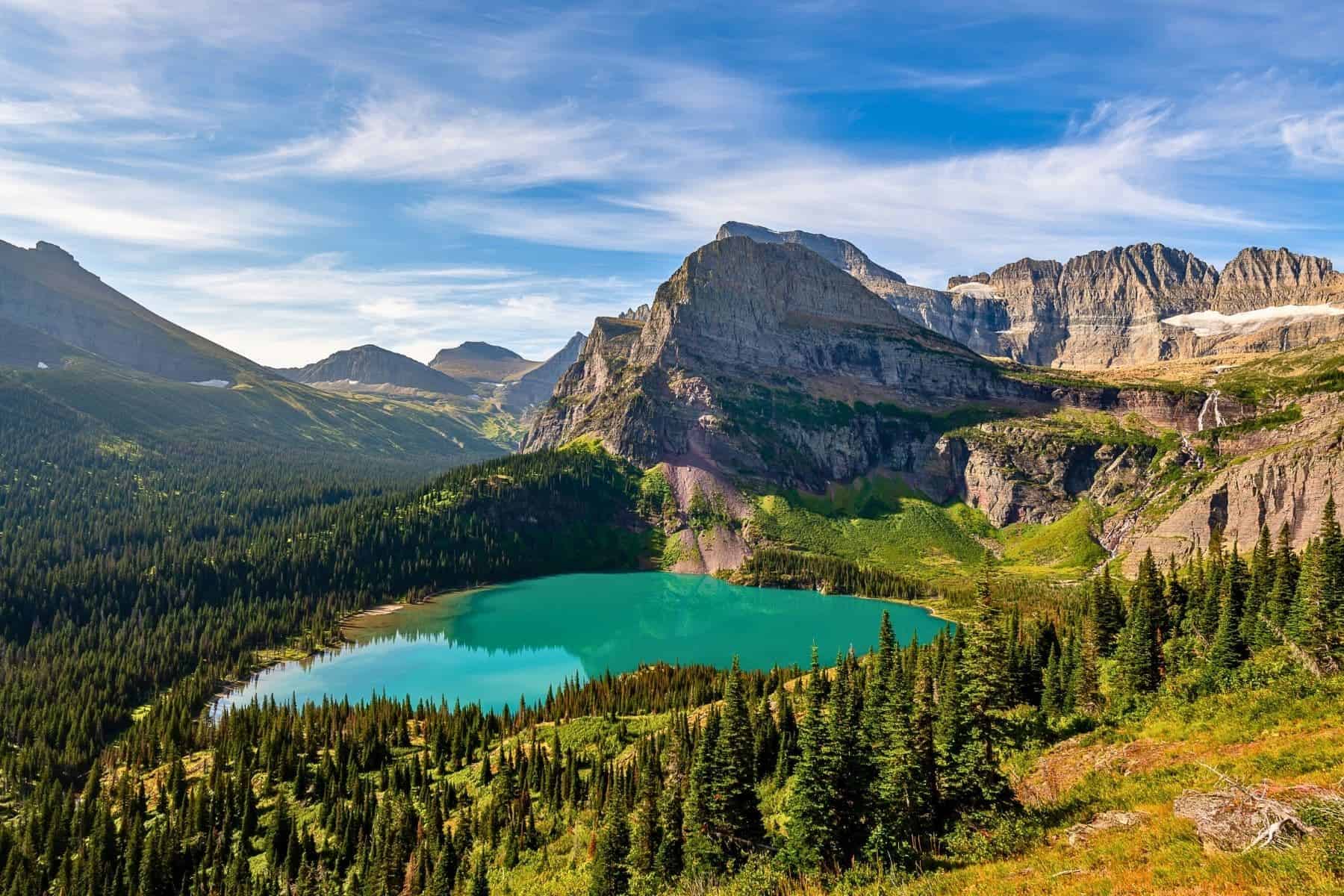
Location: Montana, United States
Disappearing: Total glacier disappearance by 2100. Each glacier shrunk by 40-80% of each from 1966 and 2015.
Glacier National Park was declared a national park in 1910. A paradise for nature lovers, it is home to roughly 25 glaciers and 200 lakes. Alpine meadows and deep forests characterize its landscape.
The national park is open 24 hours a day, year-round. It has a couple of visitor centers with different operating hours.
Apgar Visitor Center is open daily from 8am to 5:30pm, but schedule can vary seasonally. It is home to the Going-to-the-Sun Road shuttle system. Meanwhile, St. Mary Visitor Center, open daily between 8am and 5:30pm, features exhibits showcasing Native American history linked with the national park.
Logan Pass Visitor Center sits at 6,646 ft high. It has educational exhibits on climate change, geology, and life in harsh alpine environments.
Numerous ranger-led programs are available at Glacier National Park. These programs include guided hikes, short ranger talks, and more. There are also evening programs, which tackle the area’s cultural and natural history, held at campground amphitheaters.
Venice
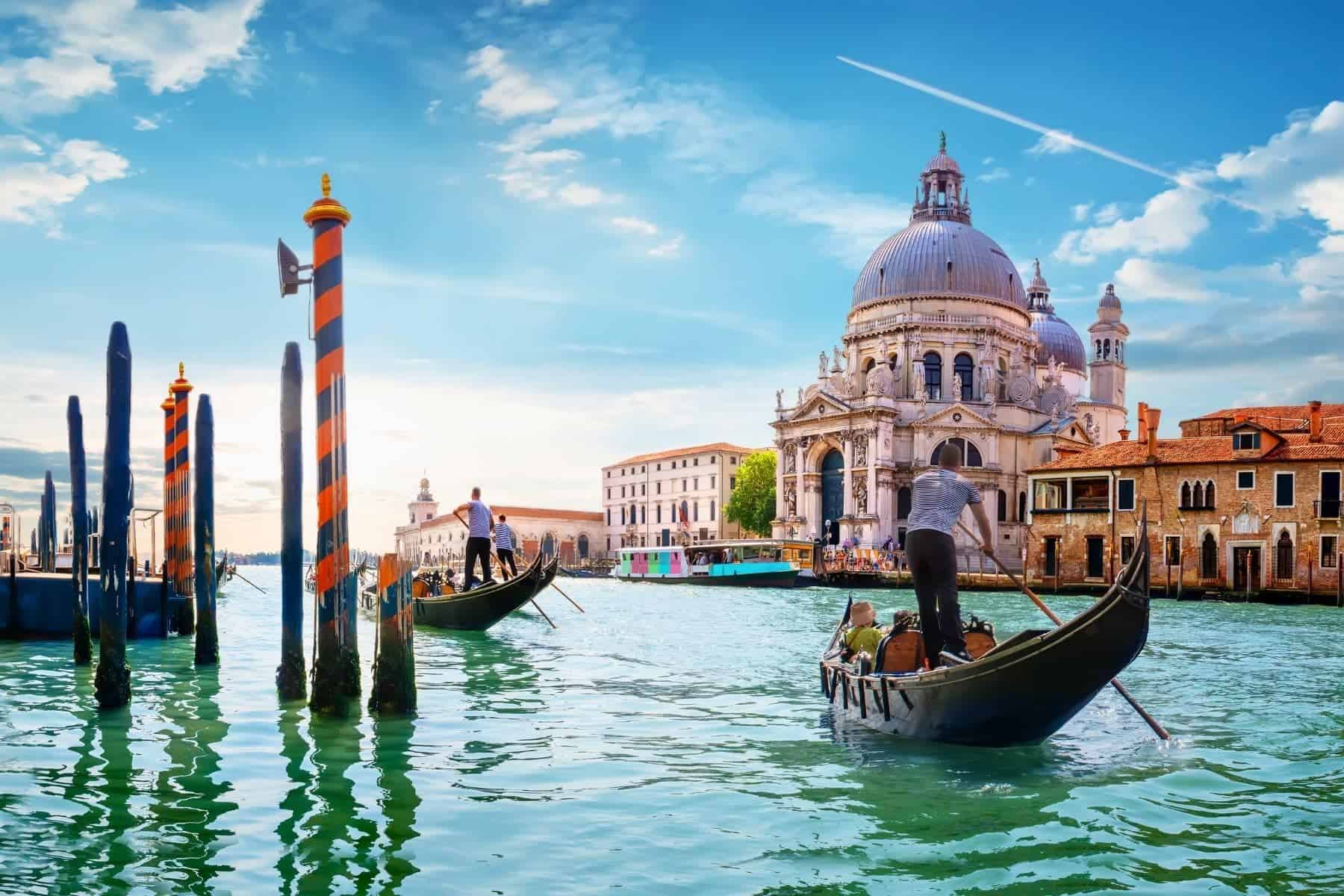
Location: Metropolitan City of Venice Italy
Disappearing: Estimated as early as 2100. Floods temporarily at various times in the year.
Set on the Adriatic Sea, Venice comprises mainly canals and waterways instead of paved roads. There’s only one bridge connecting it to the mainland. The famous Grand Canal is among its widest channels. Although you might be more familiar with gondolas, water buses are also used as major transportation options.
In 2019 the city flooded during the second worst flood in the last 100 years. The tide reached a height of 187cm (6.1ft) above sea level, resulting in more than 80% of the city being under water. The city is flooded temporarily at various times in the year causing continuous damage to houses and business. Due to these strenuous events the local population is in a state of continual decline.
Given the Mediterranean climate, the city is generally an excellent year-round destination. Various events occur throughout the year, so you might want to plan your visit around the festivity you wish to experience. The Carnival of Venice is probably the most popular event. This days-long festival is famous for the extravagant clothes used by attendees. Biennale di Venezia, a biennial event, is an arts festival during which Venice Film Festival is held.
You can explore various attractions during your trip to Venice. You can see impressive churches, such as San Zanipolo and Basilica di Santa Maria Gloriosa dei Frari. If you’re into arts and culture, you may visit Galleria dell’Accademia and Museo Correr.
Congo Basin
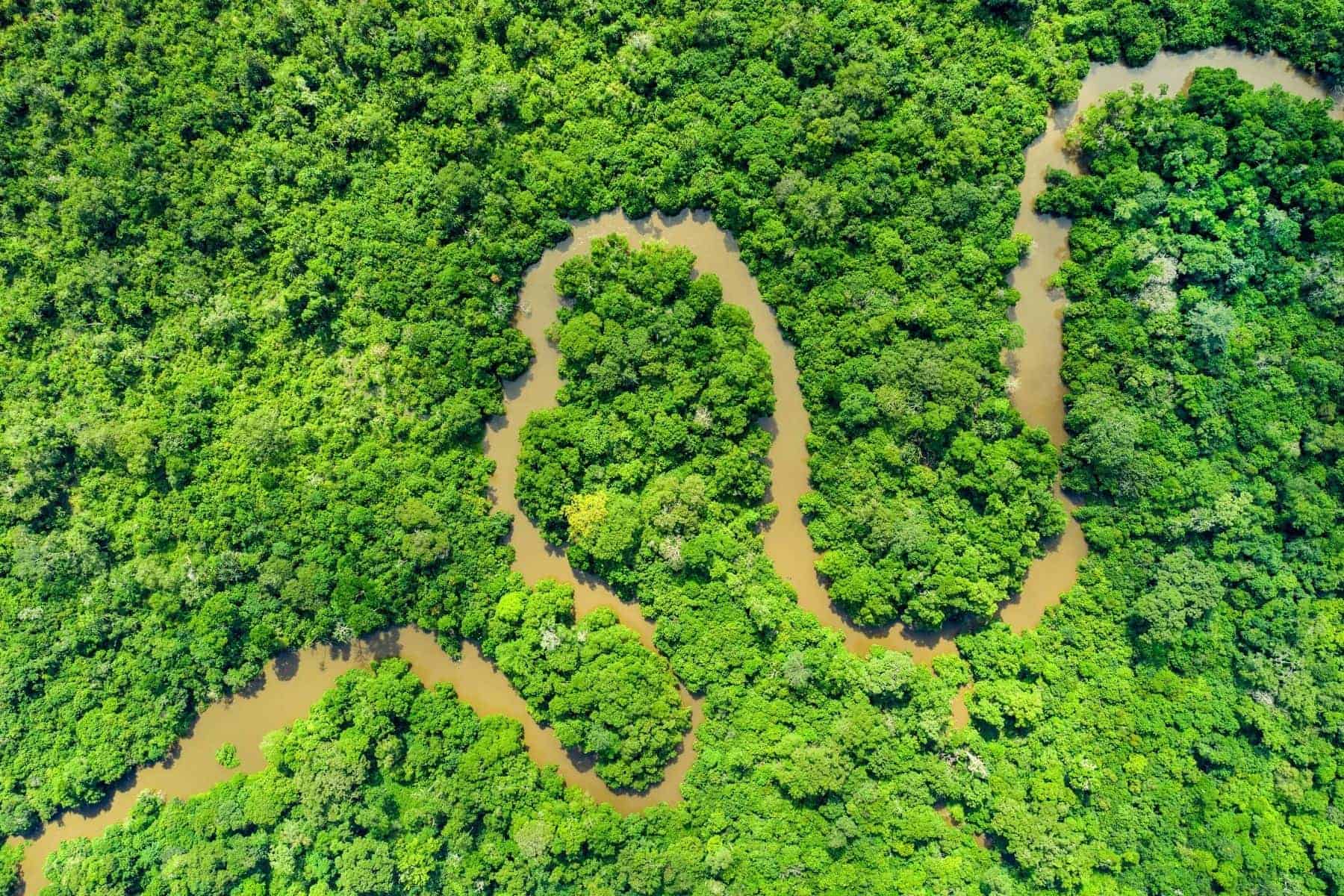
Location: Republic of the Congo
Disappearing: +27% estimated to disappear by 2050. The world’s rainforests will be gone by 2100.
Covering 500 million ac, Congo Basin is known for having the world’s second-biggest tropical forest. It is the basin of the Congo River, covering almost the entire Republic of Congo, Central African Republic, Democratic Republic of the Congo, and some parts of Angola, Cameroon, Tanzania, and Zambia.
The forest is home to about 10,000 tropical plant species. 30% of these species are only found in the region. Thousands of animal species are also found here, including endangered ones, such as bonobos, chimpanzees, and forest elephants.
UNESCO has been taking the necessary steps since 2000 to improve the conservation and management of natural attractions, including this gem. This forest has nine natural properties inscribed on the UNESCO World Heritage List. Meanwhile, four sites are inscribed on the List of World Heritage in Danger.
Congo Basin absorbs more carbon than the Amazon rainforest, earning the nickname “lungs of Africa”. The Republic of Congo alone absorbs 1.5% of annual carbon emissions worldwide. As such, the forest is vital in fighting the climate crisis. Protecting it from deforestation and environmental degradation is crucial for the planet.
Mount Kilimanjaro
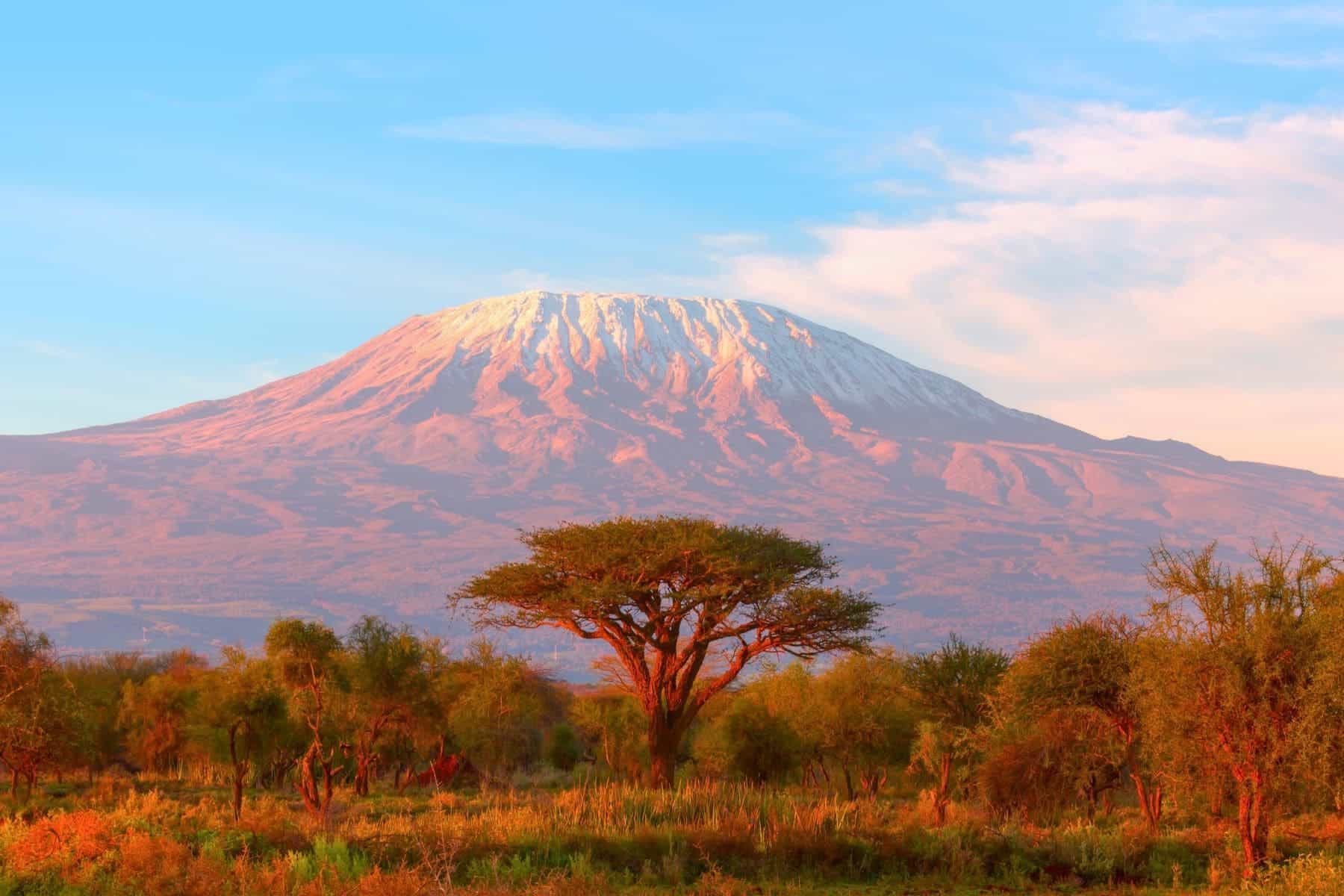
Location: Tanzania
Disappearing: Kilimanjaro glaciers are expected to disappear completely between 2030 and 2060.
Mount Kilimanjaro is Africa’s highest mountain and the biggest free-standing mountain worldwide. It is about 5,895 m above sea level. A stratovolcano, it features three cones: Shira, Mawenzi, and Kibo. The tallest of these cones is Kibo. It’s also the only dormant one among the three.
The mountain is protected within Mount Kilimanjaro National Park, which offers numerous activities besides climbing and hiking. You can go on a game drive or a nature walk. You can see small and big game animals, such as baboons, forest elephants, and hyenas. With the hundreds of bird species in the area, birdwatching is also pretty enjoyable.
At the edge of the mountain lies Chala Crater Lake, around which you can camp. The lake views are incredible from afar.
Different safari tour packages are available. You can choose one depending on the challenge you’re willing to take and how many days you can spend at the national park. Tours may last for up to 12 days if you really want to maximize your trip.
Maldives
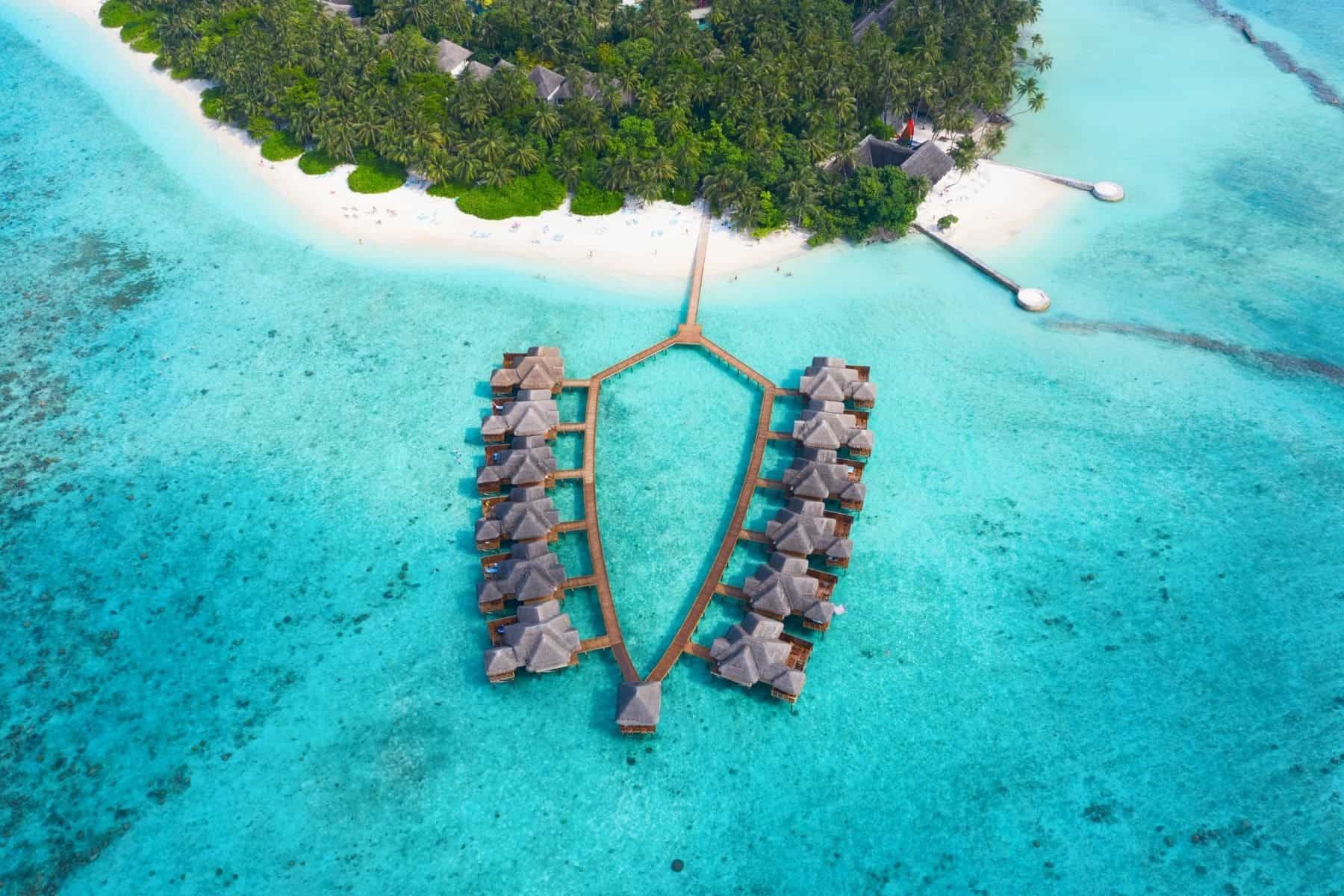
Location: Maldives
Disappearing: 80% estimated to become uninhabitable by 2050. Submerged in water by 2100.
A popular holiday destination among island lovers and beach enthusiasts, Maldives is known for its pristine white-sand beaches. It has many incredible dive spots, so scuba diving and snorkeling are some of the best things you can do here. One of the best dive sites is Maldives Victory, which is beautiful year-round. You’ll find many species underwater, including clownfish, sting rays, whale sharks, and more.
Surfing is also a popular activity in the country. The best conditions for surfing are usually between mid-February and November.
The beaches aren’t the only thing to see in the country. You can visit a couple of iconic landmarks, including Republic Square. This square waves the nation’s biggest flag.
Dating back to the mid-17th century, Hukuru Miskiiy is the nation’s oldest mosque. It may not seem that impressive on the outside, but inside are pretty fascinating inlays and woodwork. Entering the mosque requires permission from a Ministry of Islamic Affairs official, but it’s not that difficult because many officials are present.
After a long day of touring, you can treat yourself to a relaxing massage at one of the many local spas. Maldives is home to the world’s first underwater spa, Huvafen Spa.
Madagascar Lowland Forests

Location: 5GX2+JCF, Famoa, Madagascar
Disappearing: Only 10% forest remains. 80-90% of Madagascar’s land area burns each year.
Madagascar’s split from the African continent millions of years ago resulted in the development of unique ecosystems. The majority of the animal life here can’t be found anywhere else.
Covering 144 million ac, Madagascar is the fifth-biggest island worldwide. Some of the biggest coral reef systems globally are found here. The island has an arid climate in the south, temperate climate inland, and a tropical climate along the coast.
Madagascar lowland forests are an ecoregion with a rich biodiversity. It is abundant with bamboo, epiphytic orchid, and palm species, among other plant life. Further, all five families of Malagasy primates can be found here. More than 100 breeding bird species are also found here, about 40 of which are endemic to the ecoregion.
Many portions of the forests sit within protected areas, such as Ambatovaky Special Reserve, Masoala National Park, and Zahamena Strict Nature Reserve and National Park. Some parts lie outside protected areas, such as those near Rantabe.
This beautifully unique ecosystem is threatened every year by human deforestation and rise in temperatures, causing forest fires.
Darvaza gas crater
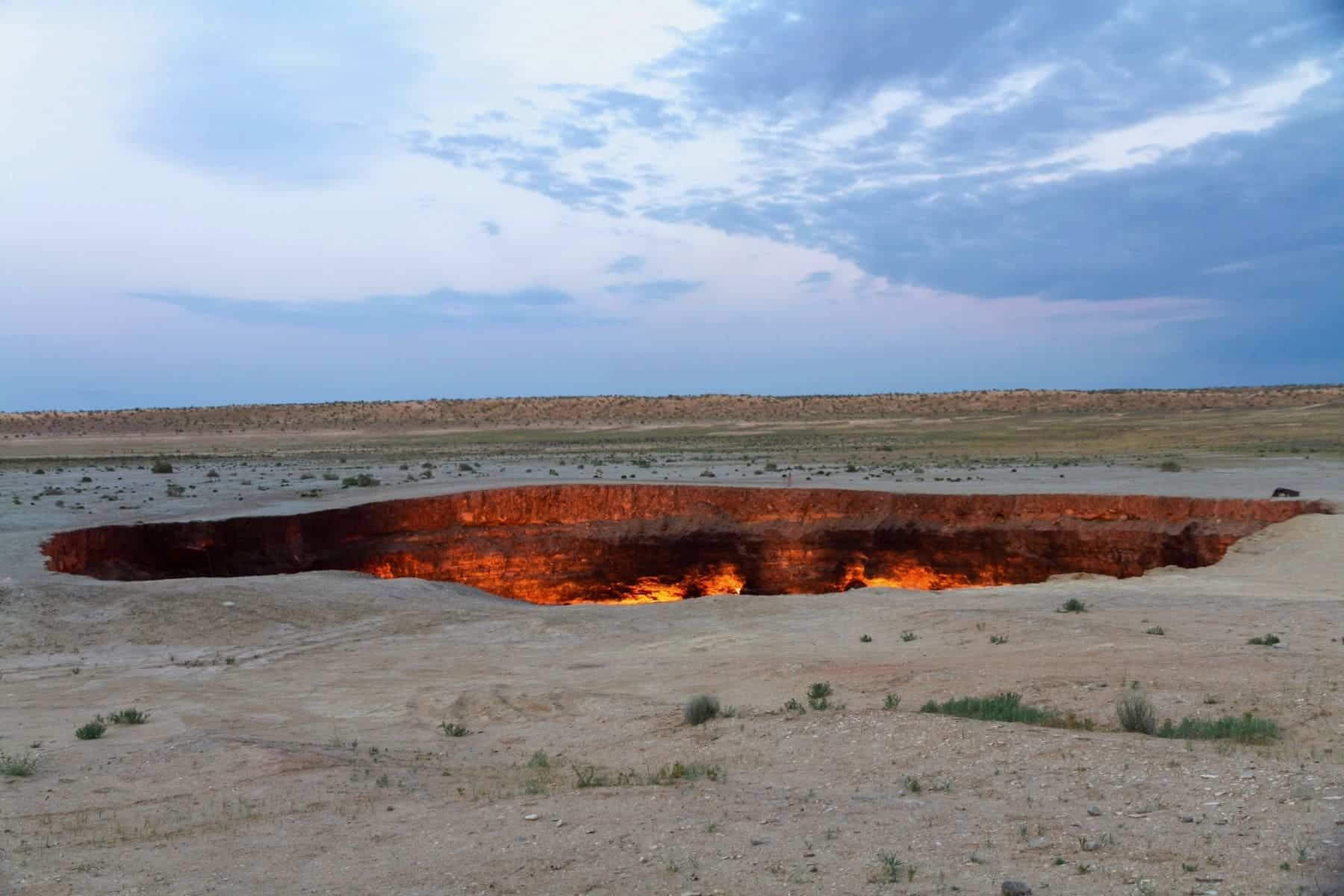
Location: 7C2Q+XRX, Derweze, Turkmenistan
Disappearing: In 2022, the president announced plans to extinguish the crater, without any luck so far.
Often called the “door to hell” or “gates to hell”, Darvaza gas crater is a massive crater with intensely burning flames that have been around for decades now. The seeping natural gas fuels the fire. The combination of scary sight and sound, and intense heat around the crater gives the impression of hell.
The crater is so enormous that it’s almost ¾ as big as an American football field. It has a diameter of about 69 m and a depth of about 30 m.
Darvaza gas crater is open to visitors throughout the year. However, due to the extreme heat, visiting during the cool months of October through April is highly recommended.
Ashgabat is usually the starting point of guided tours. From here, the journey to the crater is about four hours. It seems like an ordinary hole during the day. The views become increasingly spectacular as the night approaches. Once dusk falls, you can safely go near the edge.
Dead Sea
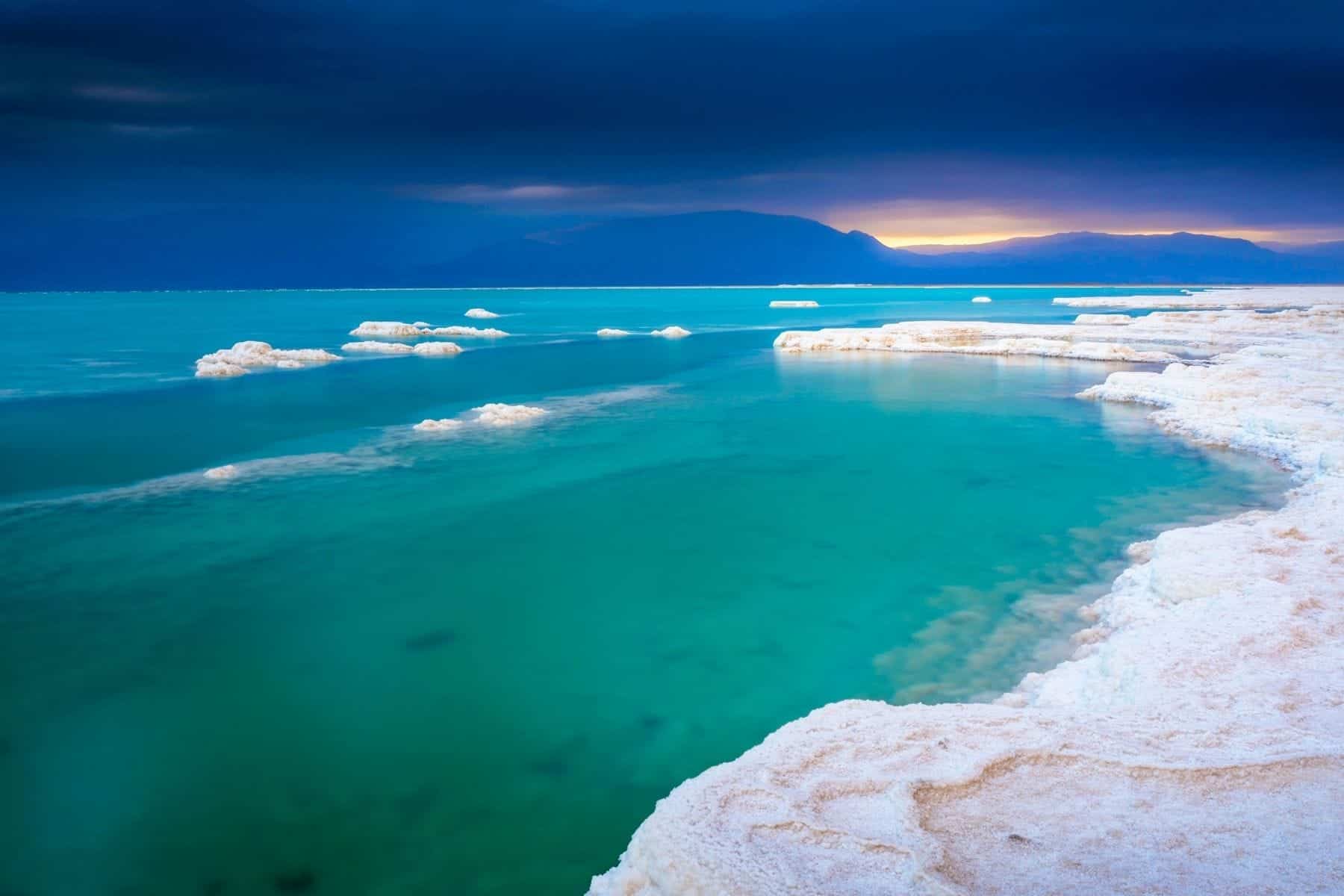
Location: Dead Sea
Disappearing: 50 miles in 1950 to 30 miles in 2005. Disappearing 4 feet a year
The Dead Sea is the earth’s lowest body of water. Its name comes from the fact that no fish can survive in its salty waters. On the upside, these waters are believed to result in mud with healing properties.
This natural attraction is popular among leisure travelers seeking to relax or those who wish to experience the waters’ healing properties. People usually cover themselves in mud and float in saline waters. Various private and public beaches, such as Ein Gedi Beach, are open to tourists.
The cheapest way to get here is through the shuttle from Jerusalem or Tel Aviv. When you board this shuttle, you no longer have to pay the beach entrance fee because it’s already included in the fare.
Various tours designed to help you maximize your trip are available. The Masada, Ein Gedi, Dead Sea, are excellent examples. You get to take the cable car from Masada, explore Ein Gedi, and have fun in the Dead Sea. Usually this tour already includes pick-up and drop-off at Jerusalem or Tel Aviv.
This special place is threatened by mining of the minerals as well as deprivation of water. The sea needs about 160 billion gallons of water annually to maintain its current size. However, it gets barely 10 percent of that. Water from rivers that used to feed the sea are now redirected to supply water throughout the country.
Wine Regions of Bordeaux
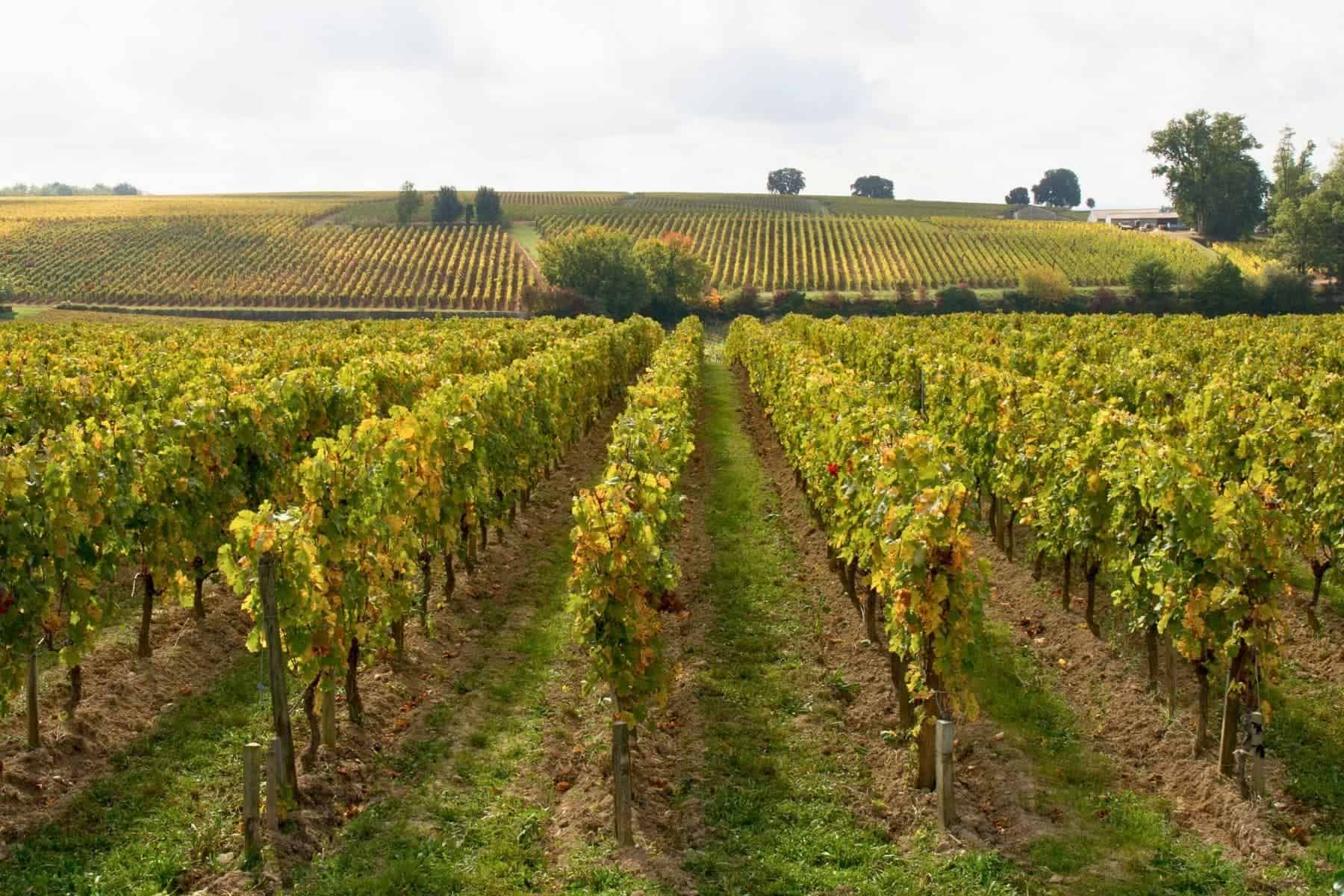
Location: 21 Rue du Chai des Farines, 33000 Bordeaux, France
Disappearing: Most wine production is estimated to be lost by 2050.
You will find the world’s oldest and biggest vineyards in Bordeaux. Its winemaking tradition goes back more than 20 centuries ago, so the products are very diverse. Numerous varieties of reds, rosés, and whites are available.
The whole region has 6,000 chateaux and historical sites, such as ancient Roman churches, medieval cities, and villages. The wineries offer plenty of experiences to tourists, such as wine courses, tastings, and other cultural events. Moreover, you can learn more about the local culture and heritage. Cite du Vin is one of the best places to visit here, especially if you want to discover its significant contributions to different cultures and civilizations.
Armagnac vineyards are among the most beautiful ones in the region. This area is home to Fources and Larressingle, some of the most iconic villages in Bordeaux. You can savor rare vintage wines within the Escapades in the Armagnac network. If you’re visiting during autumn, you can partake in the sought-after festival, Flame of Armagnac.
The region of Bordeaux, as well as other wine regions, are threatened by climate change. Grapes are very sensitive to temperature changes and a difference of 1 or 2 degrees can sometimes save a crop or destroy it. In 2021 the temperature dropped from -4 to -7 overnight. Winyards all over France reported as much as 50% of their production ruined due to that single event, with some estates losing their entire crop.
These increasingly drastic changes in temperatures set the Wine Regions of Bordeaux on the list of disappearing places.
Historical Landmarks
Ephesus
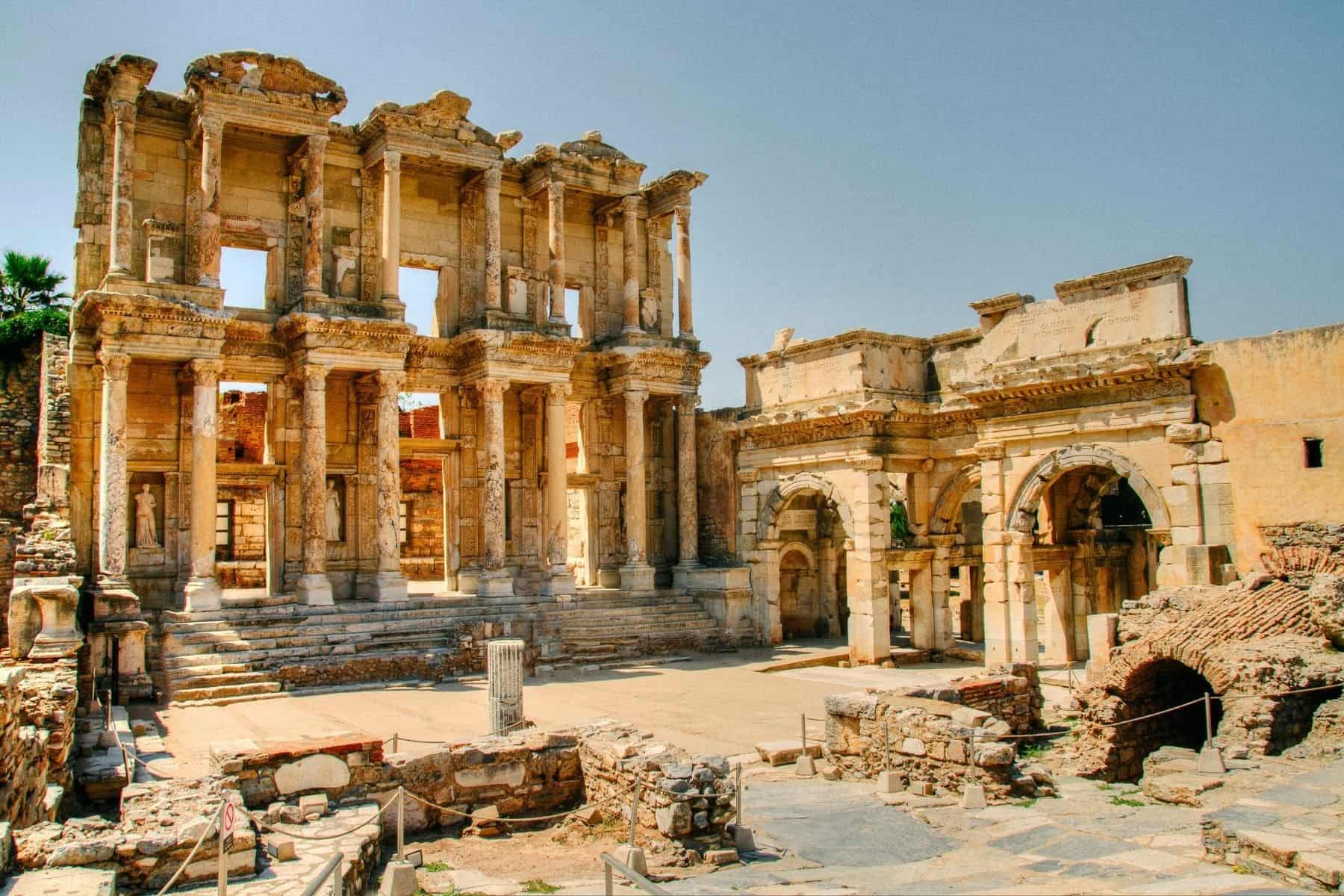
Location: Acarlar, Efes Harabeleri, 35920 Selçuk/İzmir, Türkiye
Age: Believed to be founded in 10-11th century BC
Ephesus was a port in ancient times. It was once the world’s most important commercial hub. Also, it was a significant religious center during the early days of Christianity.
Today, as a UNESCO World Heritage Site, this landmark is one of Turkey’s best tourist destinations. With well-preserved authentic components, it has Outstanding Universal Value.
An all-inclusive Ephesus tour comes with lunch, and private tour guide and transfers. It also covers all entrance and parking fees. This tour will let you see the ancient city’s iconic establishments, such as the theater, Hadrian’s Temple, Celsius Library, and more. A whole-day tour, it’ll also take you to the House of the Virgin Mary, Basilica of St. John, and Temple of Artemisio. During the tour, you have the option to see a cultural demonstration of local handicrafts.
This all-inclusive tour involves at least two hours of walking, so it’s vital to wear the most comfortable shoes for it. If you’re visiting during summer, wear the most comfortable— but still decent and presentable— clothes you can wear because it’s usually extremely hot.
Teotihuacan
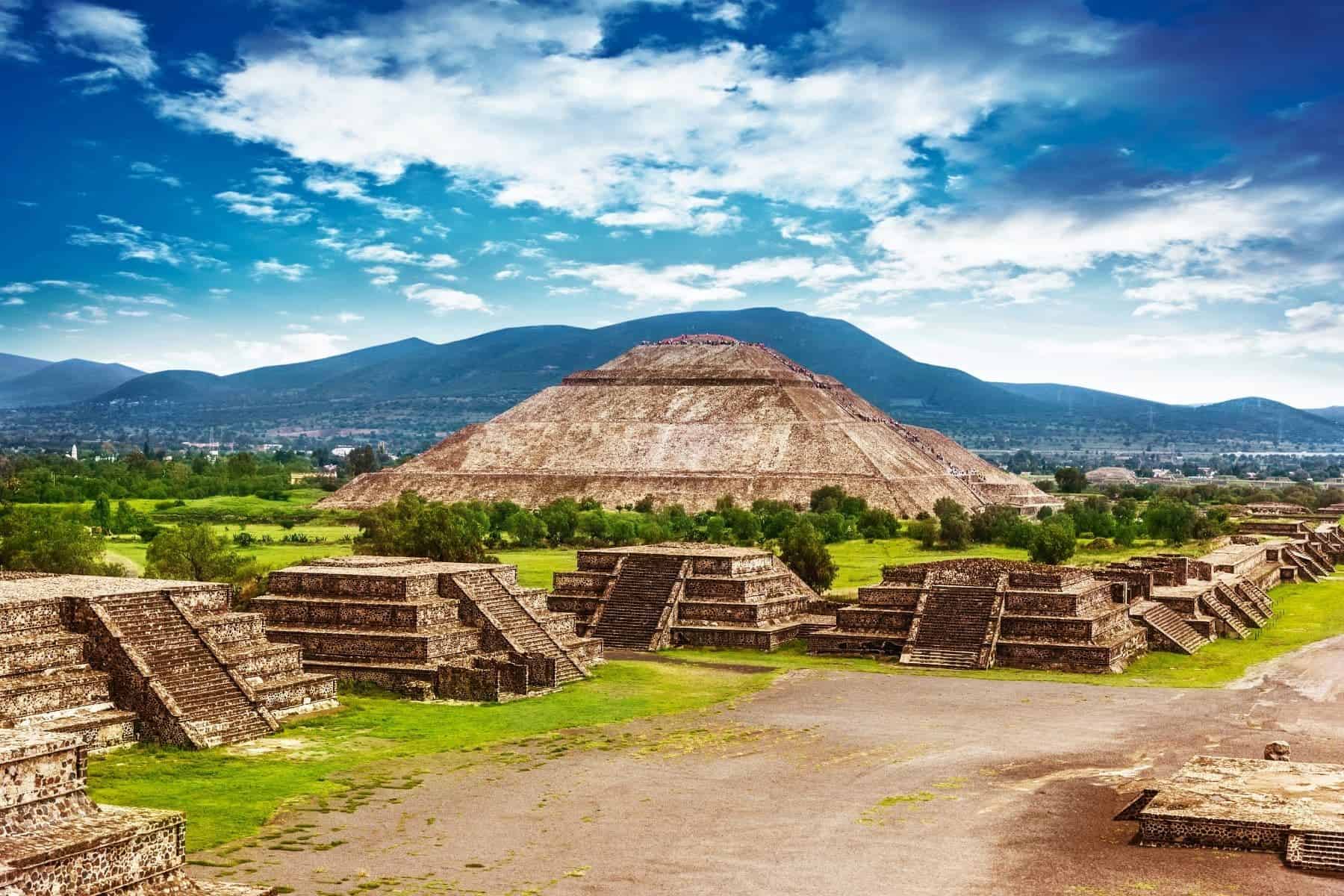
Location: State of Mexico Mexico
Age: Earliest buildings date to about 200 BC
Established between the first and seventh centuries, Teotihuacan was an essential and influential Mesoamerican city about 50 km from Mexico City. It used to be Mexico’s biggest city in terms of population. Today, it is known for its enormous monuments, such as the Pyramids of the Sun and the Moon and the Temple of Quetzalcoatl.
An archeological area of 264 ha is open to the public. This area consists of monumental buildings, such as those mentioned above, along with the Causeway of the Dead, Citadel, and the Temple of the Feathered Serpent. It also includes departmental complexes with excellent murals, such as Atetelco and La Ventilla, and the Yayahuala and Zacuala residential complexes.
Given its cultural and historical significance, Teotihuacan was inscribed on the UNESCO World Heritage List in 1987. You can learn more about it in the two museums within the archaeological zone: the Beatriz de la Fuente Museum of Teotihuacan Murals and the Museum of Teotihuacan Culture.
Angkor Wat
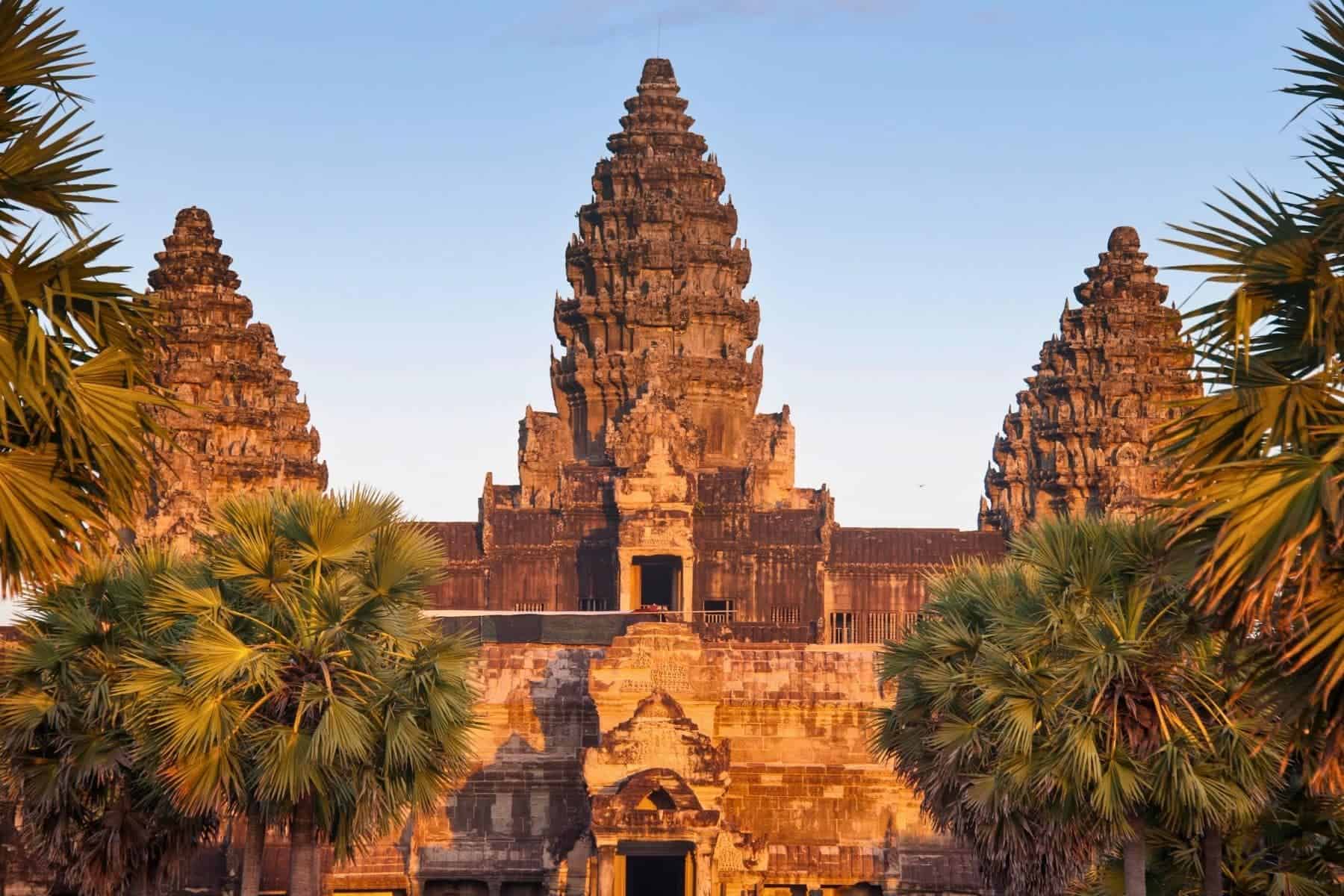
Location: Krong Siem Reap, Cambodia
Age: Built around the year 1110-1150 AD
Angkor Wat is one of Southeast Asia’s most significant archaeological sites. It covers about 400 acres of Siem Reap, making it the world’s biggest religious complex. Aside from temples, it features communication and hydraulic structures.
For centuries, the site served as the seat of the Khmer Kingdom. The ancient urban plans and massive water reservoirs at the time prove that it was a civilization quite ahead of its time. Given its cultural, historical, and religious significance, it’s been a UNESCO World Heritage Site since 1992.
The five central towers represent Mount Meru’s peaks. This mountain is believed to be the gods’ dwelling place.
Banteay Srei is one of the finest Hindu temples here. Founded in the 10th century, it is dedicated to Shiva. It is open from 5am to 5pm.
Parthenon
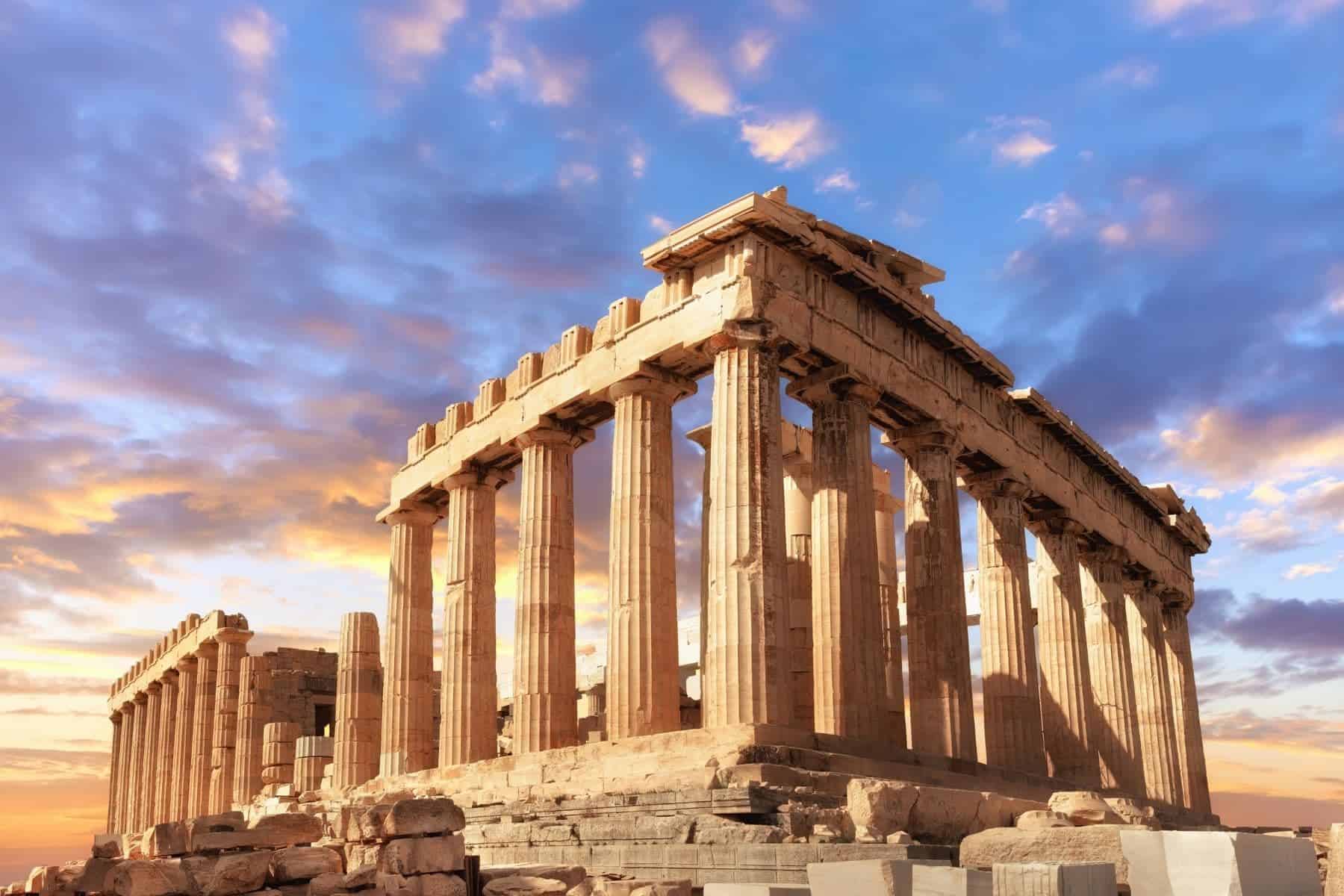
Location: Athens 105 58, Greece
Age: Established 438 BC
Dedicated to goddess Athena, Athens’ patron, Parthenon was established in 438 BC. It was built to replace two old temples dedicated to the same goddess. Since it was erected during the High Classical period, it marked the culmination of the Doric architectural order’s development.
Eventually, the temple became a Byzantine church, a Roman Catholic cathedral, then a mosque. Finally, before it became one of Athens’ leading tourist attractions by the late 19th century, it served as an army barracks towards the end of Greece’s war for independence.
Parthenon is completely made of Pendeli marble. Thanks to the precise construction and impeccable work done on it, it’s still intact today. Some of the sculptures were removed during its time as a Byzantine church, but the structure is still pretty much as it is. It’s widely known for its perfection.
Although the structure’s in white, some evidence suggests that it was once decorated in vivid colors. The statues were also colorful.
Dinosaur National Monument
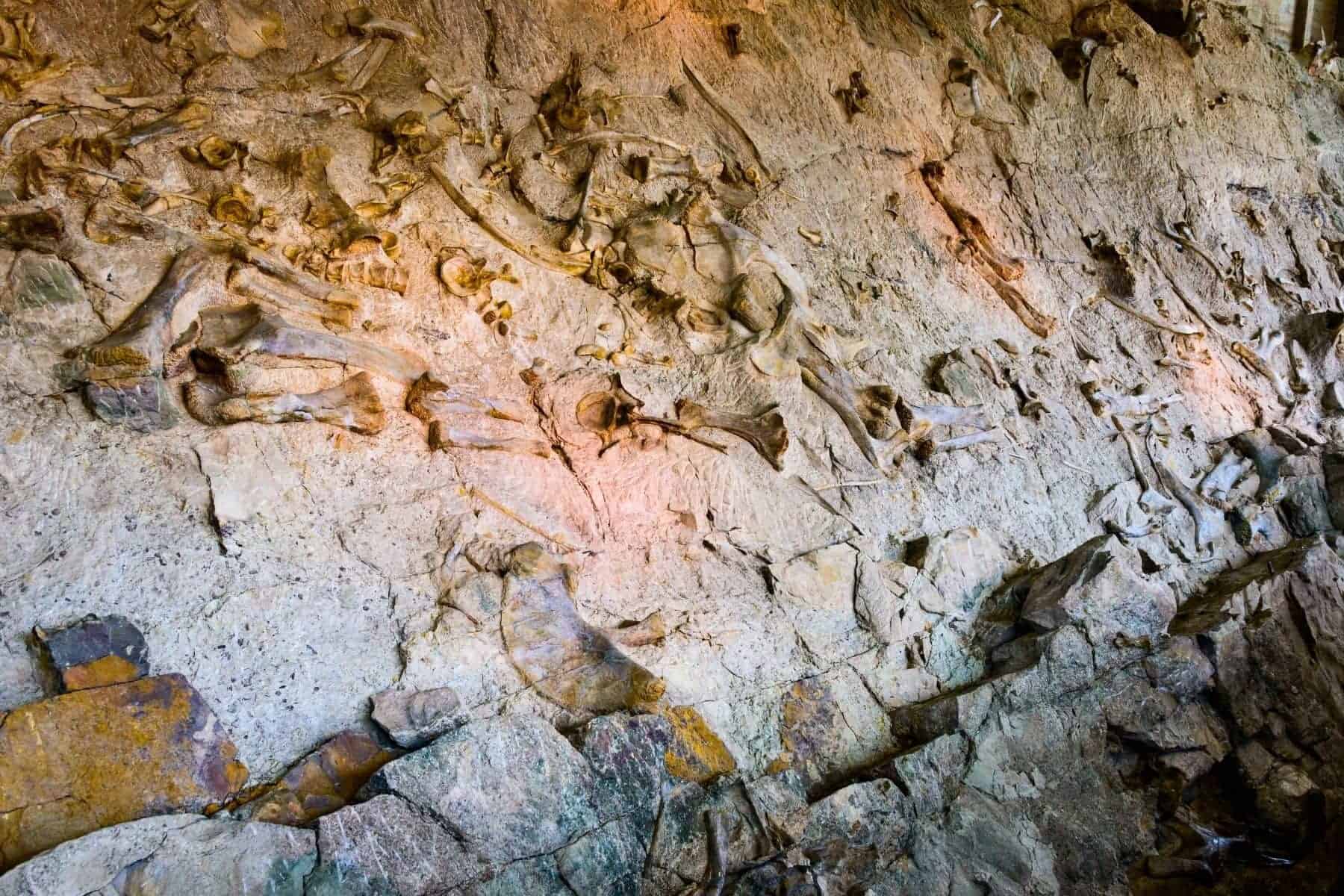
Location: Utah, United States
Age: Fossils from approximately 150 million years ago
Dinosaur National Monument is known globally for its fossils proving the existence of dinosaurs millions of years ago. Set on the border between Utah and Colorado, it covers more than 210,000 ac of land. Aside from fossils, you’ll find dinosaur footprints and other prehistoric sites here.
Interacting with the Wall of Bones, a deposit of more than 1,500 authentic dinosaur fossils, is one of the best things to do here. You can see more dinosaur fossils and footprints at Quarry Exhibit Hall.
The main visitor center, Quarry Visitor Center, is located in Utah. It is the gateway to Quarry Exhibit Hall, offering shuttle buses every summer. It showcases all the resources and places you can see within the monument. Further, it houses a gift shop and theater where you can watch a 12-minute film about the monument. It is open daily except on particular holidays, with varying hours per season. The standard entrance fee per head is 15 USD.
Auschwitz Birkenau
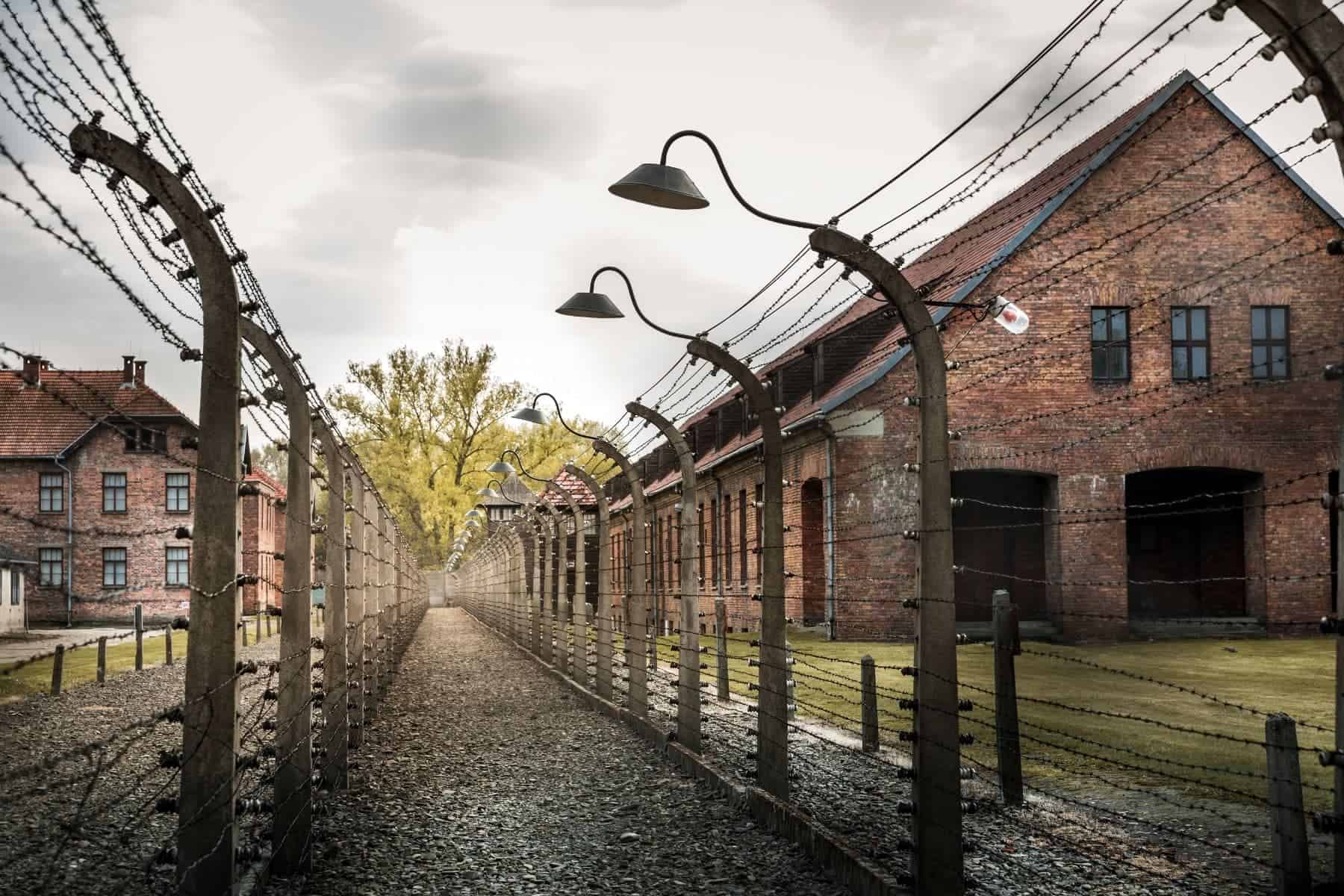
Location: Więźniów Oświęcimia 20, 32-603 Oświęcim, Poland
Age: Opened in 1940 during World War II
A historical memorial and museum, Auschwitz Birkenau protects the relics of what was once the biggest German Nazi concentration and extermination camp. It was established in 1947 for the said purpose. The memorial comprises two parts of the old camp: Auschwitz and Birkenau.
Visiting the memorial is free of charge. You only need to pay if you’re going on a guided tour to learn more about the place’s history and significance. If you’re in a group, you’re required to get an experienced guide-educator. Individual visitors have the option to join organized tours. Typically, a tour here lasts for about four hours.
Since more than a million people died here, you’re expected to act with utmost respect and solemnity. Part of that is dressing appropriately. Note that Auschwitz Birkenau is only suitable for visitors aged 14 and above.
The memorial is open daily throughout the year except on New Year’s Day, Easter Sunday, and Christmas Day. Hours vary seasonally, so ensure you check the official website when planning your visit.
Killing Fields

Location: Choeung Ek, Phnom Penh, Cambodia – Most famous field
Age: 1976 to 1978
Killing Fields is a collective term for the number of sites in Cambodia where more than 1,000,000 people were mercilessly killed during the Khmer Rouge regime in the 1970s. Many of the remains were exhumed here in 1980. Before these people were murdered, they were starved and tortured at the sites for not conforming to the beliefs of the Communist guerrilla group.
Much like German Nazi concentration camps, these sites have a significant meaning in local history despite the horrors that transpired. Memorial Stupa, founded in 1988, displays more than 8,000 skulls behind clear glass panels.
What used to be a blooming orchard suddenly became a mass grave in the 1970s. Going here may not be for the faint of heart, but there’s much to learn from the sites’ storied past.
Killing Fields near Phnom Penh is the biggest and most visited one out of all such sites scattered across Cambodia. It became known as the Choeung Ek Genocidal Centre in 2005.
Tikal National Park
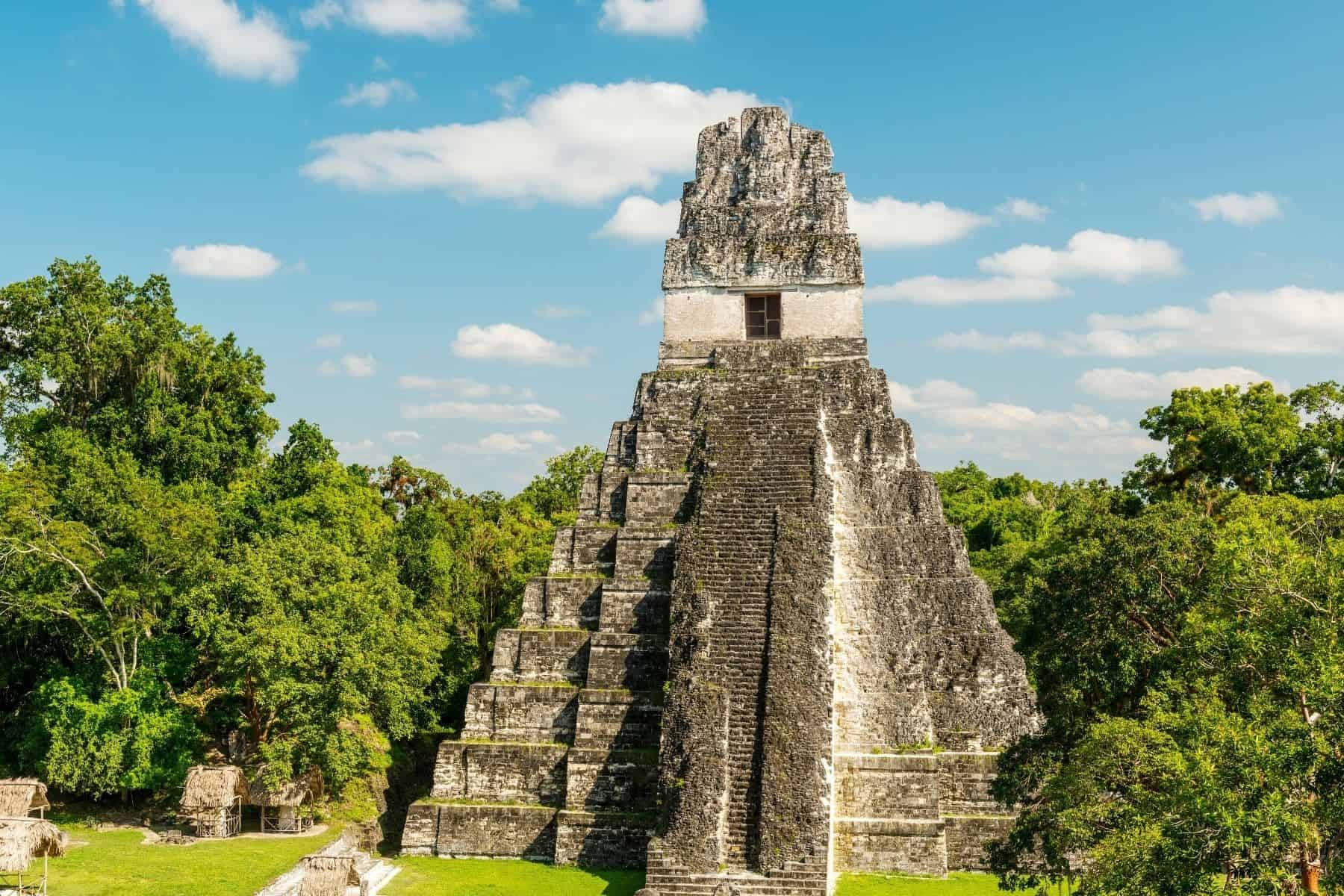
Location: Tikal, Guatemala
Age: Development high point was 200 to 900 AD. Architecture dates back to 4th century BC.
An important natural wonder in Guatemala, Tikal National Park is part of the Maya Biosphere Reserve, established in 1990. It covers 575 sq. km of jungle and thousands of ancient buildings.
Over the years, Tikal, the ancient city at the heart of the national park, became a significant commercial and cultural center. It was once the greatest Mayan city. Unfortunately, it fell by the end of the ninth century and never recovered. It was abandoned eventually.
One of the ruins here is the Temple of the Grand Jaguar or Temple I. Archeologists uncovered inside it in 1958 the tomb of Ah Cacau, one of the ancient city’s greatest rulers. It also houses many other treasures and ornaments. Meanwhile, Temple of the Masks or Temple II provides postcard-worthy views of the plaza from its peak.
Tikal National Park is open daily between 6am and 5pm. An adult’s ticket for foreigners costs about 20 USD. Visitors aged under 12 can enjoy free admission.
The Most Beautiful Places in the World
These places are the most visited and most famous sites all over the world. They’re popular for their archaeological, architectural, cultural, historical, or natural significance. Over the years, these places considered ‘the most beautiful places in the world’ have become symbols of the cities or countries they’re part of. They almost become synonymous with the localities they represent, especially among travelers.
The places listed below were selected based on significance, their role in history, popularity, number of visitors annually, and of course, beauty among other factors. Some are considered architectural marvels of their time. As for some, they’re recognized by international and local agencies and organizations. Natural wonders with inexplicable beauty are also part of the list.
Famous Landmarks
Famous landmarks are the most sought-after attractions worldwide. They’re recognized for their value and contributions to humankind’s history and culture.
There are thousands of landmarks around the world. However, for this list, we’ve selected the ones most visited and are undoubtedly worth traveling hundreds or thousands of miles for.
- You might also like Short Vacation Captions
What is a Landmark?
A landmark is a widely recognized place or structure. It holds great significance archaeologically, architecturally, culturally, historically, or naturally. For this reason, a landmark draws many tourists its way.
Landmarks can take various forms. They can be buildings, geological formations, monuments, mountains, nature reserves, statues, and more. The bottom line is that anything of importance in a particular locality can be considered a landmark. Such is especially true if specialized agencies, such as UNESCO, have designated them.
So, let’s discover some of the most spectacular landmarks in the world.
- You might also like: 101 Travel Quotes
Where are the most Famous Landmarks?
The most famous landmarks are found all over the world. However, it’s safe to say that Italy and the US are home to some of the world’s most visited and most historical landmarks. Many countries in Asia, Europe, and the Middle East also host numerous famous landmarks.
Popular human-made landmarks include the Eiffel Tower in France, the Great Pyramids of Giza and Great Sphinx of Giza in Egypt, the Leaning Tower of Pisa in Italy, Machu Picchu in Peru, and the Mount Rushmore National Memorial in the US. Meanwhile, famous natural landmarks include Lake Garda in Italy, Lake Nakuru in Kenya, Mount Yoshino in Japan, Niagara Falls in the US, and Preikestolen in Norway.
Every country in the world has attractions to be proud of, and this list of the most beautiful places in the world will help you determine where to begin your next trip. You can also use it as a reference for your bucket list of landmarks to see. Whether you’re into architecture, arts, culture, history, or nature, there’s a beautiful place waiting for you to visit.
Frequently asked questions
A famous landmark is a place or structure that holds great significance archaeologically, architecturally, culturally, historically, or naturally. It draws thousands, if not millions, of tourists yearly because of its importance, beauty, or history.
Excellent examples of iconic human-made landmarks include Pompeii, the Statue of Liberty, and the Taj Mahal. There are also plenty of iconic natural landmarks, such as the Alps, Moraine Lake, Mount Fuji, Ngorongoro Conservation Area, and Yellowstone National Park.
You can learn more about the world’s most famous landmarks by reading our in-depth guide.
Burj Khalifa is one of the world’s largest landmarks, standing at 828 m high and featuring over 160 levels. In fact, it is the highest building worldwide. Consequently, its elevator has the longest travel distance worldwide.
This building is more than just about the superlatives. It’s a symbol of the Middle East’s development and promising future.
To discover other famous landmarks read the guide.
Some of the world’s most famous places are Glacier National Park, Hạ Long Bay, Hagia Sophia, Hamilton Pool Preserve, and Leaning Tower of Pisa.
Glacier National Park in Montana is a playground for outdoor lovers. Hạ Long Bay is home to over 1,600 islands and islets surrounded by limestone pillars and impressive bodies of water.
Hagia Sophia is a significant cultural landmark in Turkey. Hamilton Pool Preserve is a historical swimming hole in Texas where you can swim. The Leaning Tower of Pisa is known for its unintentionally tilted design.
You can read more about the world’s most beautiful places in the guide.
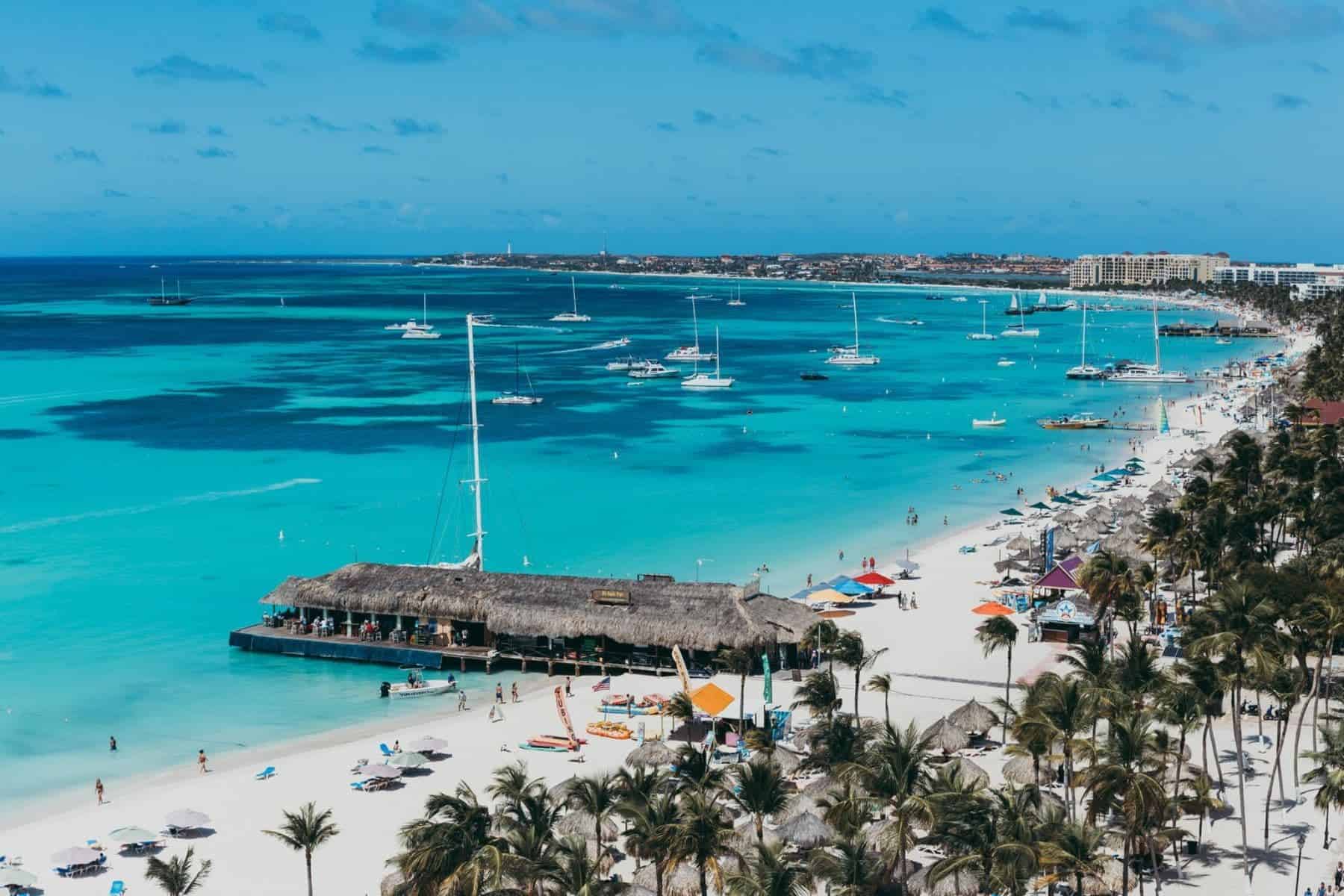
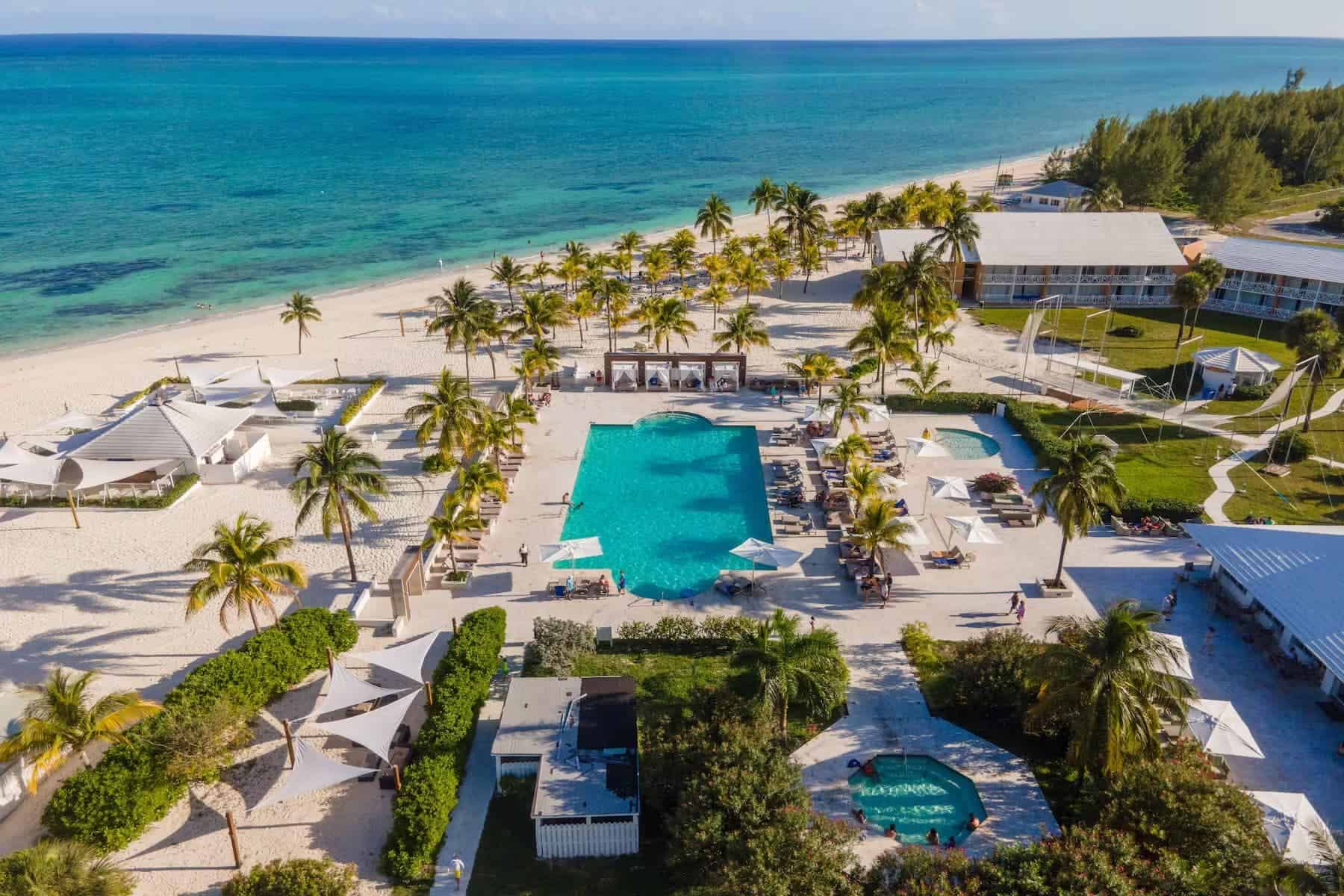
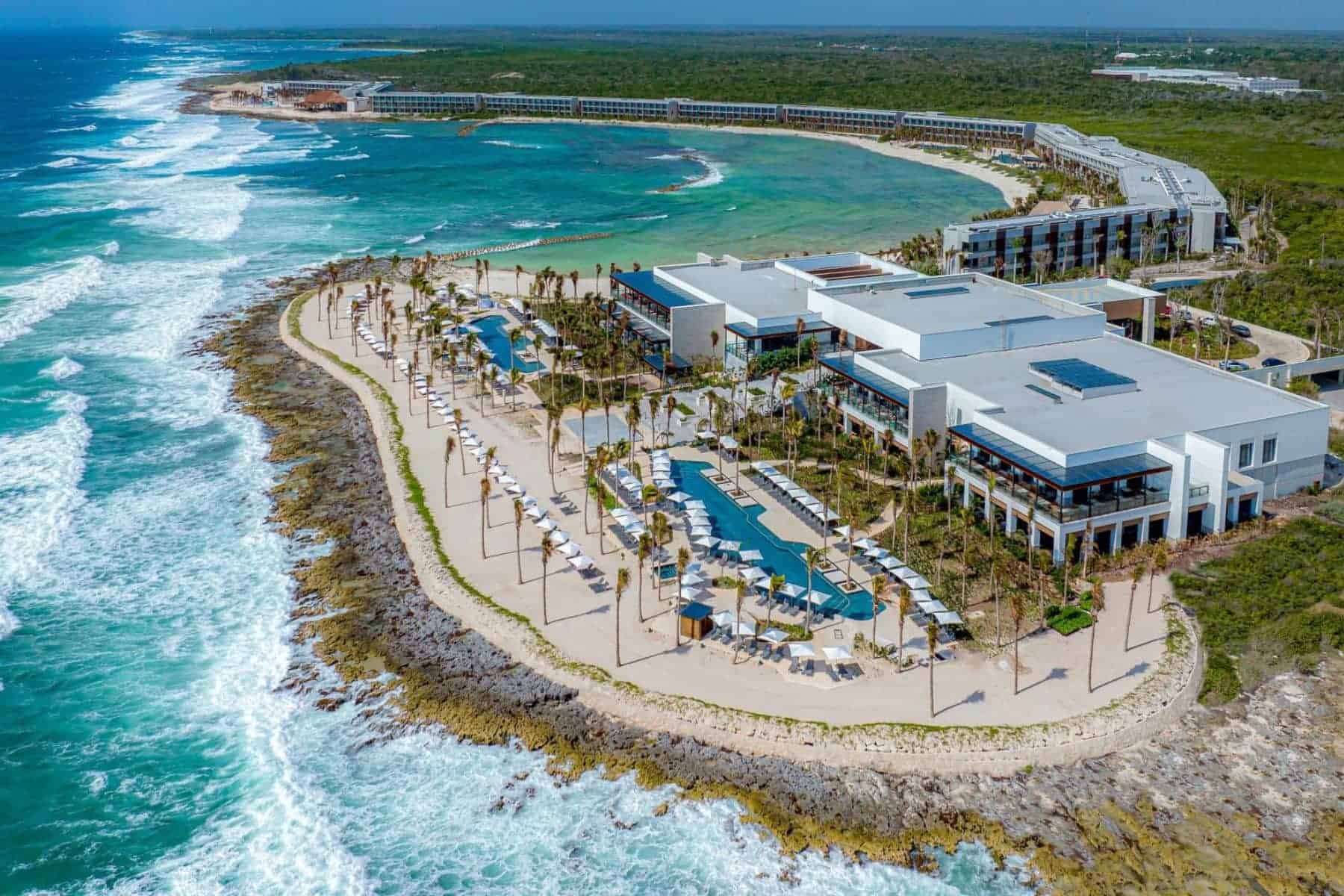
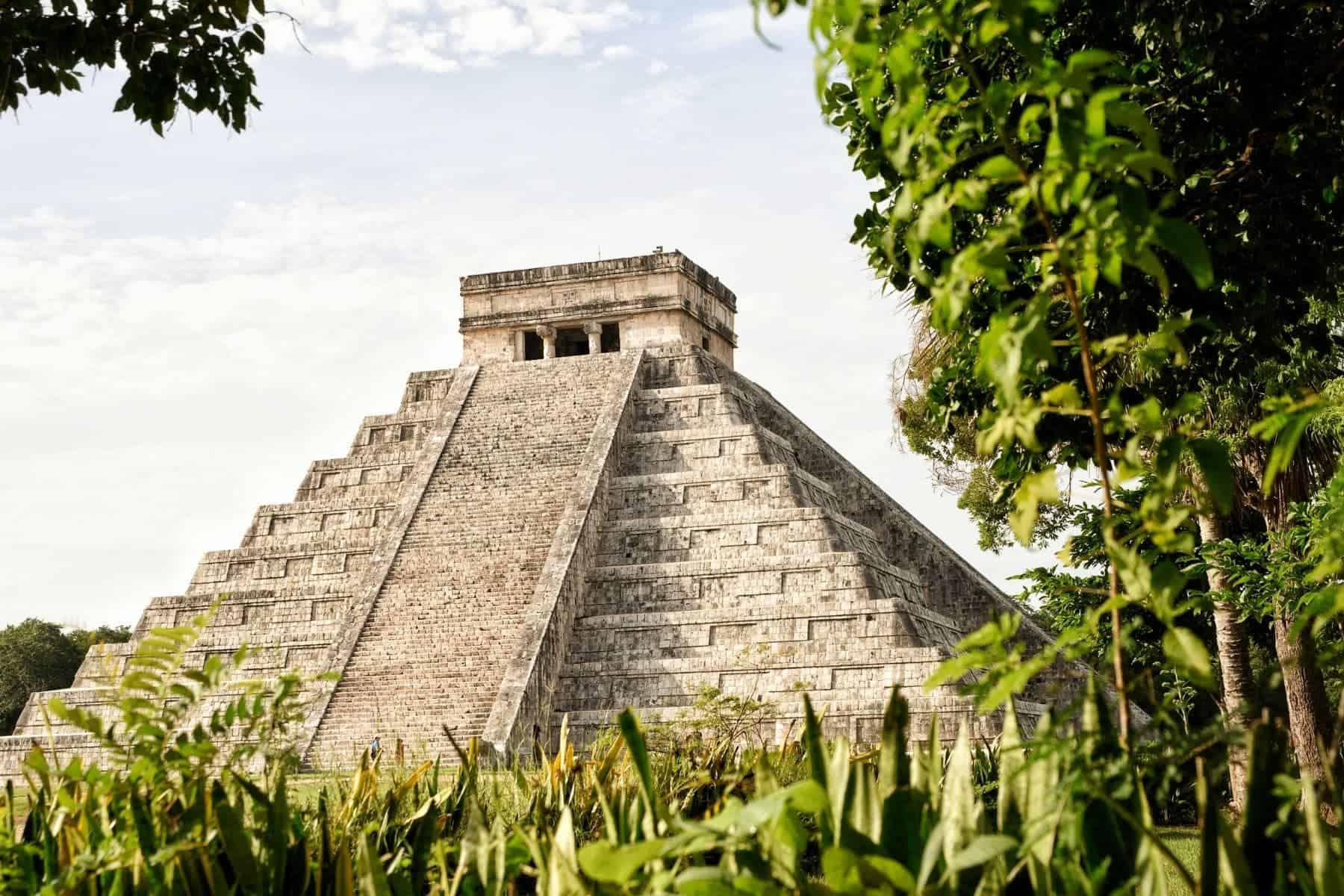
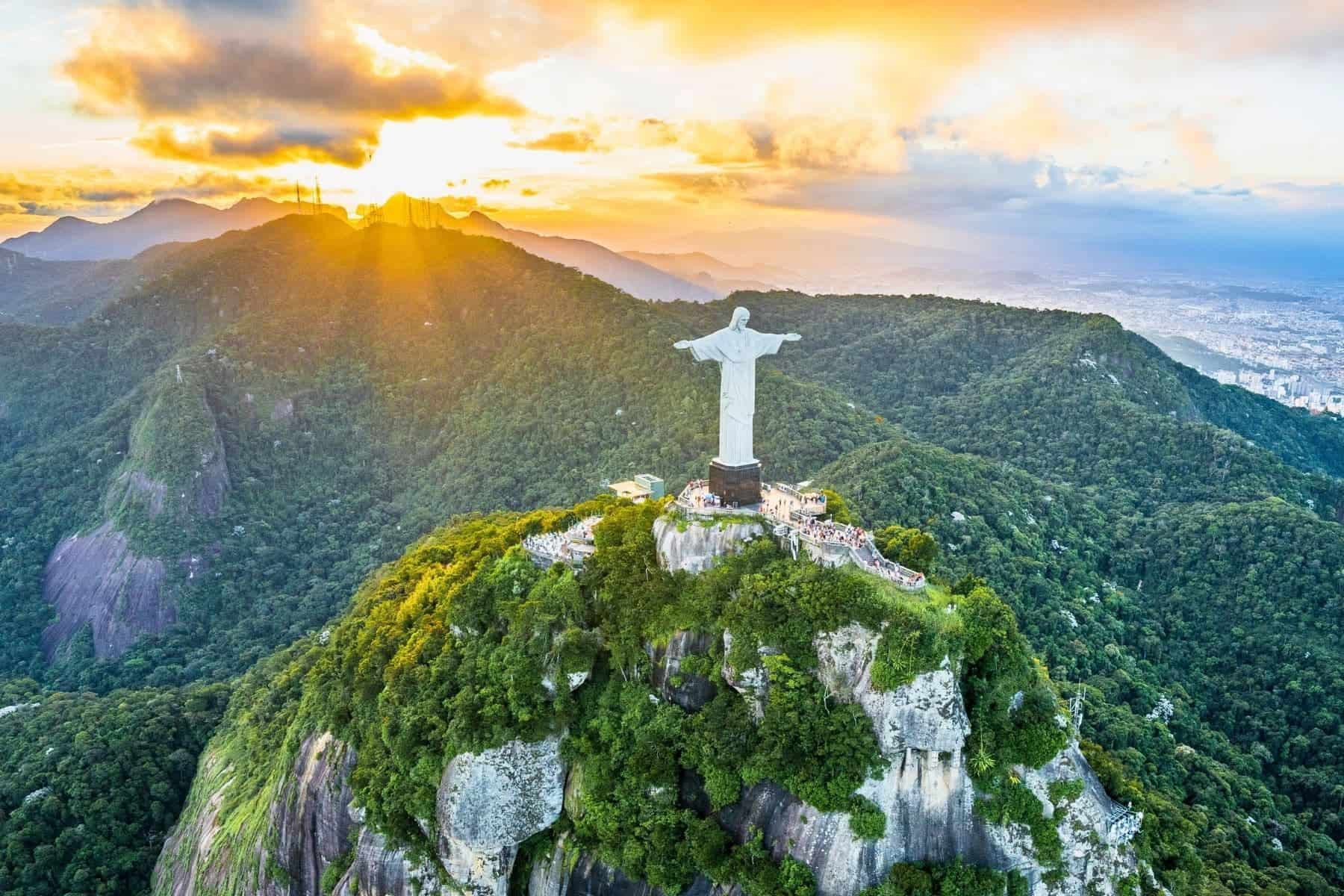
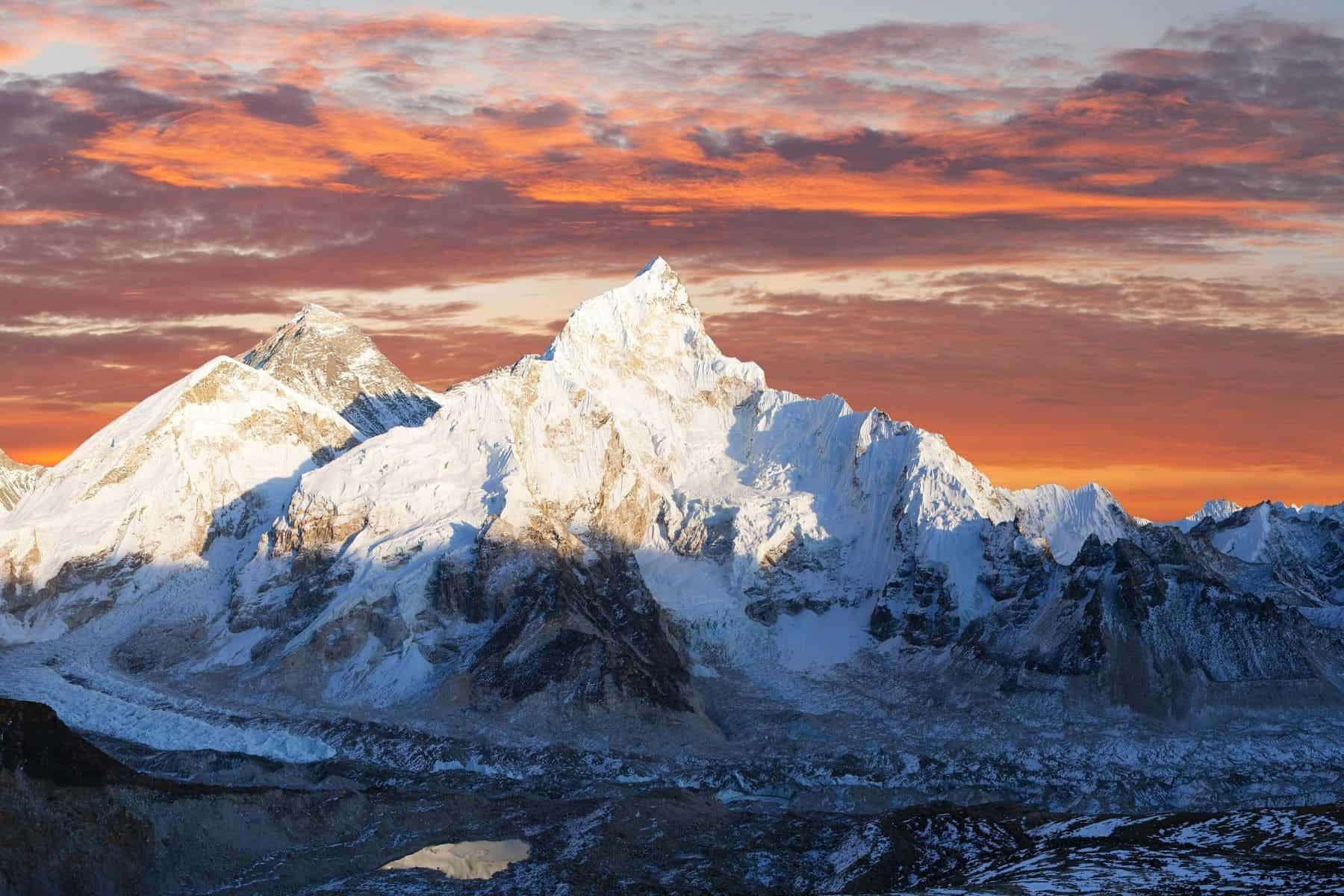
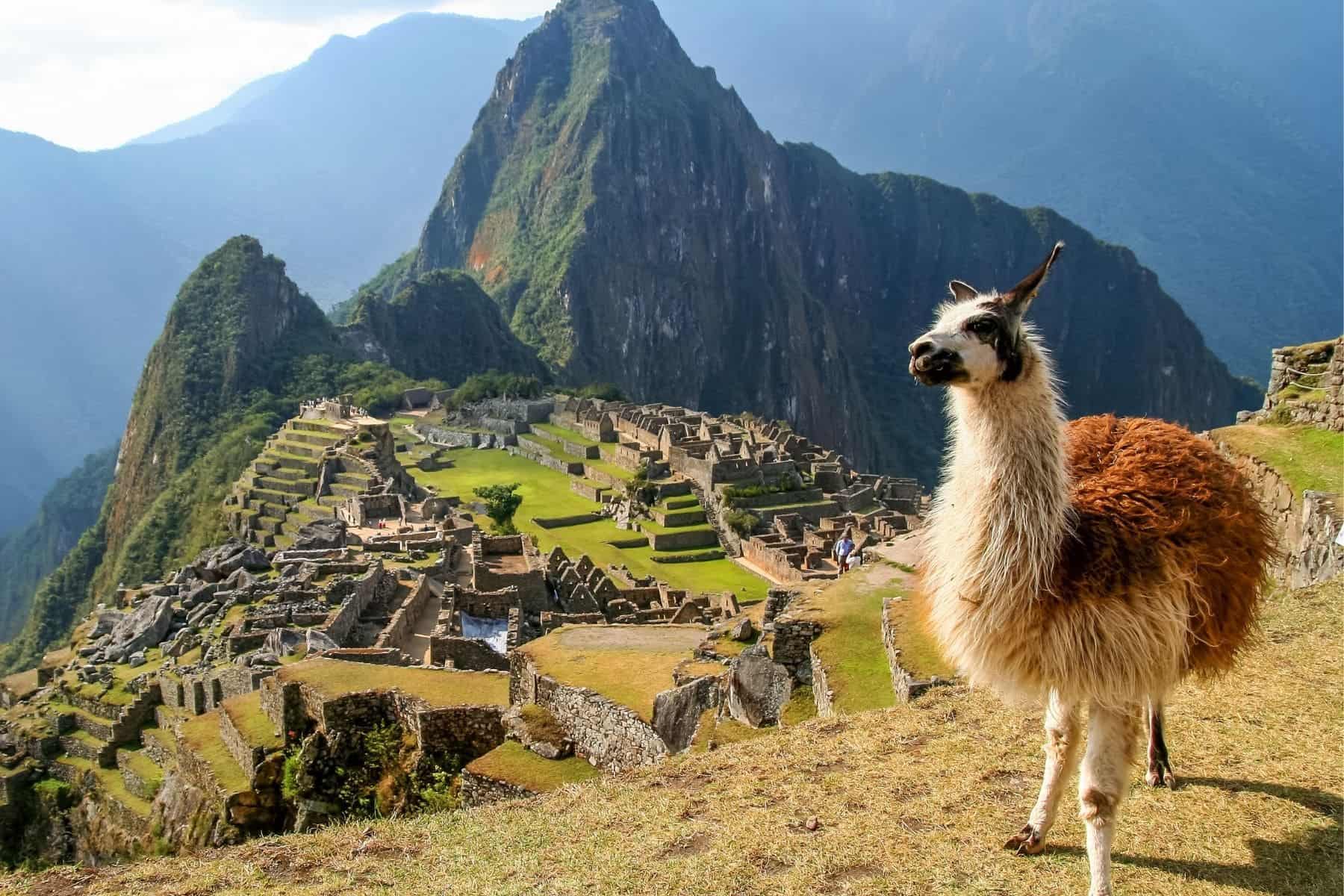
 Back
Back












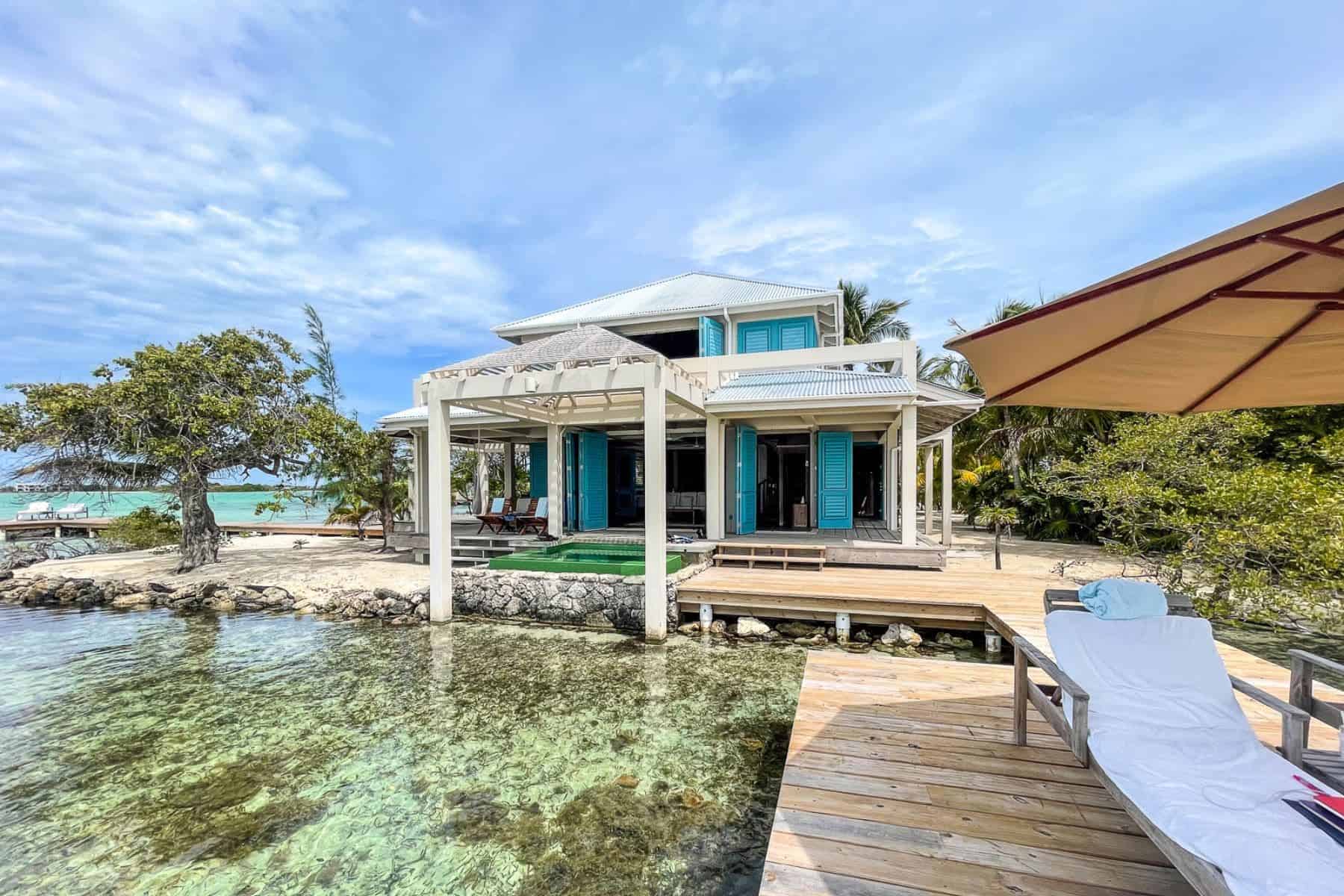








Comments